


“Buy the highest SPF you can find” is incomplete sunscreen advice. A bigger number can help, but it won't tell you whether the formula covers UVA, suits your skin, or stays comfortable when you apply enough. For those looking for protetor solar 100, the better question is what the whole label promises and what your routine delivers.
I believe the most useful pharmacy-style advice makes the choice simpler without pretending every product is interchangeable. That means looking beyond the front of the bottle, understanding the differences between American and European labels, and choosing something you won't be tempted to ration.
What Protetor Solar 100 Really Means
SPF 100 doesn't mean complete protection, double protection, or all-day protection. It describes a result from a controlled sunburn test, not everything a sunscreen can do.
The FDA defines SPF through a comparison between the ultraviolet exposure needed to cause sunburn on sunscreen-protected skin and the exposure needed on unprotected skin. In simplified terms, SPF 100 allows approximately 1/100 of the sunburn-producing UVB exposure through under test conditions, rather than blocking all radiation, as explained in the FDA's sunscreen labeling and testing guidance.
Think of a test result, not a countdown
That distinction matters when you're planning a beach day. You can't turn the number on the bottle into a personal allowance for staying outside, because the laboratory rating isn't a fixed duration of protection.
A useful mental model separates the tested protection from the conditions needed to maintain it.
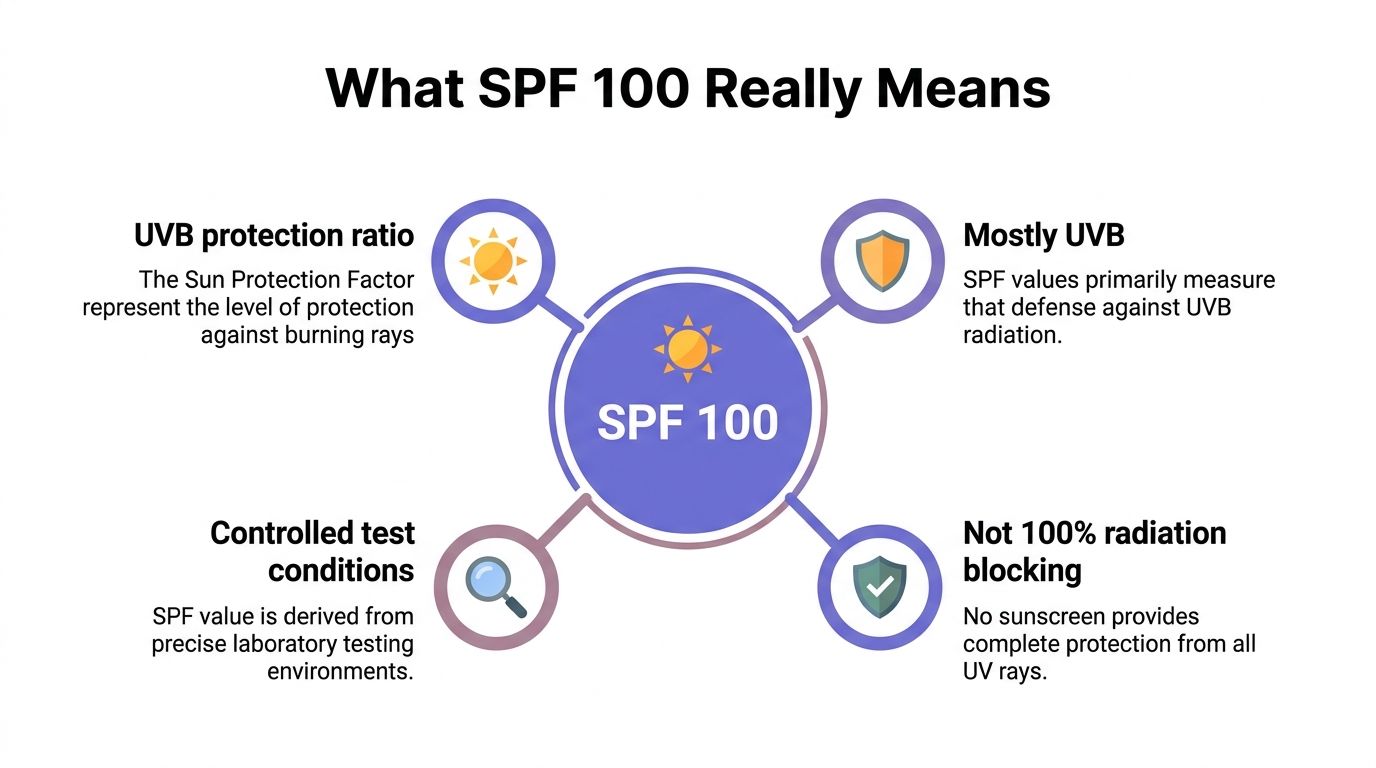
The number also leaves important shopping questions unanswered:
- UVA coverage: Look for a separate broad-spectrum or UVA designation.
- Water resistance: Read the instructions rather than assuming a high SPF makes the formula suitable for swimming.
- Application: Check how to apply the particular format, especially if it's a spray.
- Comfort: Decide whether you can wear the instructed amount without wanting to wipe it off.
Practical rule: Treat SPF as the starting point of label reading, not the final verdict.
Match the label to the activity
A sunscreen used during a commute faces a different practical test from one used during watersports. The latter requires attention to application, water exposure, and the rest of your sun-protection setup, not just a larger label number.
For an activity-specific planning resource, Blitz Surf Shop's guide to how to stay sun-safe while surfing offers relevant context for readers taking sunscreen into the water.
You don't need to memorize sunscreen chemistry. You need to recognize what the SPF number answers, then check the information it leaves out.
SPF 100 vs SPF 50 and SPF 30 in Real Life
The difference between these labels looks dramatic on a shelf. Under ideal testing conditions, the difference in the proportion of UVB filtered is much narrower: approximately 97% for SPF 30, 98% for SPF 50, and 99% for SPF 100, using the simplified comparison in the American Academy of Dermatology's guide to sunscreen labels.
What the SPF Number Changes
The following table expresses that same comparison as the approximate UVB exposure that gets through, rather than the amount filtered.
| Label | Approximate UVB reaching skin in test conditions | Practical takeaway |
|---|---|---|
| SPF 30 | About 3% | A useful protection level when the complete label and application suit the situation |
| SPF 50 | About 2% | Higher tested sunburn protection without requiring a three-digit claim |
| SPF 100 | About 1% | An additional laboratory margin, not complete protection |
These are rounded teaching figures, not predictions of what reaches your skin during a particular afternoon. The important lesson is diminishing returns, not that the remaining difference is worthless.
Where the laboratory comparison stops helping
Consider a hypothetical shopper choosing between a comfortable broad-spectrum lotion and a heavier high-SPF cream. If they spread the lotion generously but use the cream sparingly because it feels unpleasant, the larger number may not translate into the better routine.
That's why a properly applied broad-spectrum SPF 50 can provide better practical protection than an SPF 100 applied too thinly. This is a comparison of application habits, not a claim that every lower-SPF formula outperforms every higher-SPF formula.
The rushed morning is often the main problem. Someone may carefully cover their cheeks, then hurry past the ears, neck, and hairline because they're already late. Buying a stronger label doesn't correct those gaps.
- Choose the higher number when it fits: If the formula feels comfortable and you'll use it properly, the extra tested margin can be worthwhile.
- Don't buy protection you'll ration: A finish you dislike can make generous application harder.
- Keep the comparison complete: Texture, UVA labeling, intended use, and water-resistance directions belong beside SPF in your decision.
For a practical comparison of a lower-numbered option, use our guide to choosing, applying, and reapplying SPF 50 sunscreen. ALODERMA's daily facial sunscreen application tips are another routine-focused resource if the difficult part is fitting sunscreen into morning skincare.
My view is straightforward: don't dismiss the additional protection, but don't pay attention to it at the expense of everything that determines whether you'll use the product well.
How to Read UVA Labels, Filters, and Water Resistance
Turn the bottle around before deciding which product is stronger. American and European labels communicate protection differently, so a direct comparison of front-label numbers can mislead.
In the United States, Broad Spectrum requires a separate test covering UVA and UVB wavelengths, with a mean critical wavelength of at least 370 nanometres. The FDA's sunscreen testing document explains why that designation is separate from the sunburn-focused SPF test.
European protection labels need their own reading
The European Commission places SPF 50 and SPF 50+ in the “very high” protection category, rather than creating a separate standardized consumer category for SPF 100. That approach appears in the Commission's recommendation on sunscreen efficacy and claims.
European guidance also recommends UVA protection of at least one-third of the labeled SPF, alongside the standardized UVA indication. The European Commission's explanation of sunscreen labeling gives the background to that relationship.
These systems aren't interchangeable scores. A US broad-spectrum designation and a European UVA symbol help answer related questions, but you shouldn't assume either is a numerical conversion of the other. Our explanation of the difference between UVA and UVB can help you interpret those terms without turning shopping into a technical exercise.
Filters and finish are separate decisions
Mineral-only, organic-filter, and hybrid formulas are options to assess, not automatic rankings of safety, comfort, or quality. A shopper with fragrance intolerance should check the full ingredient list rather than assume a mineral formula must be fragrance-free.
Visible residue also deserves an honest assessment. If a formula leaves a finish you dislike at the instructed amount, compare another formulation rather than immediately using less. Conversely, a fluid that feels elegant isn't automatically the right choice for reactive skin.
Use this reading order:
- Protection designation: Find the SPF and the relevant UVA or broad-spectrum marking.
- Personal tolerance: Check fragrance and any ingredients you already know you don't tolerate.
- Activity instructions: Look for water-resistance wording when swimming or sweating is part of the plan.
- Format directions: Check whether the product is intended for the face, body, or particular areas.
Don't confuse a convenient package with easy coverage. A lotion makes the dispensed amount easier to judge, while a spray requires deliberate technique. A stick may be convenient for selected areas, but convenience alone doesn't establish that you've covered everything evenly.
Who Should Consider SPF 100 and When
A very fair shopper preparing for a beach holiday and an office worker looking for a comfortable facial sunscreen aren't solving the same problem. Neither benefits from being told that everyone needs the biggest number.
SPF 100 is an option to consider, not a universal prescription. The useful question is whether its additional tested margin fits your skin, activity, and ability to apply it properly.
Different people need different priorities
For someone who burns easily, a high-SPF formula may be a sensible part of a careful outdoor routine. Think of a traveler who wants to avoid spending the first holiday afternoon testing how much sun their skin can tolerate. The purchase should support a conservative plan, not encourage a longer stay outside.
Someone with a photosensitive condition, or concerns about a medicine and sun exposure, needs an individualized plan from their clinician or pharmacist. A cosmetic label can't establish whether that plan is adequate.
For a person concerned about melasma or uneven pigmentation, the shopping conversation shouldn't stop at sunburn protection. The earlier distinction between SPF and UVA information matters here, and cosmetic sunscreen selection shouldn't be presented as treatment for a pigmentation condition.
- Outdoor workers: Choose a format you can carry, dispense, and reapply during the working day.
- Runners and swimmers: Plan for the activity, including the areas you tend to miss and the product's water-resistance directions.
- Snow and high-altitude travelers: Build a complete sun-protection plan rather than treating a higher label as permission to stay exposed.
- Parents: Read the child-specific product directions and age suitability instead of assuming the adult bottle is automatically appropriate.
Make the recommendation fit the person
An office worker who only thinks about sunscreen at lunchtime may need a more workable morning routine before needing a different number. A runner who repeatedly overlooks the back of the neck needs an application check, not merely a new bottle.
These are illustrative situations, not patient case studies. Their value is showing how to identify the practical weak point before spending money.
I believe the best choice is the product you can apply generously and repeat comfortably, not the impressive label you leave in your bag.
For shoppers whose main concern is persistent facial sensitivity, our guide to choosing sunscreen for rosacea-prone skin offers a more focused starting point. Persistent burning, redness, or a rash deserves professional assessment rather than repeated trial-and-error purchases.
Applying Enough SPF 100 and Reapplying Well
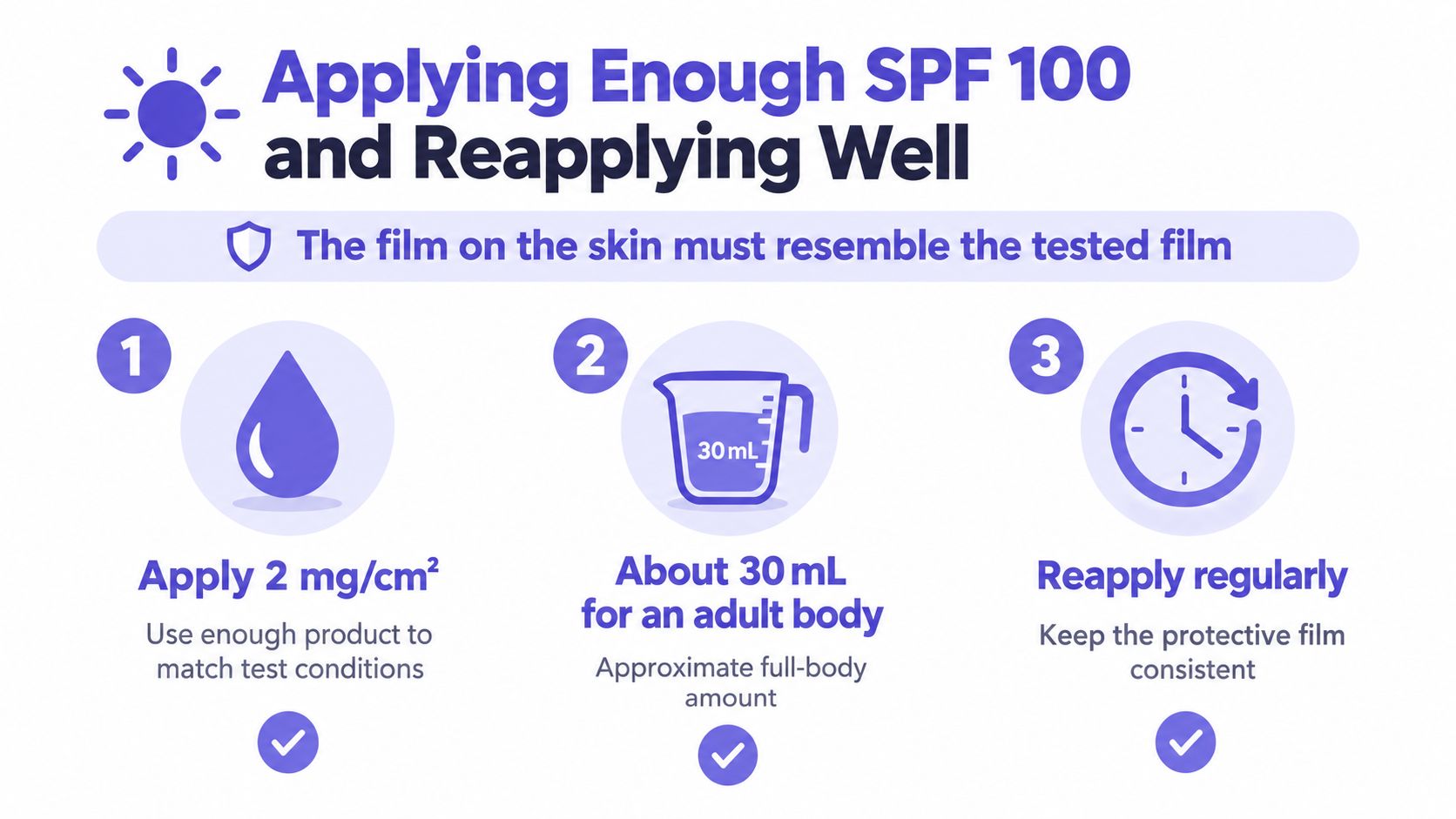
“Apply liberally” becomes more useful when you connect it to an amount. Conventional sunscreen testing uses 2 mg/cm², with approximately 30 mL for an average adult full-body application serving as a practical reference, as discussed in the published assessment of high-SPF sunscreen performance.
That's an approximation, not a custom dose for every body size or outfit. The important point is that a high-SPF formula isn't a concentrate you're supposed to use sparingly.
Keep the application principle visible while building your routine.
Build coverage before you leave
The American Academy of Dermatology recommends approximately an ounce, often described as a shot-glass amount, for exposed adult body skin. Its sunscreen application guidance also supports checking easily overlooked areas rather than concentrating everything on the most visible skin.
A practical approach is to apply methodically rather than chase a particular finish immediately. If separate passes help you notice gaps, use them, but don't assume that dividing the application lets you reduce the total amount.
- Start with exposed skin: Work around clothing edges instead of stopping well short of them.
- Check the perimeter: Include ears, hairline, neck, and exposed scalp partings.
- Finish the extremities: Remember hands and tops of feet.
- Review the face: Don't let concern about shine turn adequate coverage into a few scattered dots.
Use both the schedule and the event
Apply sunscreen 15 minutes before going outdoors, reapply every two hours while outdoors, and reapply after swimming or sweating, following the American Academy of Dermatology's application instructions.
The schedule isn't permission to ignore a disturbed layer. Toweling, rubbing clothing, or sand abrasion should prompt you to check the label and restore coverage rather than wait for the next planned application. Equally, the number on the bottle isn't a countdown telling you exactly when all protection disappears.
For sprays, follow a deliberate method: apply liberally, spread evenly by hand, avoid windy conditions and inhalation, and never spray directly onto the face. Follow the package directions for facial application.
Before leaving home: Pack the sunscreen where you can reach it, not underneath everything else in your beach bag.
Our guide to how often to reapply sunscreen helps translate those instructions into different daily routines.
For readers who prefer a video alongside the written checklist, this is an additional viewing option.
Choosing a High Protection Sunscreen on Healtsy
Start with the job you need the product to do. Facial wear under makeup, generous body application on holiday, and accessible reapplication during sport are different shopping priorities.
A US-style SPF 100 and a European very-high-protection sunscreen can both deserve consideration. The earlier labeling comparison is the reason not to reject a European option because its front label looks smaller.
Compare the formula with your actual routine
A useful shortlist is small enough that you can explain why each option belongs on it. Avoid collecting products based only on brand familiarity or the promise of an invisible finish.
| Shopping priority | What to assess | What not to assume |
|---|---|---|
| Sensitive or intolerant skin | Complete ingredients and known personal triggers | Mineral-only automatically means fragrance-free |
| Lightweight facial wear | Comfort at the instructed amount and during reapplication | A fluid guarantees a non-greasy finish |
| Outdoor use | Relevant water-resistance and application directions | High SPF alone establishes suitability for swimming |
| International buying | Market labeling, destination delivery, and checkout details | European and American packaging use identical terminology |
If blocked pores are a concern, Neutralyze's guide to find facial sunscreen that won't clog pores is a relevant companion resource. Treat such guidance as a way to refine your questions, not a guarantee that a formula will suit every individual.
Our guide to choosing sunscreen for your skin provides another practical checklist.
Keep moisturizer and sunscreen roles separate
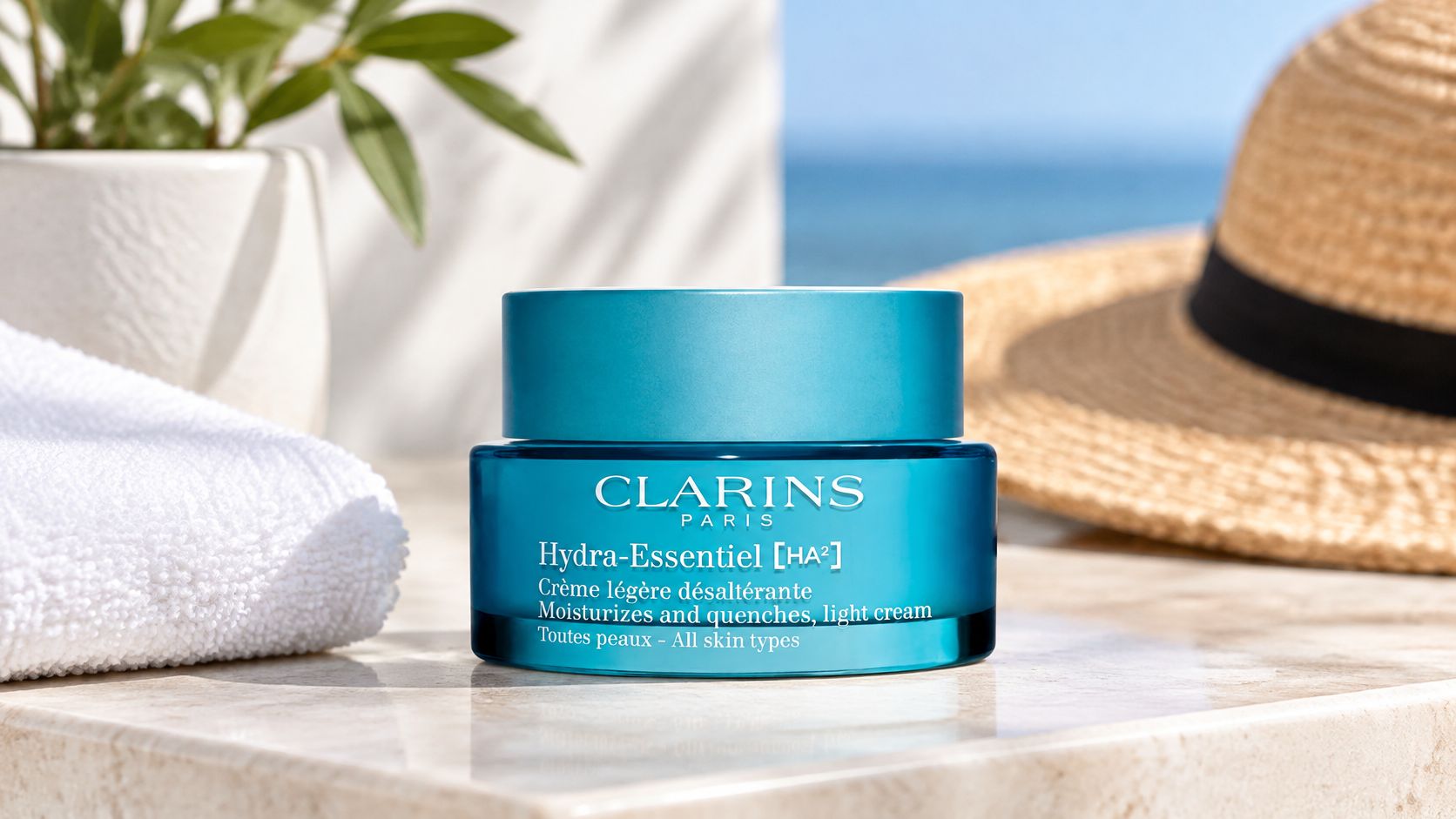
A moisturizer can belong in the same routine without being the protective product. For example, Clarins Hydra Essentiel Light Cream - 50ml is described with hyaluronic acid, organic flower-of-fortune extract, and organic cassava powder for hydration and shine reduction. That description doesn't establish an SPF or UVA protection claim.
The catalog image below identifies that skincare item, not a substitute for sunscreen.
Check international ordering details
We're based in Portugal and source through authorized distribution rather than grey-market channels. Our pharmacist reviews product information, and orders ship from Europe by DHL to customers worldwide.
For US buyers, import duties are included in the price for the main non-EU markets. Review the destination-specific checkout information and delivery estimate before ordering, particularly if you need the product before travel. Don't plan a holiday routine around an assumed transit time.
Authenticity and shipping clarity matter, but they come after identifying the right product type. A reliably sourced formula still needs to suit the person using it.
SPF 100 Myths, FAQs, and Your Next Step
The most useful conclusion isn't that high SPF is good or bad. It's that the label, the formula, and the application have to work together.
Does SPF 100 last longer?
Don't use it to extend the application schedule or your time in the sun. Follow the product directions and the reapplication guidance already discussed, including what to do when coverage is disturbed.
The practical question isn't how long you can make the bottle's number last. It's whether you've maintained the protection you intended to apply.
Can I use less because the number is higher?
No. The tested label assumes an adequate application, and a thin cosmetic layer isn't a reliable way to reproduce it.
If the instructed amount feels unbearable, reconsider the texture. Don't solve a finish problem by reducing protection.
What if I have darker skin or pigmentation concerns?
Don't let the absence of an obvious tendency to burn become your only shopping criterion. Consider the broader label information and your individual concerns rather than selecting by SPF alone.
If pigmentation is persistent or changing, ask a qualified clinician about assessment. Sunscreen shopping advice shouldn't be mistaken for a diagnosis or treatment plan.
Are sprays enough on their own?
A spray can be a sunscreen format, but it isn't a shortcut around adequate application. Use the spreading and safety instructions above, and choose another format if you can't apply it reliably in your usual conditions.
Why does a European label look different?
The European category system explains the difference. Use the UVA information and complete directions to compare products instead of treating the front-label number as a universal score.
Before buying, make a short decision list:
- Your main use: Face, body, children's care, sport, or travel.
- Your key requirements: Relevant protection labeling and any personal ingredient restrictions.
- Your practical preference: A format and finish you can use generously.
- Your ordering needs: Destination delivery details and enough time before departure.
I'm certain this approach resolves the central shopping confusion: you're no longer trying to buy the biggest number. You're choosing a sunscreen you understand and can use properly.
Healtsy offers face, body, lip, baby and kids sunscreen, alongside after-sun and other sun-care categories, with brands including Avène, Bioderma, Clarins, Eucerin, SVR, and Uriage. Visit Healtsy to compare very-high-protection options, shortlist the format that fits your routine, and check your destination's ordering details before buying.