


Peach Face Mask Benefits, Ingredients, and How to Use One
The most popular advice about a peach face mask is also the least useful: “Peach extract gives you instantly transformed skin.” It sounds attractive, but peach alone rarely carries a mask. The visible effect usually comes from the complete formula—especially glycerin, hyaluronic acid, panthenol, oils, ceramides, and the occlusive ingredients that keep water from escaping.
I've worked in skincare for 16 years, and I believe my knowledge is the best I can give you based on that experience. My practical view is simple: peach-derived ingredients have a legitimate cosmetic and scientific history, but you should judge a mask by its ingredient list, format, and fit with your skin, not by the fruit printed on the sachet. This is the complete guide to choosing, using, and evaluating a peach face mask without paying for marketing fluff.
What a Peach Face Mask Actually Does
A peach face mask can soften, hydrate, and make skin look fresher, but it won't magically erase wrinkles or treat acne. The peach name may attract you to the product, yet the supporting formula often determines most of the immediate result.
Peach kernel oil contributes emollience. It helps the product spread smoothly and leaves the stratum corneum feeling softer. One analysis described peach kernel oil as containing 91.27% unsaturated fatty acids, with oleic and linoleic acids among the dominant components. The published analysis of peach kernel oil gives useful formulation context, although the oil's presence in a mask doesn't guarantee a specific clinical outcome.
Peach-derived glucosylceramide is more interesting from a barrier perspective. A peer-reviewed study reported that it increased ceramide levels in three-dimensional human skin cultures. In a human ingestion trial involving 26 adults, with an average age of 47.9 years, administration over 20 consecutive days at 0.6 mg/day and 1.2 mg/day improved water retention, reduced transepidermal water loss, and improved skin texture. Those findings relate to peach-derived glucosylceramide, not automatically to every mask containing peach fragrance or fruit water. The study on peach-derived glucosylceramide makes that distinction clear.
The barrier benefit matters more than the fruit story
Peach flower and fruit extracts may provide antioxidant support, particularly when the formula contains genuine botanical extract rather than only peach perfume. Research on peach flower ethanol extract and its fractions found reduced UV-induced epidermal thickening and lower MMP-13 expression, alongside support for antioxidant enzymes including catalase, SOD, and GPx. The peach flower extract research supports a photoaging-related rationale, but it doesn't turn a rinse-off mask into sunscreen.
Humectants create the short-term plumping effect shoppers usually notice after removing a mask. Glycerin and sodium hyaluronate draw water into the outer layers of skin, while oils and occlusives help reduce moisture loss. That combination can improve comfort, make fine dehydration lines look less obvious, and leave the face smoother to the touch.
My buying rule: If the label contains peach but lacks a sensible hydrating or barrier-support base, you're probably buying a scent experience rather than a meaningful skincare treatment.
A consistent routine also matters more than an occasional novelty product. If you're trying to understand the reasons to follow a skincare regimen, think of a peach mask as a supporting step, not the foundation. Use it to reinforce cleansing, moisturizing, and sun protection.
Key Ingredients and What Each One Contributes
Read a peach face mask from the inside out. The fruit extracts are only one part of the product, and they may sit behind the ingredients that provide the actual hydration, slip, soothing effect, and preservation.
Peach kernel oil is an emollient. It softens the feel of dry skin and improves spreadability, but people with very oily or acne-prone skin should assess how rich the overall formula feels. Peach flower extract and peach fruit extract may contribute antioxidant and conditioning support, especially when they appear as identifiable extracts rather than only as fragrance components.
Glucosylceramide deserves more attention than a generic “peach complex.” The human-relevant research discussed above connects peach-derived glucosylceramide with ceramide support, water retention, and lower TEWL. Still, a mask label may list it in a small amount, so check its position and the manufacturer's ingredient disclosure rather than assuming the fruit theme tells you the dose.
Then come the workhorse ingredients. Glycerin, sodium hyaluronate, and trehalose attract water. Panthenol and allantoin calm the feel of tight or irritated skin. Niacinamide can support the appearance of uneven tone and help regulate the look of excess oil, although the mask format and contact time influence what you can realistically expect. For a clearer explanation of the ingredient, see this guide to what niacinamide serum is good for.
A practical label-reading table
| Ingredient | Primary Function | Best For |
|---|---|---|
| Peach kernel oil | Emollience and skin softening | Dry or rough-feeling skin |
| Peach flower extract | Antioxidant and photoaging-related support | Dull or environmentally stressed skin |
| Peach fruit extract | Conditioning and botanical support | General comfort and glow |
| Glucosylceramide | Barrier lipid support | Dehydrated or barrier-weakened skin |
| Glycerin | Humectant hydration | Tight, dry, or thirsty skin |
| Sodium hyaluronate | Water-binding hydration | Dehydrated skin with surface fine lines |
| Panthenol | Soothing and conditioning | Sensitive or uncomfortable skin |
| Allantoin | Skin-soothing support | Skin prone to stinging |
| Niacinamide | Tone and sebum-supportive care | Uneven tone or combination skin |
| Centella asiatica extract | Calming botanical support | Redness-prone skin |
A supplier describes one peach kernel extract as 20% extract in water and glycerin, recommending a 5% to 10% use level in products such as cleansers, toners, and moisturizers. That formulation benchmark shows why peach ingredients usually support the formula instead of dominating it.
Don't ignore preservatives, emulsifiers, thickeners, and pH adjusters. They affect whether the product stays stable, spreads evenly, rinses cleanly, and remains tolerable. A beautiful ingredient story is irrelevant if the finished mask stings, separates, or leaves your skin congested.
Choosing the Right Format for Your Skin Type
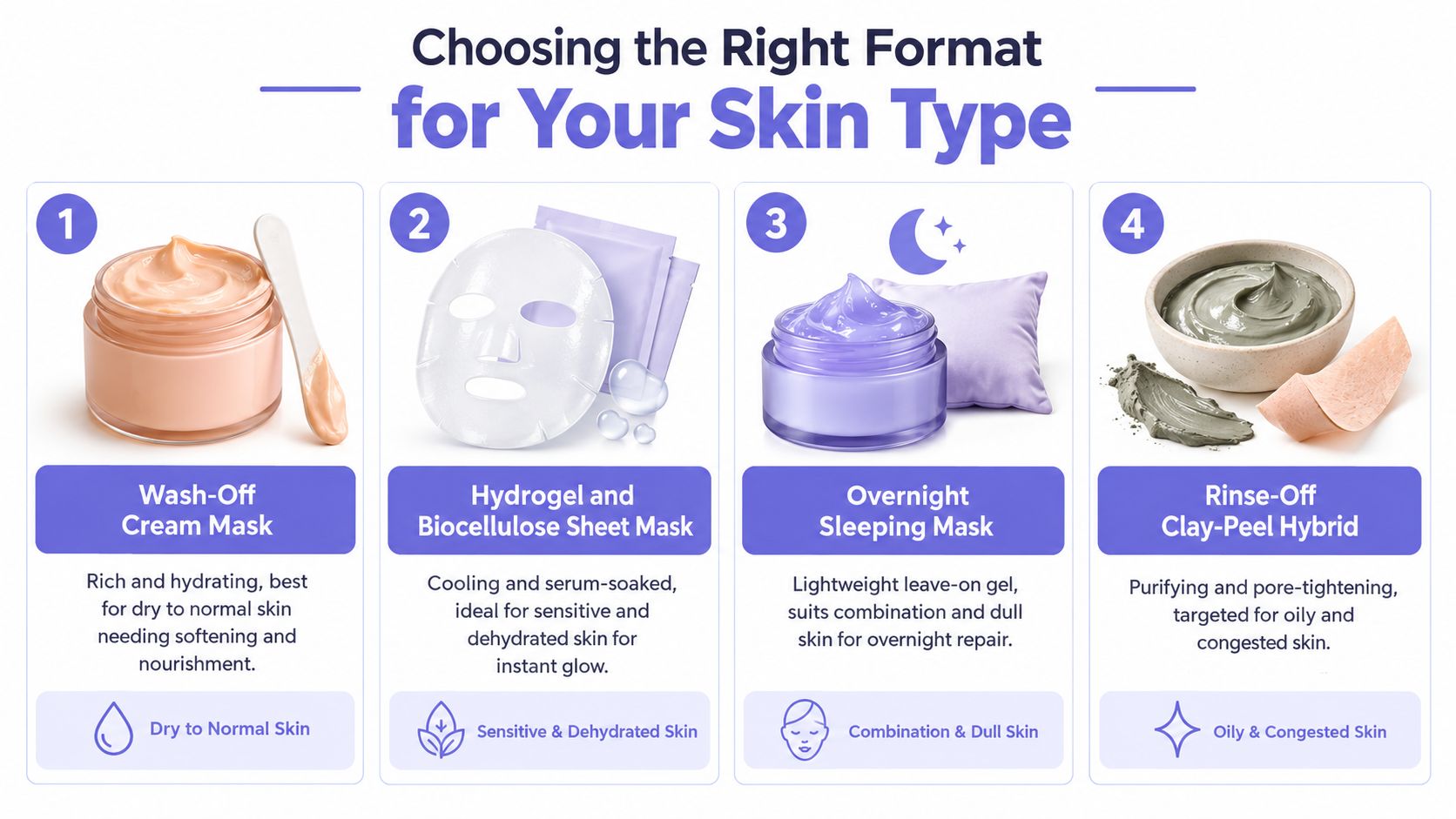
Choose the format by your skin's current condition, not by the packaging. A peach-themed jar, sheet, or sleeping mask can suit completely different needs depending on its vehicle and supporting ingredients.
Match texture to the problem
Wash-off cream masks suit dry to normal skin that needs softness and comfort. Look for peach kernel oil, squalane, glycerin, panthenol, and barrier-supportive lipids. They're a sensible choice after travel, cold weather, or cleansing that leaves your face tight.
Hydrogel and biocellulose sheet masks provide a cooling, serum-soaked layer. They work well for dehydration and temporary dullness, particularly when the formula is fragrance-free and contains glycerin, hyaluronic acid, panthenol, or centella. The sheet itself helps hold the watery formula against the skin, but it doesn't make weak ingredients stronger.
Overnight sleeping masks are best for people who want a leave-on layer that reduces moisture loss while they sleep. Combination and mature skin often prefer a lightweight gel rather than a heavy balm. Check whether the product is designed to be left on, because a rinse-off cream shouldn't become an accidental overnight treatment.
Clay-peel hybrids can suit oily or congested skin, but they need more caution. Clay may absorb surface oil, while peel components can add exfoliation. Don't choose this format because “pore tightening” appears on the front label, especially if your skin already uses acids or retinoids.
Quick choices by skin type
Oily or acne-prone
Choose a lightweight gel or biocellulose sheet mask with a restrained oil phase. Peach kernel oil may feel too rich for some people, and its higher oleic acid content can be problematic for clog-prone skin. See this peach kernel oil safety overview, which also discusses rare allergic contact dermatitis and theoretical cross-reactivity concerns.
Dry or mature
Choose a richer cream mask or sleeping mask with peach kernel oil, squalane, glycerin, and ceramide-supportive ingredients.
Sensitive or post-procedure
Select a minimalist, fragrance-free sheet mask focused on panthenol or madecassoside. Avoid applying any mask to open, peeling, or actively inflamed skin unless a clinician has advised it. This guide to skincare for sensitive skin offers useful routine context.
Combination
Use a hydrating sheet mask on dry zones and a lightweight gel elsewhere. You don't need one heavy texture across the entire face.
Strong peach perfume oils, high essential-oil loads, and denatured alcohol high in the ingredient list are red flags for sensitive or compromised skin. The format can look gentle while the formula behaves aggressively.
How to Use a Peach Face Mask the Right Way
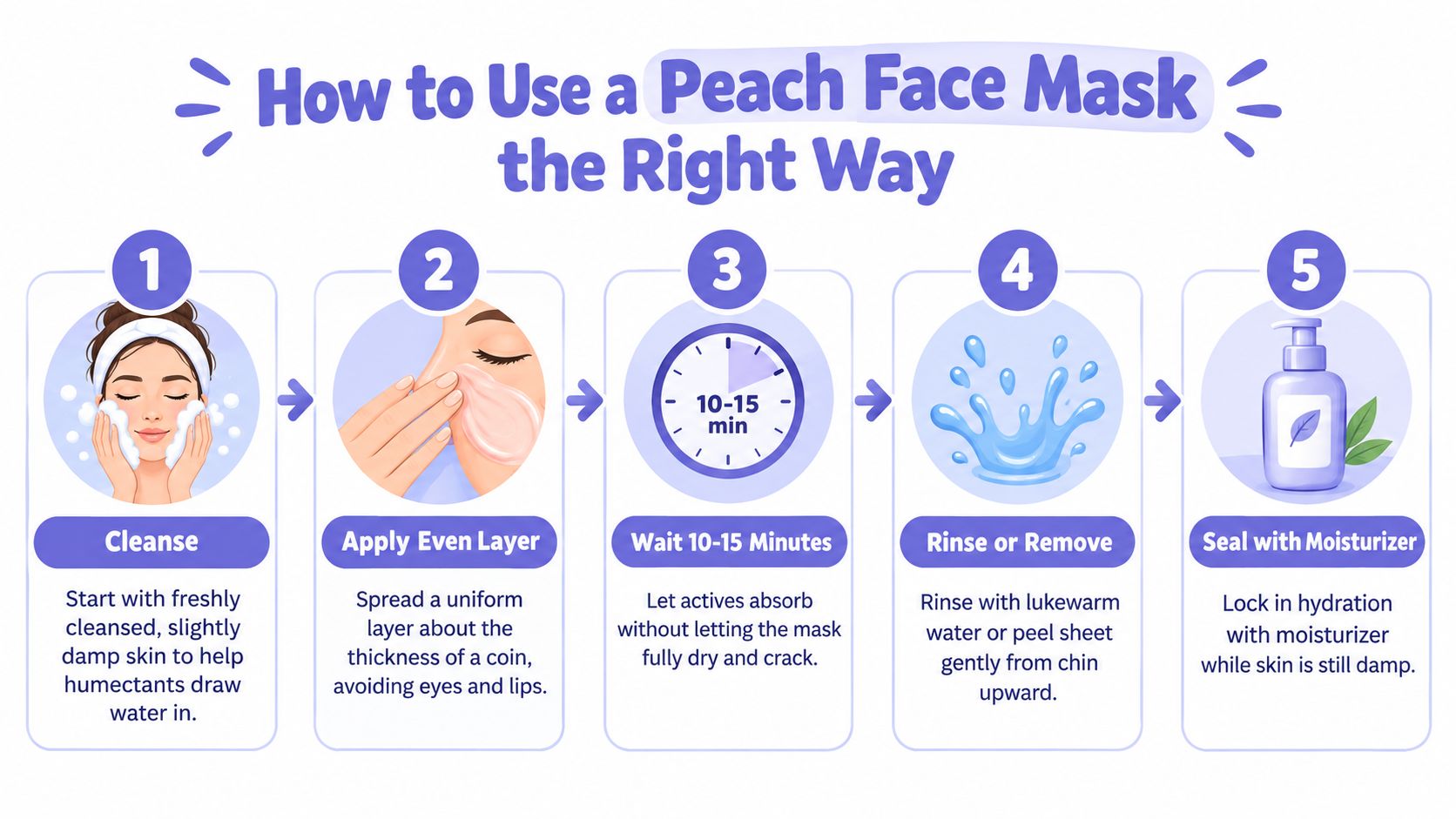
Start with freshly cleansed, slightly damp skin. Humectants such as glycerin and hyaluronic acid work more sensibly when water is available at the surface, while a clean face prevents makeup, sunscreen, and excess oil from interfering with the mask.
For wash-off cream and gel masks
- Apply an even layer. Aim for a uniform coat about the thickness of a credit card. Keep it away from the immediate eye area, nostrils, and lips, where skin and mucous membranes are more easily irritated.
- Follow the label time. Many wash-off masks specify 10 to 15 minutes, but the product directions take priority. Don't wait for a mask to become completely dry, tight, and cracked.
- Rinse gently. Use lukewarm water rather than very hot water, then pat your face dry. Rubbing to remove a stubborn film can undo the comfort you wanted from the mask.
- Moisturize immediately. Apply a simple, fragrance-free moisturizer while skin still feels slightly damp. This helps keep the temporary hydration from disappearing quickly.
For sheet masks, smooth the fabric over the face and press out air pockets. Wear it for the labeled period, often 15 to 20 minutes at most, then remove it before the sheet becomes stiff. Leaving a sheet mask on overnight isn't a clever upgrade. As the fabric dries, it can leave skin feeling tighter rather than more hydrated.
Don't combine a peach mask containing acids with a strong exfoliant or retinoid on the same evening. Alternate them until you know how your skin responds.
You can find more practical sequencing advice in these skincare routine steps. I'm certain this approach will solve the most common application mistakes: over-wearing the product, layering too many active ingredients, and expecting a short treatment to create permanent change.
For a visual demonstration of the application sequence, watch this guide:
DIY Alternatives Worth Knowing About
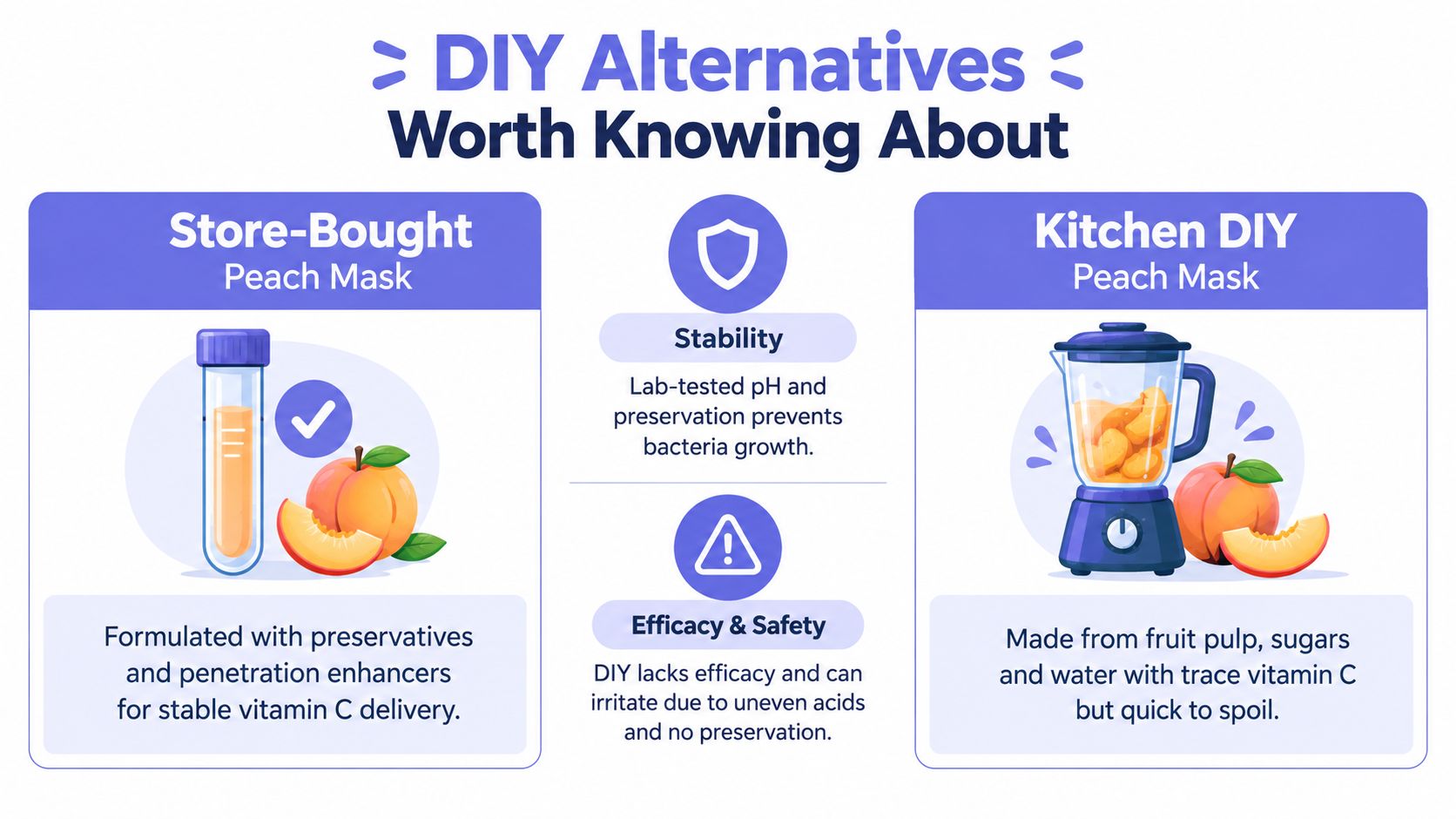
A kitchen peach mask can feel appealing because the ingredients are familiar and inexpensive. The problem is that a ripe peach mostly gives you pulp, sugars, water, and variable amounts of naturally occurring compounds. It doesn't give you the controlled pH, preservation system, standardized extract, or delivery design found in a properly manufactured cosmetic.
A simple experiment is mashed ripe peach mixed with plain yogurt. Yogurt can provide a creamy vehicle and mild lactic-acid exposure, although the acidity and composition will vary. You can also mix peach with honey for a more humectant, sticky mask, then rinse it away after a short contact period.
A more practical homemade option
Mix a small amount of peach kernel oil into oatmeal and water for a soothing wash-off texture. Oatmeal gives the mixture body, while the oil adds emollience. Keep the mixture fresh, use it immediately, and don't store leftovers because kitchen preparations lack a reliable preservation system.
None of these recipes replicates ceramides, stabilized niacinamide, or hyaluronic acid at a controlled and meaningful cosmetic concentration. They're sensory experiments, not clinical substitutes. Raw fruit acids and proteins can irritate sensitive skin, so patch test behind the ear first and stop if you notice burning, swelling, itching, or persistent redness.
DIY verdict: Use homemade peach masks for the experience, not because the blender can reproduce laboratory formulation.
Commercial masks also aren't automatically superior. Some are little more than fragrance, color, and a basic gel. The sensible comparison is between a transparent commercial formula and a fresh kitchen mixture, not between “natural” and “chemical.” If your main need is reliable hydration or barrier support, a well-formulated moisturizer may outperform both.
Buying Smart and Pairing It With Your Routine
Read the ingredient list before the price tag. In a useful hydrating mask, you'll often see water or another serum base first, followed by humectants such as glycerin, hyaluronic acid, or beta-glucan. Emollients such as peach kernel oil or squalane may appear later, followed by supportive actives including niacinamide, panthenol, glucosylceramide, or ectoin.
The exact order doesn't tell you everything, and ingredients used at low levels can still matter. But a label dominated by peach fragrance, perfume allergens, and colorants doesn't justify a strong peach-specific claim. A dermatology-focused overview describes topical peach as a cosmetic ingredient, not an FDA-approved drug active in the United States, and notes that no OTC monograph covers it. The dermatology ingredient overview supports a barrier and hydration position, not treatment claims for acne, pigmentation, or medical skin disease.
Use this shopping checklist
| Look For | Skip If You See |
|---|---|
| Glycerin, sodium hyaluronate, or beta-glucan near the top | A formula led by fragrance or perfume |
| Panthenol, allantoin, centella, or madecassoside | Denatured alcohol high on the list if your skin is sensitive |
| Peach extract with a clear INCI name | “Peach” described only as scent or color |
| Peach kernel oil balanced with humectants and barrier ingredients | A rich oil-heavy base if you clog easily |
| Glucosylceramide, ceramides, squalane, or ectoin | Strong acids layered into an already active routine |
| Clear directions and intact packaging | A product with vague use instructions or damaged seals |
Price should be interpreted cautiously. Sheet masks may be sold as single-use products, while wash-off masks come in containers intended for repeated applications. Don't assume a more expensive jar contains more meaningful peach activity. Pay for a formula that matches your concern, not for a premium fruit narrative.
For routine placement, apply a hydrating mask after cleansing and toner, then follow with moisturizer. Use it on evenings when you aren't already pushing your skin with a retinoid or exfoliating acid. Alternate rather than stack strong actives, especially if your barrier is dry, reactive, or recently over-exfoliated.
A short-term result can be plumper, calmer-feeling skin after one use. Longer-term barrier improvements require regular care and a formula that supports the skin consistently. If you're considering professional support rather than another jar, compare the approach used in Bonna Beauty spa treatments with your home routine, then decide whether the service or product addresses your actual concern.
When a Peach Face Mask Earns Its Place
A peach face mask earns shelf space when it solves a visible problem and the formula explains how. Dehydration, post-sun tightness, and dullness after travel are reasonable reasons to use one. “It smells like peach” is a pleasant feature, not a skincare indication.
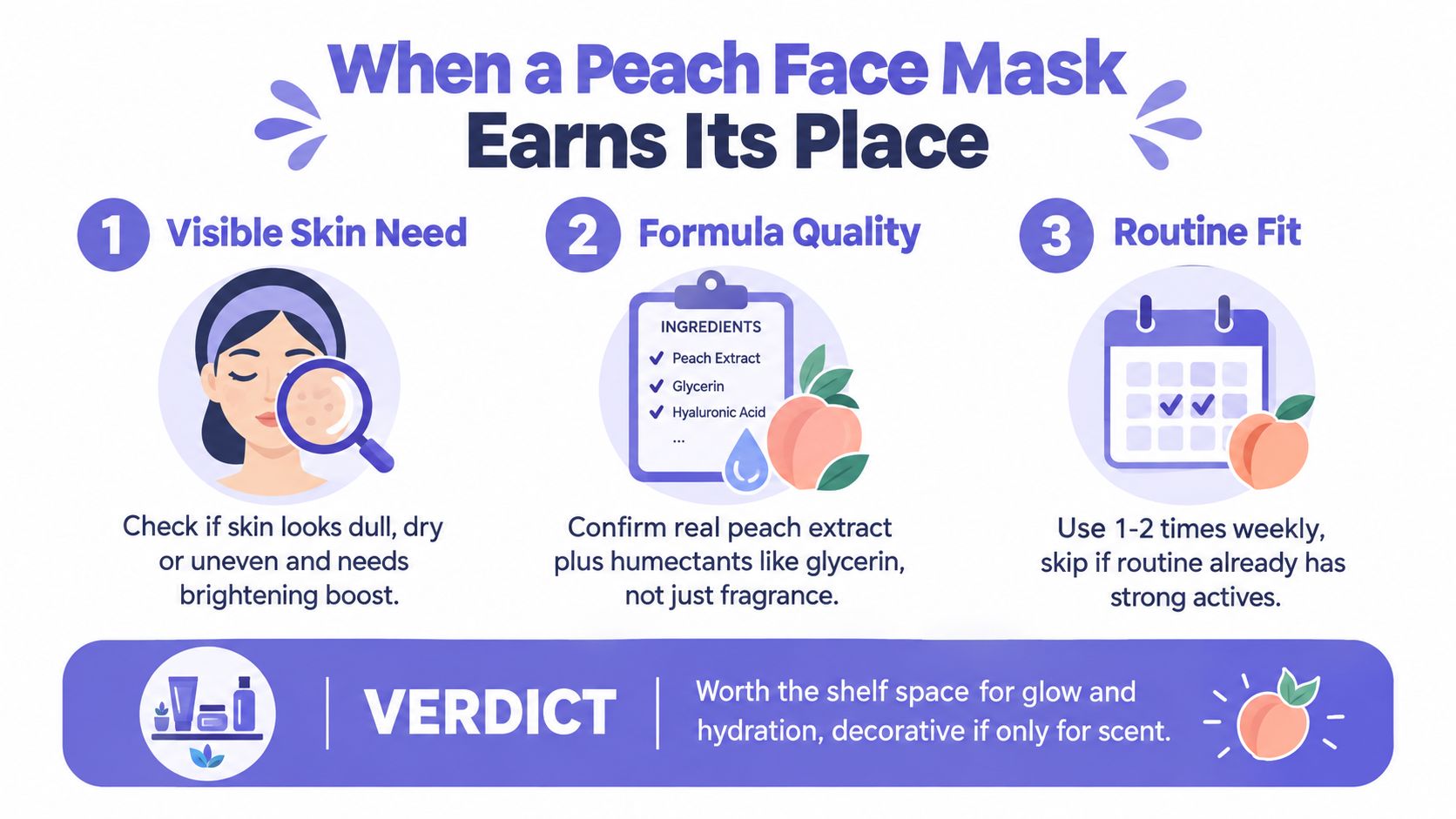
Start with three questions.
- What do you see and feel? If your skin looks dull, feels tight, or appears temporarily dehydrated, a hydrating mask may give you a useful cosmetic lift. If you're treating persistent acne, eczema, rosacea, or pigmentation, a fruit-themed mask shouldn't become your main treatment.
- What's in the formula? Look for a real peach extract or peach-derived active alongside humectants, soothing ingredients, and barrier lipids. If peach appears mainly through fragrance and color, treat the product as a sensory indulgence.
- Does it fit your routine? Hydrating formats can fit occasional weekly use, while acid-containing options deserve less frequent use and more caution. If your routine already contains strong actives, adding another exfoliating product may create irritation rather than progress.
Peach extract adds genuine value when it appears in a well-built formula with ceramides, squalane, niacinamide, glycerin, or panthenol. The botanical component may support antioxidant and conditioning goals, while the rest of the formula handles the immediate hydration and feel. That division of labor is normal cosmetic science, not a weakness.
A peach kernel oil formula can be unsuitable for someone with very oily or acne-prone skin, and anyone with stone-fruit or nut-related allergies should patch test carefully. Keep every product away from the eyes. If you want to understand why that area needs special care, this eye and lashes anatomy guide provides helpful context.
My final checklist is straightforward:
- Visible need: Your skin needs hydration, softness, or a temporary fresh appearance.
- Formula quality: Peach-derived ingredients appear alongside credible humectants or barrier-supportive ingredients.
- Tolerance: The product is fragrance-conscious and doesn't sting during or after use.
- Routine fit: You can use it without stacking several irritating actives.
- Expectation: You want comfort and glow, not a drug treatment or permanent wrinkle correction.
If the mask passes those checks, try it. If it fails, skip the fruit packaging and buy a straightforward moisturizer or barrier mask instead.
Choose a peach mask alternative based on your skin, not the scent
Healtsy offers skincare masks and routine products for concerns including dehydration, sensitivity, and combination skin—with options such as SVR B3 Masque Hydra Intensif, Rilastil Aqua Moisturizing Mask, and Filorga Hyalu-Filler Flash Mask. Compare formulas and shop pharmacy skincare based on your actual skin needs.
Shop Healtsy