


Anti Dandruff Shampoo with Salicylic Acid: How to Choose
The most common advice is to buy the strongest anti dandruff shampoo with salicylic acid you can find and wash with it every day until the flakes vanish. I don't agree with that, and after 16 years reading labels with shoppers I still don't. A higher percentage can lift thick scale, and it can also leave the scalp tight, dry, or stinging. Daily use is often more than the bottle intends.
I believe the useful question is narrower. Is the main problem stuck-on scale, or is it itch and recurrence that need a second active? This is the complete guide to reading the percentage, the contact time, and that second ingredient before you change your whole wash routine. I'm certain this will solve the guesswork of standing in front of three similar bottles and picking by the word "maximum" on the front.
Salicylic acid is a scale-clearing step inside a routine. It is not a complete fix for every kind of flaking. The label is the document I trust, not the marketing line.
How Strong Salicylic Acid Should Be on the Label
Most bottles marketed for dandruff sit between 1.8% and 3% salicylic acid. That is the permitted range in the FDA OTC Monograph M032 for products sold in the United States to control dandruff, seborrheic dermatitis, and psoriasis. I believe the label is the one document you should trust, because the front of the bottle almost never states a strength.
A 2% shampoo is about 20 milligrams per milliliter. A 3% shampoo is about 30 milligrams per milliliter. If one carton prints a percentage and another prints milligrams, you can line them up. U.S. listings show both 2% and 3% shampoos on the market, so "salicylic acid shampoo" is not one standard dose. Markets outside the United States do not always use the same labeling rules, which is why I read the active list rather than the product name.
| Label strength | Position against the FDA range | Practical reading |
|---|---|---|
| Below 1.8% | Under the FDA dandruff range | Check whether the product is marketed as a dandruff treatment or only as a cleanser |
| 1.8% | Lower limit of the range | About 18 mg per ml; a gentler starting point for thick scale |
| 2% | Inside the range | About 20 mg per ml; a standard mid-range strength |
| 3% | Upper limit of the range | About 30 mg per ml; stronger scale removal with a higher risk of dryness |
| Above 3% | Outside the FDA dandruff range | Confirm the label and directions with a pharmacist before use |
Where the number actually sits
Look at the active ingredients panel on the back. "Salicylic acid" in the product name does not tell you the dose. Instructions, contact time, and warnings stay specific to that formula, even when two bottles share the same percentage.
A higher number is not automatically better. Stronger scale removal can come with dryness or irritation, especially if you already wash often or your scalp feels tight after a normal shampoo. I would start inside the range, at the lower or middle band, unless thick adherent scale is the clear problem and the scalp is otherwise comfortable.
Before you buy, run four checks:
- Find the active: Confirm salicylic acid is in the active list, not only in a story on the front.
- Confirm the percentage: Place the bottle in one row of the table above.
- Read the directions: Note how long it should stay on the scalp.
- Read the warnings: Note eyes, broken skin, age, and when to stop.
Once those four lines are clear, you can say which strength band your bottle sits in.
How Salicylic Acid Loosens Scale on the Scalp
Scalp scale is like old wallpaper stuck down in layers. Salicylic acid loosens the paste so the layers can lift and rinse away. It does not repaint the wall.
At about 1% or higher, this keratolytic and desmolytic active weakens the material that holds scalp skin cells together, so adherent scale loosens. The Drugs.com salicylic acid monograph places 1.8–3% in the self-care range for dandruff and seborrhoeic dermatitis, and it is clear about the limit. The ingredient does not directly control excess oil or scalp microorganisms. A visible flake is not always the same problem.
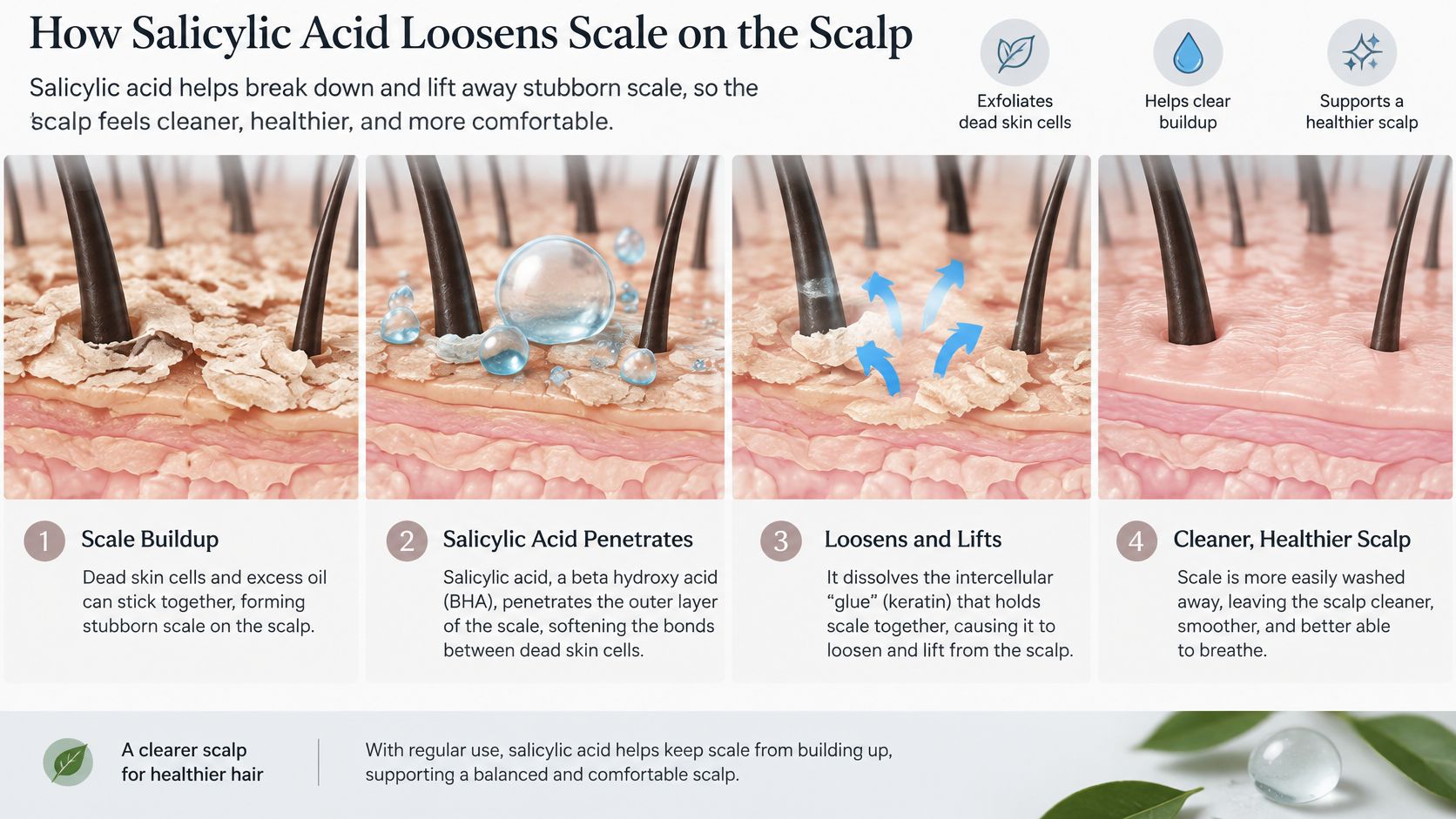
Thick, loose, or stuck flakes that ease across a fair trial of repeated washes point toward this active. Burning, crusting, marked redness, or hair loss point toward a professional look, not more exfoliation. Judge the bottle over several weeks of use as directed, not after one shower.
If curls feel dry while the scalp is flaky, Coil's guide to dry curly scalps is a useful companion, because scale care and moisture care are different jobs. The same active shows up in face care, which is why a read of the CeraVe SA Smoothing Cleanser helps you see salicylic acid as a targeted exfoliant, not an all-day scalp solution. Salicylic acid clears scale inside a broader routine. The partner active is what changes the kind of flaking you can reasonably expect to shift.
Salicylic Acid Compared with Other Anti-Dandruff Actives
I believe most shoppers pick the wrong active because they never ask what the second ingredient is for. Start with the roles, then match them to the flakes you see.
| Active | Main action | Best fit | Label note |
|---|---|---|---|
| Salicylic acid | Loosens and removes adherent scale | Thick, stubborn scale | Labelled 1.8% to 3% in dandruff products |
| Ketoconazole 2% | Antifungal against Malassezia yeast | Flaking linked to yeast, itch or inflammation | Check strength and directions on the label |
| Zinc pyrithione | Antifungal and antibacterial | Everyday maintenance and recurrence | Often found in combination formulas |
| Selenium sulfide | Antifungal; slows scale formation | Dandruff with itching or stubborn flaking | Often about 1% in dandruff shampoos |
| Ciclopirox olamine | Antifungal | Seborrheic dermatitis and persistent dandruff | Often paired with salicylic acid, as in the trial |
| Sulfur | Loosens scale with an antifungal effect | Oily scale | Used with salicylic acid in some studies |
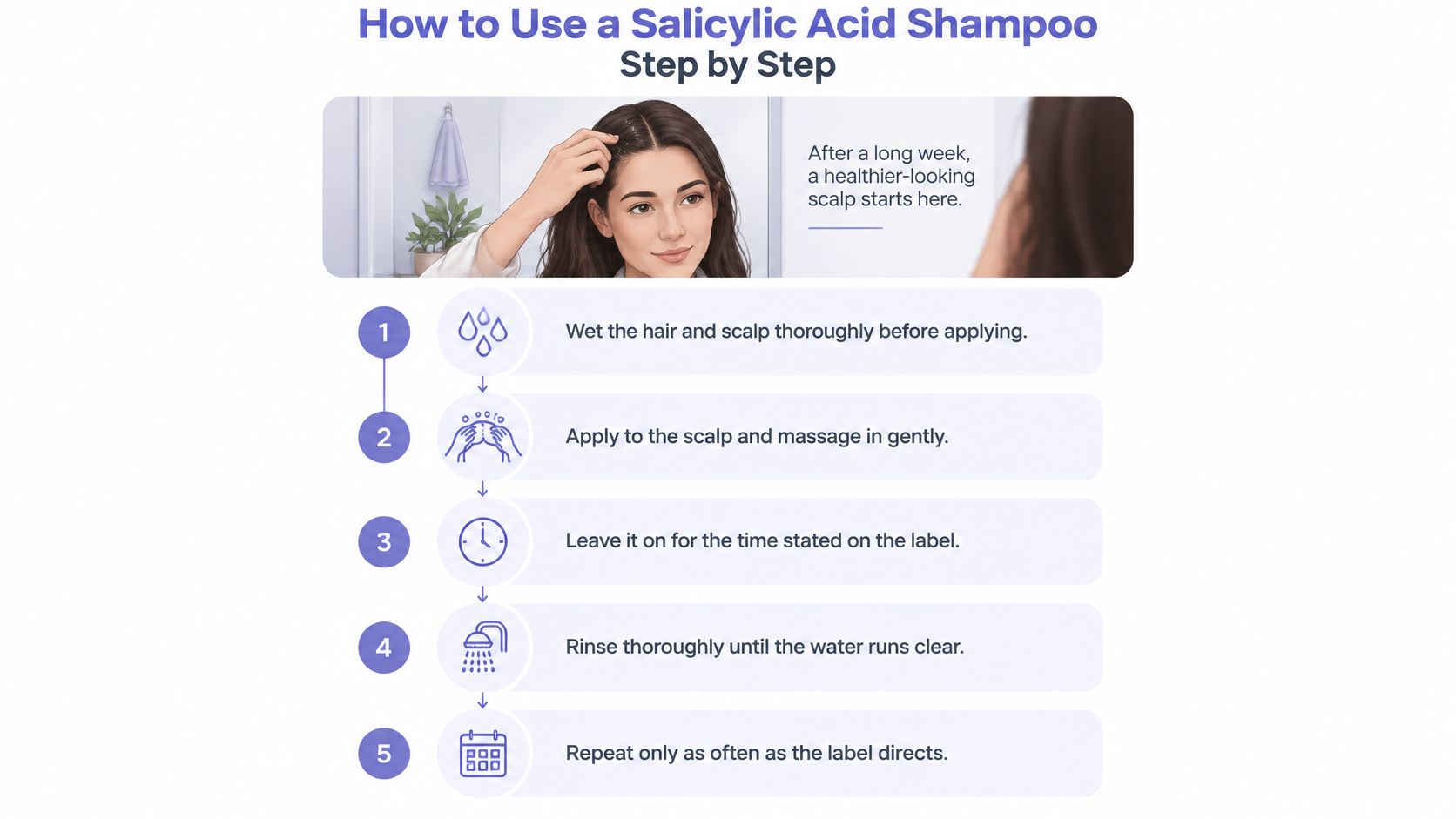
A wash only works if the lather reaches the scalp and stays there. The order below is the habit I want in place before you compare actives.
How I choose between them
A randomized, single-blind trial enrolled 154 people with dandruff, including 70 who also had seborrheic dermatitis, and compared a shampoo with 1.5% ciclopirox olamine plus 3% salicylic acid with a 2% ketoconazole shampoo. People used the products three times a week for four weeks. Both groups improved significantly in dandruff and seborrheic-dermatitis scores on day 29 and again on day 43, and the combination reduced itching in the seborrheic-dermatitis group at those points. The trial record tested one combination product, so those results should not be credited to salicylic acid alone.
Ask of any label, what is the second active, and is it intended for my kind of flaking?
If you want the wider cast of dandruff ingredients in one place, the guide to anti-dandruff shampoo ingredients lines them up without treating salicylic acid as the only answer. A short demonstration of a calm scalp wash makes the timing easier to picture than a paragraph does.
How to Use a Salicylic Acid Shampoo Step by Step
Say it is Friday, flakes sit along the hairline after a long week, and the hair itself still looks healthy. You want the scale gone without a stripped, squeaky finish. I believe the contact time is the step often skipped, and skipping it is why a good bottle gets blamed.
- Wet the hair and scalp thoroughly before applying. Water helps the lather reach skin at the hairline and crown. A dry patch of scalp never sees the active.
- Use about a coin-sized amount and divide it between your hands. DermNet's shampoo guidance describes roughly a 5–10 cent-sized amount. A huge palmful mostly coats the lengths.
- Massage gently into the scalp, not the lengths, for about 30 seconds to build a lather. Fingertips are enough. Hard rubbing does not loosen scale faster, and it can make a tender scalp angrier.
- Leave it on for the time on the label, often around 5 to 10 minutes, and time it. The American Academy of Dermatology notes that some formulas should stay on about 5 to 10 minutes, and the exact line varies by product and hair texture. A quick rinse gives the active almost nothing to do. If the scalp is dry or sensitive, start at the shortest time the label allows.
- Rinse thoroughly. Residue keeps working after you think the wash is over. Keep rinsing until the water runs clear, including the nape.
- Condition the lengths if they feel dry, never the scalp under the product. Conditioner protects the hair shaft. It should not be used to cover up a stinging scalp.
The American Academy of Dermatology also splits frequency by hair: about twice weekly for fine, straight hair or an oily scalp, and about once weekly for coarse, curly, or coily hair, with the shampoo kept on the scalp because these actives can dry curls. For recurring seborrhoeic dermatitis, DermNet's professional guidance describes medicated shampoo twice weekly for at least one month, then continued use only if needed.
| Hair or scalp type | Suggested frequency | What to watch for |
|---|---|---|
| Fine, straight hair or oily scalp | About twice weekly while using a dandruff shampoo | Tight or dry feeling; reduce frequency if it persists |
| Coarse, curly or coily hair | About once weekly, as tolerated | Apply to the scalp only, since dandruff actives can dry curls |
| Standard course for persistent dandruff | Twice weekly for at least one month, then continue only if needed | Stop and seek advice if irritation builds or nothing improves |
| Sensitive or irritated scalp | Start at the minimum contact time and the lowest frequency | Burning, redness or peeling means stop |
| Children under 2 | Not recommended | Ask a doctor before use for older children |
Scale that loosens across that trial, at the frequency in the table, means the routine is doing its job. No change means reassess the active, not scrub harder. On non-treatment days a mild shampoo is fine if the scalp stays comfortable. The Vichy Dercos shampoo notes are a helpful contrast when you are comparing how often a medicated wash belongs in the week.
If your scalp is already reactive, keep the safety checks in view while you time the wash.
Safety Limits, Side Effects and When to See a Doctor
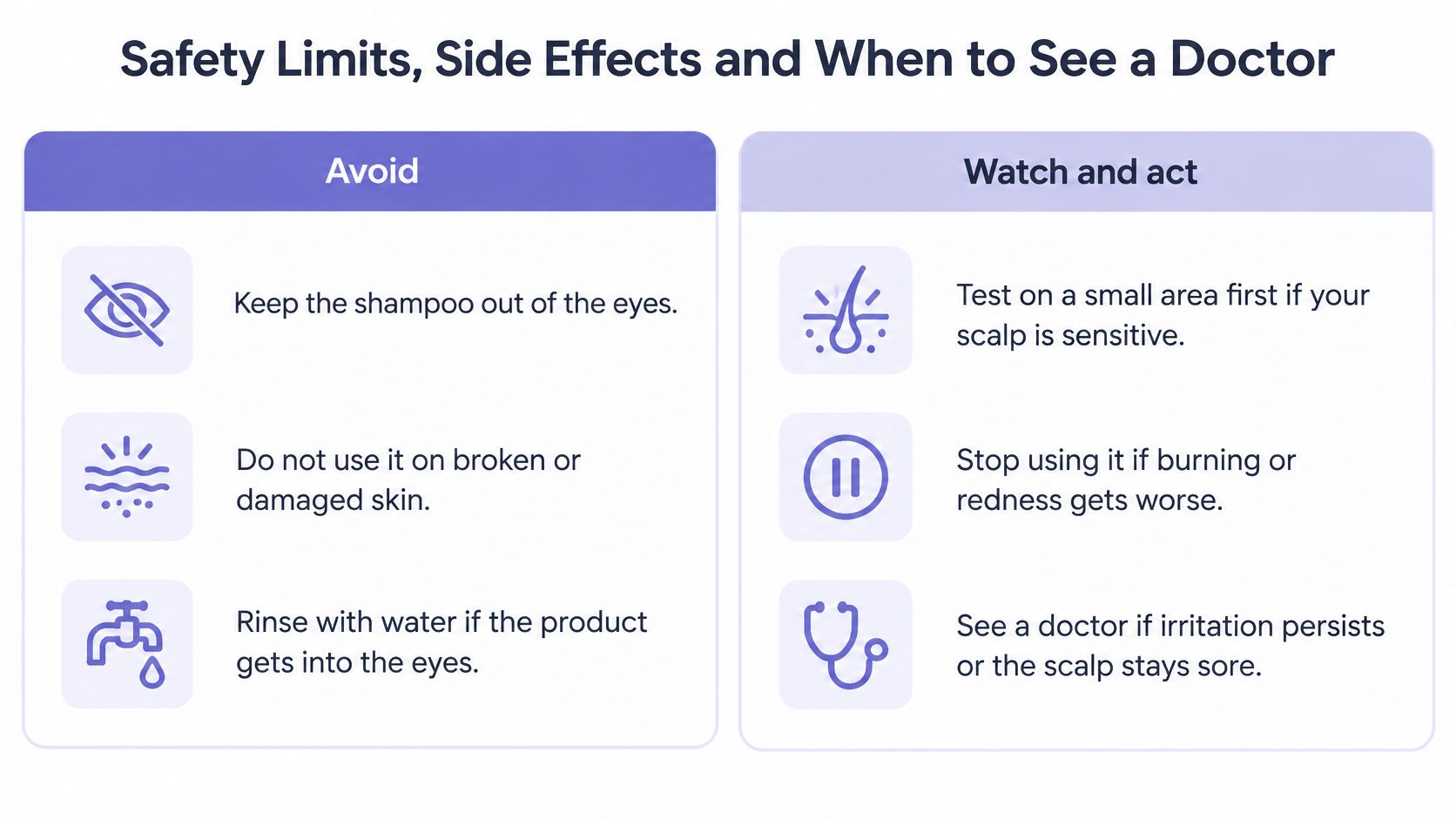
The ingredient's presence is rarely the problem. Cumulative irritation from overuse, long contact, or stacking exfoliants is. Mayo Clinic dosing guidance frames salicylic-acid shampoo for dandruff or seborrheic dermatitis as something generally used once or twice weekly, not at every wash.
Plain rules I use at the counter
- Eyes stay clear. Keep the shampoo out of the eyes, use it on the skin only, and rinse with plenty of water if any gets in.
- Broken skin is a stop. Do not put it on damaged or broken scalp without asking a clinician. Cleveland Clinic flags damaged skin and certain medical conditions as reasons to get advice, and it lists burning, peeling, redness, dryness, and allergic reactions as signs to watch.
- Young children are a separate case. Use is not recommended under two years, because young children have a greater risk of absorption and irritation. For an older child, ask a doctor before you start.
- Do not stack peeling agents. Do not use benzoyl peroxide, sulfur, or tretinoin on the same area unless a clinician directs it.
Say you already wash daily with a salicylic shampoo and then add a scalp scrub because the flakes are still visible. The scalp starts to sting. Drop the scrub first, then cut the shampoo back to the weekly rhythm on the label. More exfoliation is the wrong next move.
Thick scale with marked redness, crusting, or hair loss needs a professional assessment. If the scalp worsens, or nothing changes after a directed trial, stop and seek advice. The same caution applies when eczema and flaking overlap, which is why the shampoo notes for scalp eczema are worth reading before you add another active.
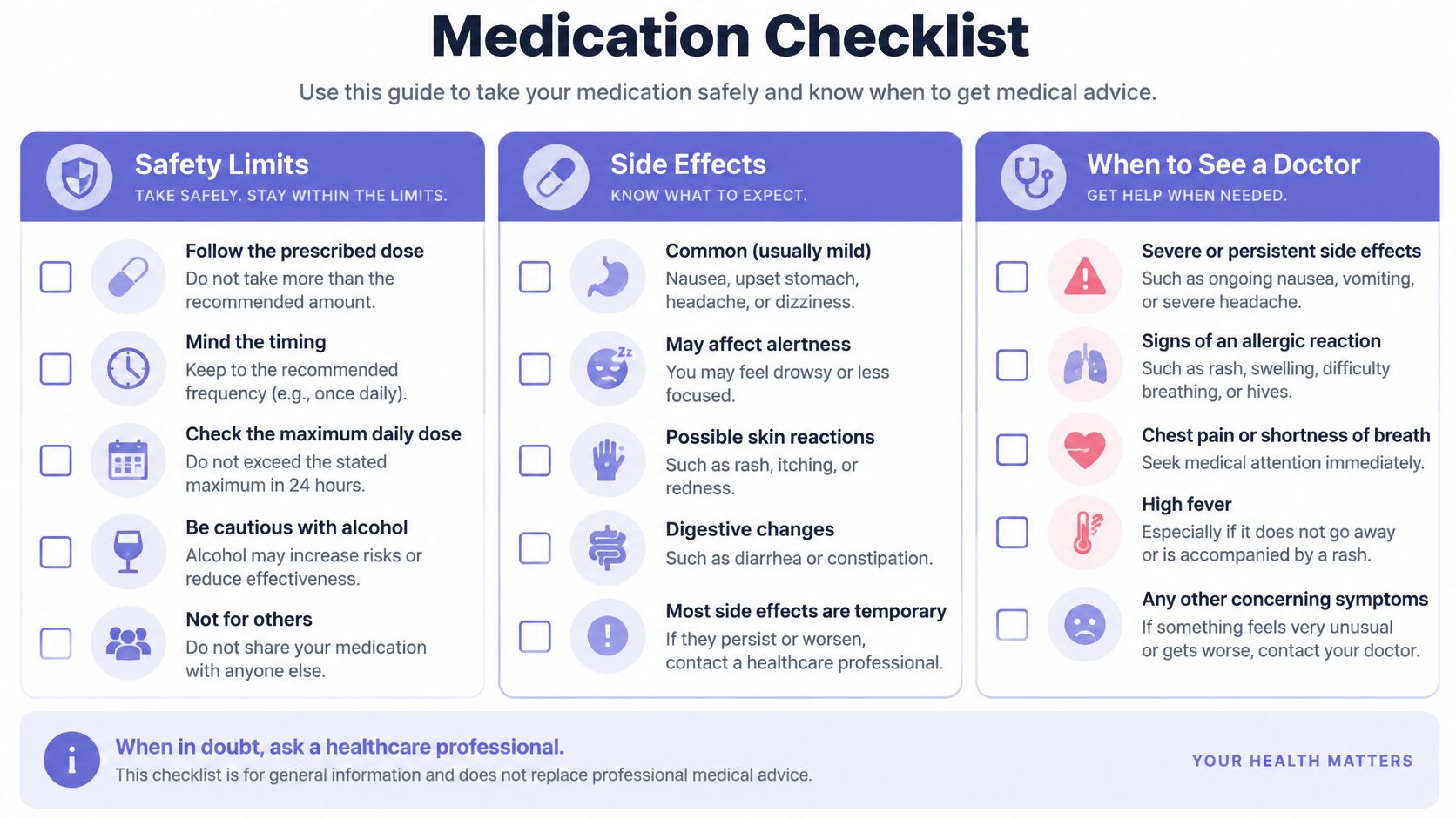
If the scalp stings, stop the stacking before you stop the shampoo.
Which Actives Pair Well with Salicylic Acid
Combinations are common, and the evidence supports them, but the pairing belongs in one formula. Two strong bottles on the same evening are how scalps get overworked.
In a double-blind study of 48 adults with moderate-to-severe scaling, people shampooed twice weekly for five weeks with a plain vehicle, 2% sulfur, 2% salicylic acid, or 2% sulfur plus 2% salicylic acid. The combination cut clinical scaling and corneocyte counts earlier and more than either active alone or the vehicle. The PubMed record of that trial is the clearest picture I know of an additive effect on visible flakes and shed cells. Newer work also reports benefit from a shampoo with 1% selenium disulfide and 0.9% salicylic acid for seborrhoeic-dermatitis symptoms. The lesson is the partner, not a race to 4%.
Two formulas and the flaking they fit
Novophane DS anti-dandruff shampoo 125ml pairs zinc pyrithione and piroctone olamine with salicylic acid. The antifungal complex is aimed at Malassezia-type yeasts, and the salicylic acid is there to reduce dandruff. I would reach for it when flakes come with itch or keep returning, including moderate dry or oily dandruff, and the scalp still tolerates a medicated wash. The foam is light and fragrance-free, which matters if scent itself irritates you.
Phyto Antidandruff Shampoo 250ml pairs salicylic acid and lactic acid with celery and rosemary extracts. Lactic and salicylic acids exfoliate dead cells, celery extract is positioned to limit recurrence, and rosemary extract is there to help protect the scalp from external stress. I match it to scale removal when you also want the scalp rebalanced and itching soothed, not when you are already layering peels. Because two exfoliating acids sit in one bottle, stay at the lowest frequency your scalp accepts, and do not add a scrub or another peeling product on top.
Ask one question before you open either bottle. Which second active is in this formula, and is it aimed at my kind of flaking?
Choose Your Shampoo and Start Your Routine This Week
Match the problem first. Thick, stubborn flakes call for a scale-focused routine. Flakes with itch or a pattern of coming back call for a formula that already includes an antifungal partner. You do not need a new checklist. You need the bottle whose second active fits that picture, used on a schedule your hair can live with.
We sell hair care for dandruff, a sensitive scalp, oily hair, dry hair, curls, and a long list of other hair concerns, so the wash can sit next to the rest of your routine instead of fighting it. If you are comparing options made for different hair patterns, the best anti-dandruff shampoo notes for women add texture and fragrance tolerance to the same decision. Shoppers who also look at Japanese scalp care can use Buy Me Japan dandruff care picks as a second opinion on routines, then come back to the percentage and the partner active on the carton in your hand.
The week-one plan
Judge flakes and comfort across that trial. Then ease to whatever frequency the scalp accepts without tightness. If scale is still stuck after the trial, or irritation builds, see a pharmacist or a doctor rather than raising the strength on your own.
Read the label today, place the percentage in the 1.8% to 3% band, choose the band that fits your flaking, and write the start date on the bottle. A fair trial needs a date, not a feeling.
Start from the bottle that fits your scalp
Healtsy is a European pharmacy shop shipping original hair and scalp care worldwide, including anti-dandruff shampoos chosen for the active on the label. If you are matching a salicylic acid formula to thick scale or to flakes that keep returning, browse the hair care with us and check strength, size, and directions before you wash.
Shop Hair Care