


You're looking at several white Uriage tubes, each promising high sun protection, and wondering which belongs on dry cheeks, an oily forehead or a child's shoulders. The names look similar, but buying the highest SPF won't settle the questions that matter once you're outside: how comfortably it spreads, what the UVA marking means and what survives a swim.
This is the complete guide to Uriage sun cream for that shopping pause, especially if you're buying a European pack from the United States or another non-EU market. I believe the most useful recommendation is the one you can apply to the exact carton in your hand, rather than a promise about an entire brand.
A French Pharmacy Sun Cream Worth Understanding
A familiar pharmacy name can make choosing feel easier. Still, the thermal-water story on a Uriage pack and the protection claims on its label do different jobs.
According to Uriage's thermal-water history, the dermatological brand was founded in 1992, around water from the French Alps that travels through rock for approximately 75 years and contains about 11 grams of minerals and trace elements per litre. The same account says its dermatological expertise is recognised in more than 70 countries, which helps explain why international shoppers encounter the brand.
Practical distinction: Heritage explains where a product comes from. The individual sunscreen label explains what you're buying.
Bariésun is Uriage's sun-care range, but the range name isn't enough to choose a formula. A cream that feels comfortable on dry cheeks may be less appealing across a shiny forehead, and an adult facial product shouldn't automatically become the family's children's sunscreen.
Start with the person and the day
Before comparing ingredients, establish the job you need the sunscreen to do.
- For your face: Consider dryness, shine, makeup and whether the finish encourages a generous application.
- For exposed body skin: Think about spreading it evenly across shoulders, arms and legs, not just how quickly the bottle dispenses.
- For a child: Check the intended age group on the actual pack rather than relying on familiar branding.
- For outdoor activity: Read the water-resistance wording before treating it as a beach or sports option.
I would start with those questions, then check the texture, filter list and protection markings. They turn a shelf full of similar tubes into a manageable choice without assuming every Bariésun formula is interchangeable.
Which Bariésun Cream Fits Your Skin
Uriage Bariésun sun creams by skin and day
| Variant | Texture | Filter style | Labelled SPF | Best starting fit |
|---|---|---|---|---|
| Bariésun Cream SPF50+ | Rich cream | Organic multi-filter | SPF50+ very high | Normal to dry face and body |
| Bariésun Ultra-Light Fluid SPF50+ | Light fluid | Confirm filters on the current ingredient list | SPF50+ very high | Oily or combination face and humid days |
| Bariésun Invisible Spray SPF50+ | Spray | Confirm filters on the current ingredient list | SPF 50 | Body coverage and reapplication after an even first coat |
These are starting fits, not guarantees of how your skin will respond. It's unlikely that everyone requires every texture in the range. They need one they'll spread properly and feel comfortable using again later.
Choose comfort without sacrificing coverage
Start with the cream if your skin feels tight or dry. A richer texture can make application more comfortable across dry cheeks and exposed areas of the body. The trade-off is the finish: what feels reassuring on dry skin may feel heavier on an oily T-zone, especially in humid weather.
Start with the fluid if a noticeable film makes you use less. Bariésun Ultra-Light Fluid SPF50+ is the lighter-format option to consider for a combination or oily face and for wearing beneath makeup. A SkinSort product analysis of the Ultra-Light Fluid associated an SPF rating of 50 with approximately 98.0% UVB protection; that's a UVB estimate, not a measurement of every aspect of sun protection.
If blemishes complicate the choice, the practical criteria in our guide to sunscreen for acne-prone skin can help you judge finish and routine compatibility. Don't interpret a light texture as proof that a product cannot irritate your skin or contribute to breakouts.
Consider the spray for body application, not invisible application. Bariésun Invisible Spray SPF50+ offers a convenient dispensing format, but the skin still needs an even coat that you rub in. The SkinSort analysis of the Invisible Spray reports an SPF rating of 50, associated with approximately 98.0% UVB protection.
Keep separate products in their proper roles
The eye-care image below shows a different product category, not a Bariésun sunscreen or an alternative to sun protection.
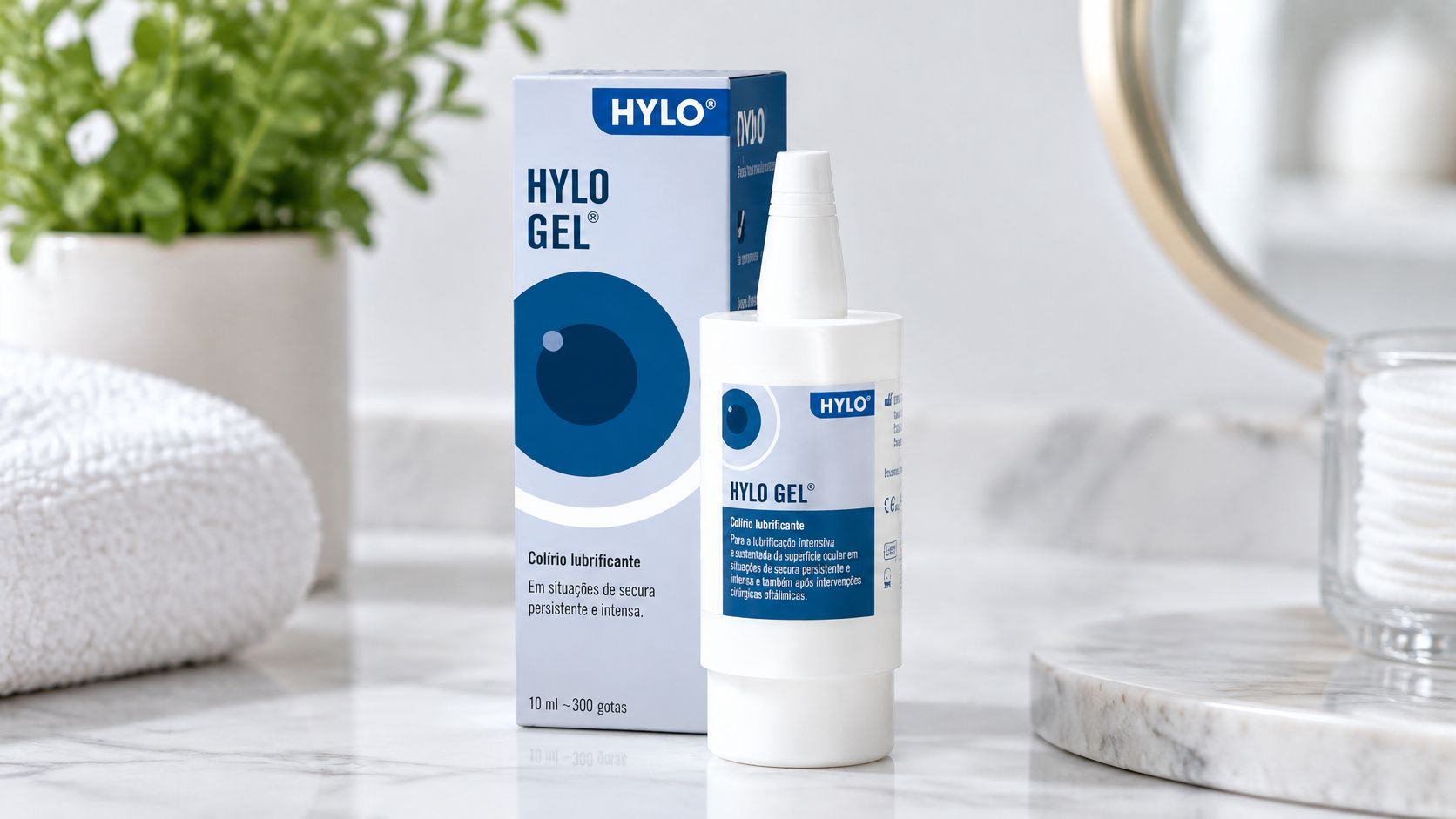
Hylo Eye Lubricant Eye Gel - 10ml is a gel-like eye lubricant intended for prolonged ocular-surface moisturisation in chronic, excessively dry eyes. It isn't sunscreen, and choosing an eye lubricant doesn't resolve sunscreen stinging or make a facial formula suitable for use close to the eyes.
For the sunscreen itself, match the format to your skin and activity, then verify the size, intended age and claims on the current pack. Similar product names across markets aren't enough to establish an identical formula.
What SPF50 Plus and the UVA Logo Mean
SPF and UVA protection answer different questions. A large SPF number is useful, but it shouldn't be the only part of a European sunscreen label you read.
The distinction is easier to recognise when the markings sit side by side.
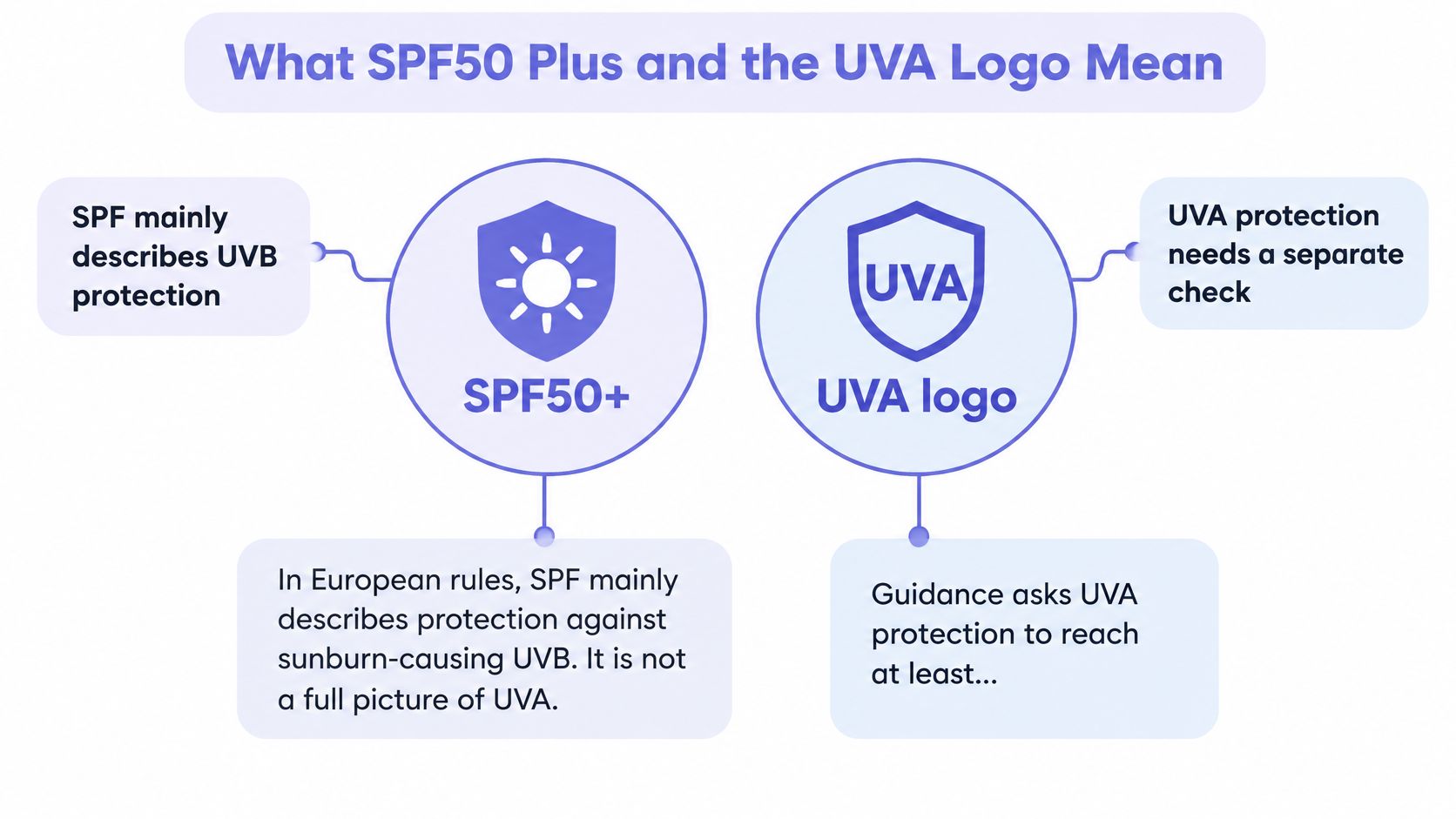
The European Commission's sunscreen guidance explains that SPF primarily measures protection against sunburn-causing UVB and recommends UVA protection of at least one-third of the labelled SPF, assessed using standardised methods. Its ratio gives an approximate UVA protection-factor benchmark of 16.7 when calculated from SPF 50, but that isn't a published test result for an individual Bariésun tube.
Read the circular UVA mark separately
The European Commission's sunscreen recommendation also specifies a critical wavelength of 370 nm and protection categories that place SPF 30 in high protection and SPF50+ in very high protection. These are labelling categories, not permission to stay outdoors until your skin changes colour.
The Commission's explanation of sunscreen labelling identifies the circular UVA logo developed by Cosmetics Europe as a way to indicate compliance with the recommended minimum UVA protection. The logo communicates that criterion, rather than necessarily revealing the product's exact UVA protection factor.
A higher SPF doesn't automatically answer the UVA question. Look for separate evidence on the pack.
For a commuter, that distinction is practical rather than technical. You're choosing protection for the exposed skin around your daily travel and working environment, not trying to avoid obvious redness during a holiday.
What a US shopper should verify
The FDA's sunscreen guidance explains that US broad-spectrum products protect against both UVA and UVB. A European UVA circle is useful European label information, but it doesn't mean the product is FDA-approved or identical to a US sunscreen.
Check these elements together:
- SPF: Read the actual protection number and category.
- UVA indication: Look for the circular mark or clear supporting claim on the current pack.
- Market-specific information: Match the ingredient list and directions to the version you're ordering.
Our explanation of the difference between UVA and UVB provides more context for interpreting those terms.
For another way to approach the topic, this video can accompany your label check.
Don't convert a laboratory SPF into a fixed allowance of safe minutes outside. Your application, activity and exposure conditions aren't a controlled test.
Organic Filters Mineral Creams and Texture
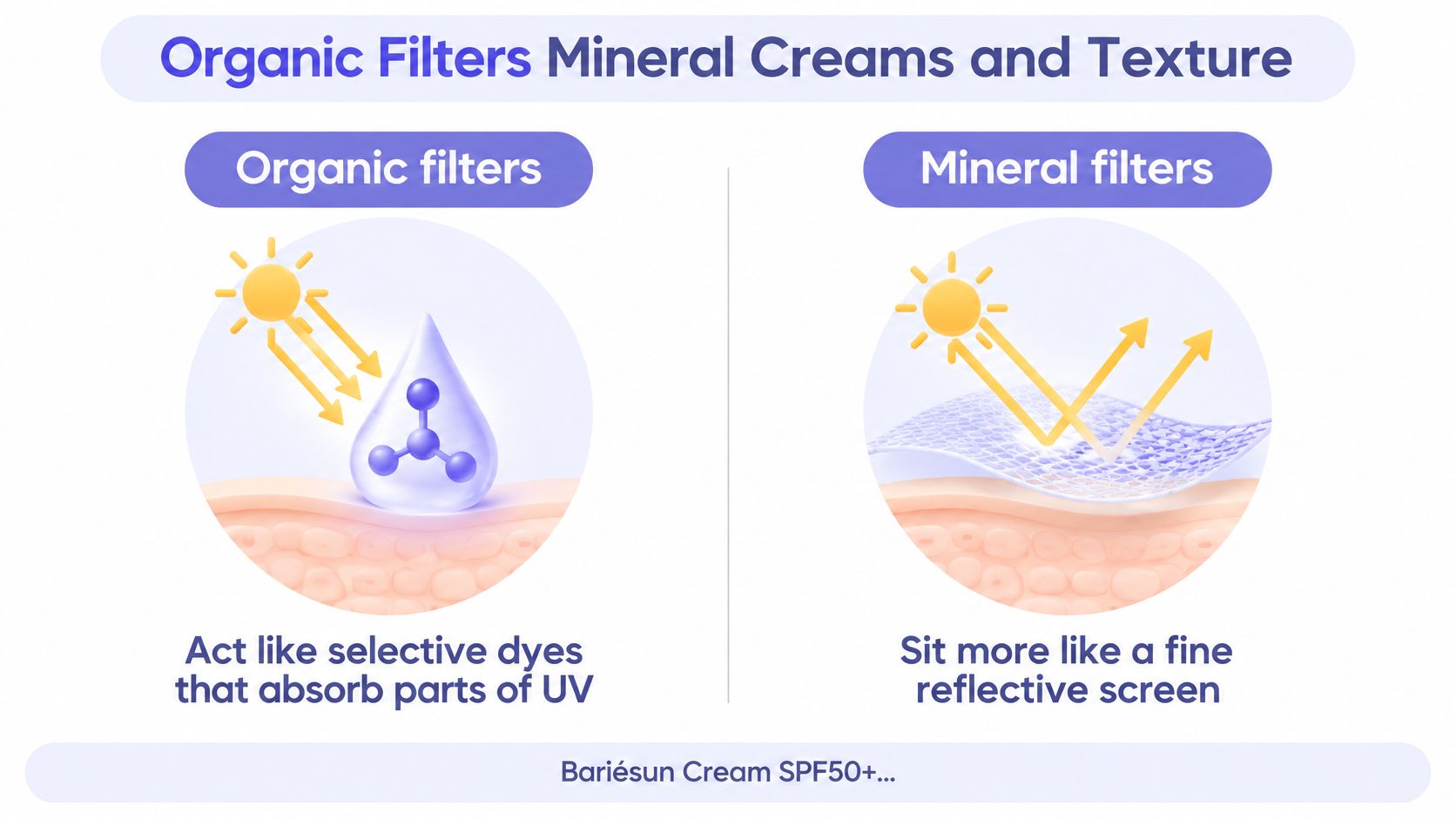
Organic filters absorb ultraviolet radiation. A useful mental picture is a set of selective dyes, each handling a particular part of the UV range. Here, organic describes the filter chemistry, not organic farming or a guarantee of gentleness.
Mineral filters are often pictured as a fine screen. That picture is incomplete: mineral sunscreens also absorb UV, so it's misleading to describe them as working only by reflection.
The diagram offers a simple comparison, with that limitation in mind.
What the Bariésun cream filter list tells you
The published Bariésun Cream SPF50+ ingredient list describes a multi-filter organic system containing diethylamino hydroxybenzoyl hexyl benzoate for UVA, ethylhexyl methoxycinnamate and ethylhexyl salicylate primarily supporting UVB protection, ethylhexyl triazone for UVB, and bis-ethylhexyloxyphenol methoxyphenyl triazine covering UVA and UVB.
You don't need to memorise those names. Their practical significance is that the formula divides the work among filters with different absorption ranges rather than asking one ingredient to cover everything.
Uriage describes this system as photostable, with UVA and UVB coverage. Photostability concerns how the filter system behaves under light; it doesn't make the layer immune to rubbing or mean the cream blocks all ultraviolet radiation.
Choose the whole formula, not a filter slogan
Mineral and organic aren't reliable shortcuts for good and bad. A sensitive-skin shopper needs to consider the complete formula and their own tolerance, rather than assuming a filter category settles the decision.
| What you notice | Practical response |
|---|---|
| Dry cheeks feel uncomfortable after application | Consider a more comfortable cream texture rather than reducing the amount |
| An oily forehead feels coated | Try a lighter finish and allow skincare underneath to settle |
| A mineral formula leaves a visible cast | Assess it at a proper application amount, not a tiny test dab |
| A product stings or causes persistent irritation | Stop using it and seek advice about a suitable alternative |
A white cast can be more noticeable on deeper skin tones. Blending may improve the finish, but rubbing a product almost completely away to hide it isn't a useful solution.
Our mineral versus chemical sunscreen guide can help separate filter preferences from marketing language. I would prioritise a well-tolerated, wearable formula with clear protection claims over choosing by one reassuring word on the front.
Finally, read the current INCI list, meaning the ingredient list, on the carton. A formula described for one market or variant shouldn't be copied onto another just because both carry the Bariésun name.
How Much Cream a Real Morning Needs
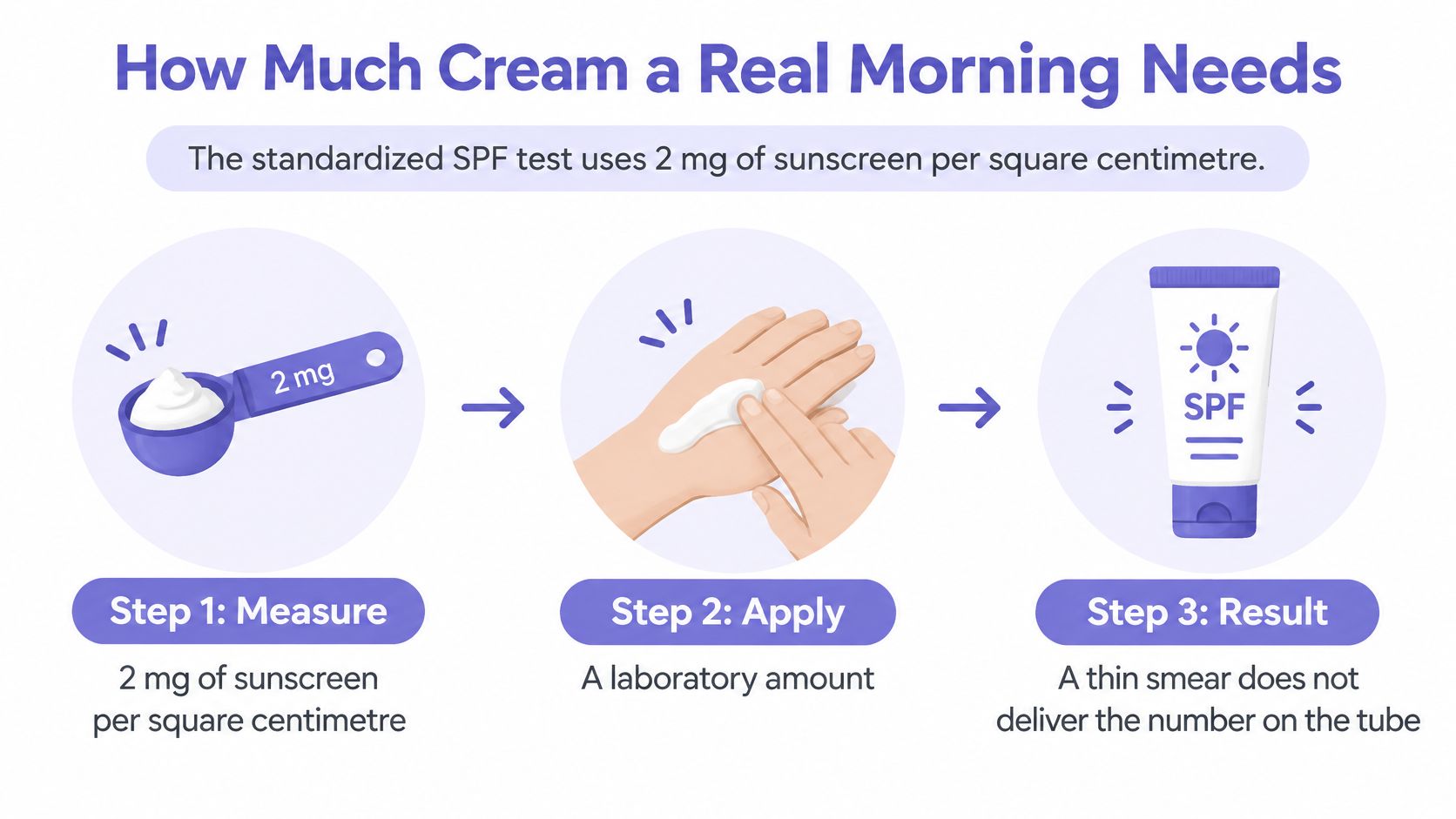
The FDA's standardised SPF test applies sunscreen at 2 mg per square centimetre of skin. That measured layer is part of the test conditions behind the protection number, so a thin cosmetic smear shouldn't be treated as equivalent.
The practical aim isn't to turn your bathroom into a laboratory. It's to cover exposed skin deliberately, without stretching a small dab until you can barely tell where it went.
This application visual shows the relationship between amount and the labelled result.
Build a routine that leaves an even film
- Start on dry skin. Finish your underlying skincare, then apply sunscreen before exposure according to the pack's directions. Don't mix it into moisturiser or foundation to make it easier to spread.
- Work methodically. Spread it across the face, then deliberately cover the hairline, ears, jaw and exposed neck. Use it near the eyelids only if the product's directions allow that application.
- Check the edges. Look for missed patches around facial hair, straps, clothing edges and the backs of your hands.
- Let it settle. Give the layer time to form before applying makeup or pulling clothes across it. Patting makeup on gently is more practical than repeatedly rubbing the surface.
- Make later application possible. Keep the sunscreen accessible instead of leaving it in a bathroom while you spend the day outside.
Finger-length advice can be a useful reminder to use more than a dab, but it isn't a universal measurement. Nozzle width, product consistency and the area you're covering all affect what comes out.
Solve the awkward parts of a real day
Say you apply a facial fluid before commuting, then go outdoors again for lunch. The useful question is whether your routine allows you to renew the exposed areas, not whether the original finish still looks neat beneath makeup.
For a family outing, tackle body coverage before everyone is moving around. A spray can be convenient, but dispensing it towards legs in a breeze makes it difficult to judge where the product has landed.
Application check: An even, deliberate coat is more useful than a fast mist you can't see or assess.
Use your hands to spread the product and check for untreated stripes. For facial application, follow the spray's directions rather than spraying towards the eyes or breathing in the mist.
Our guide to how to apply sunscreen on your face can help fit this into a skincare routine. I believe wearability matters most when it makes the next application realistic, rather than merely making the first application pleasant.
Water Sweat and Hot Climate Days
Water resistant isn't waterproof. That distinction matters more on a beach holiday than whether the product felt beautifully dry when you left the hotel.
The FDA's sun-safety advice distinguishes 40-minute and 80-minute water-resistance claims, states that no sunscreen is waterproof, and advises reapplication at least every two hours, as well as after swimming, sweating or towel drying according to the applicable directions.
A European Uriage carton may use different wording. If no duration is printed, don't borrow a duration from a US product or assume the longest test period applies.
The towel matters more than the holiday plan
Consider a beach morning: you apply sunscreen, swim, dry yourself thoroughly and settle onto a lounger. The towel can disturb the protective layer, so the fact that you applied before leaving your accommodation doesn't settle what you need now.
A runner faces a similar problem in humid heat. Wiping a wet forehead with a sleeve can remove product along with sweat, particularly around the hairline and temples.
- After a swim: Follow the pack's reapplication directions rather than waiting for your skin to feel unprotected.
- After towel drying: Treat the dried area as needing a fresh application.
- During heavy sweating: Pay attention to wiping and friction, not just time spent exercising.
- During a hot Gulf afternoon: Use shade, covering clothing and a hat rather than expecting sunscreen alone to carry the whole day.
Treat the claim as a test result
Water resistance describes performance under a specified test. It isn't a promise that the same layer will survive repeated swimming, sweat, a towel and clothing friction without attention.
Treat the towel as a reset, not as evidence that the sunscreen has stayed in place.
I'm certain this distinction resolves much of the waterproof confusion: the claim tells you something useful about durability, but your activity still determines when the layer needs renewing.
Our guide to water-resistant sunscreen for swimming helps connect pack wording with pool and beach routines. Before an outing, keep the product where you'll use it, beside your towel or in your day bag, rather than somewhere inconvenient to reach.
Confirm the Pack Before You Order
The best purchase decision ends with the live product information, not a remembered tube or an attractive texture description. You want the formula and format you chose, with directions you can follow in the conditions where you'll use it.
For international buyers, this is especially important when similar names appear on different regional packs. A translated product title isn't enough to confirm that the ingredient list, intended user and claims match.
A final shopping check
- Match the full name. Confirm whether you're ordering the cream, fluid or spray, rather than relying on the Bariésun range name alone.
- Read the protection markings together. Check the SPF figure and the UVA indication on the same current pack.
- Verify the intended user. For a children's product, read the age information explicitly. Don't infer suitability from a family-oriented photograph.
- Check the ingredients. Make sure the filter system and other ingredients suit what you're trying to buy.
- Read the activity claims. Note the exact water-resistance wording without adding assumptions.
- Choose a practical size. Consider the areas you'll cover and how readily you'll carry the container for later application.
Separate authenticity from suitability
An original product can still be the wrong texture or intended age group for your household. Authenticity and suitability are separate checks, and both deserve attention before ordering.
Our products are sourced through authorised distribution, and a pharmacist reviews product information. We ship from Europe by DHL to customers worldwide, with import duties included for the main non-EU markets; review the destination-specific checkout information rather than assuming every country has identical arrangements.
I would also avoid choosing a larger container solely because it looks economical. A bottle that stays at home while you spend the day outside is less practical than a format you'll carry and use.
Before paying, compare the pack image with the written description. If they appear to describe different versions, resolve that discrepancy before relying on a particular ingredient or claim.
Choose the right formula, then make enough coverage and renewal part of the day. Shade, clothing and a hat still belong in the plan after the sunscreen arrives.
Healtsy offers European pharmacy sun care, including face, body, lip, baby and kids sunscreen, alongside after-sun products, and carries Uriage among its brands. Visit Healtsy to review current product details and delivery options for your destination, then match the exact pack to your skin, intended user and outdoor plans before ordering.