


A parent comes to the pharmacy with a box of papa sem lactose in one hand and a worried question in the other: “Can I give this to my baby?” The short answer is that the label alone can't tell you whether it fits your reason for avoiding lactose. Lactose-free, milk-free and vegan are different outcomes, and choosing well means looking beyond the front of the pack.
This is the complete guide to papa sem lactose, from reading European cereal labels to preparing a bowl at home. I believe careful label-reading is the most useful habit I can share from my 16 years in the sector. I'm certain it can help you ask a more precise question before the first spoonful: are you avoiding lactose, all milk ingredients, or every animal-derived ingredient?
Why Papa Sem Lactose Is Not the Same as Dairy Free
At the counter, a parent may point to “sem lactose” and assume it means the product contains no milk. That assumption can lead to the wrong choice. “Sem lactose” means lactose-free, but it doesn't automatically mean milk-free or vegan.
Lactose is the natural sugar in milk. The body uses an enzyme called lactase to break it down into simpler sugars it can absorb. When there isn't enough lactase, undigested lactose passes into the large intestine, where bacteria ferment it and produce gas. That process can lead to bloating, abdominal discomfort, rumbling, flatulence, nausea or diarrhoea, and sometimes constipation. NHS inform's explanation of lactose intolerance describes the mechanism and symptoms.
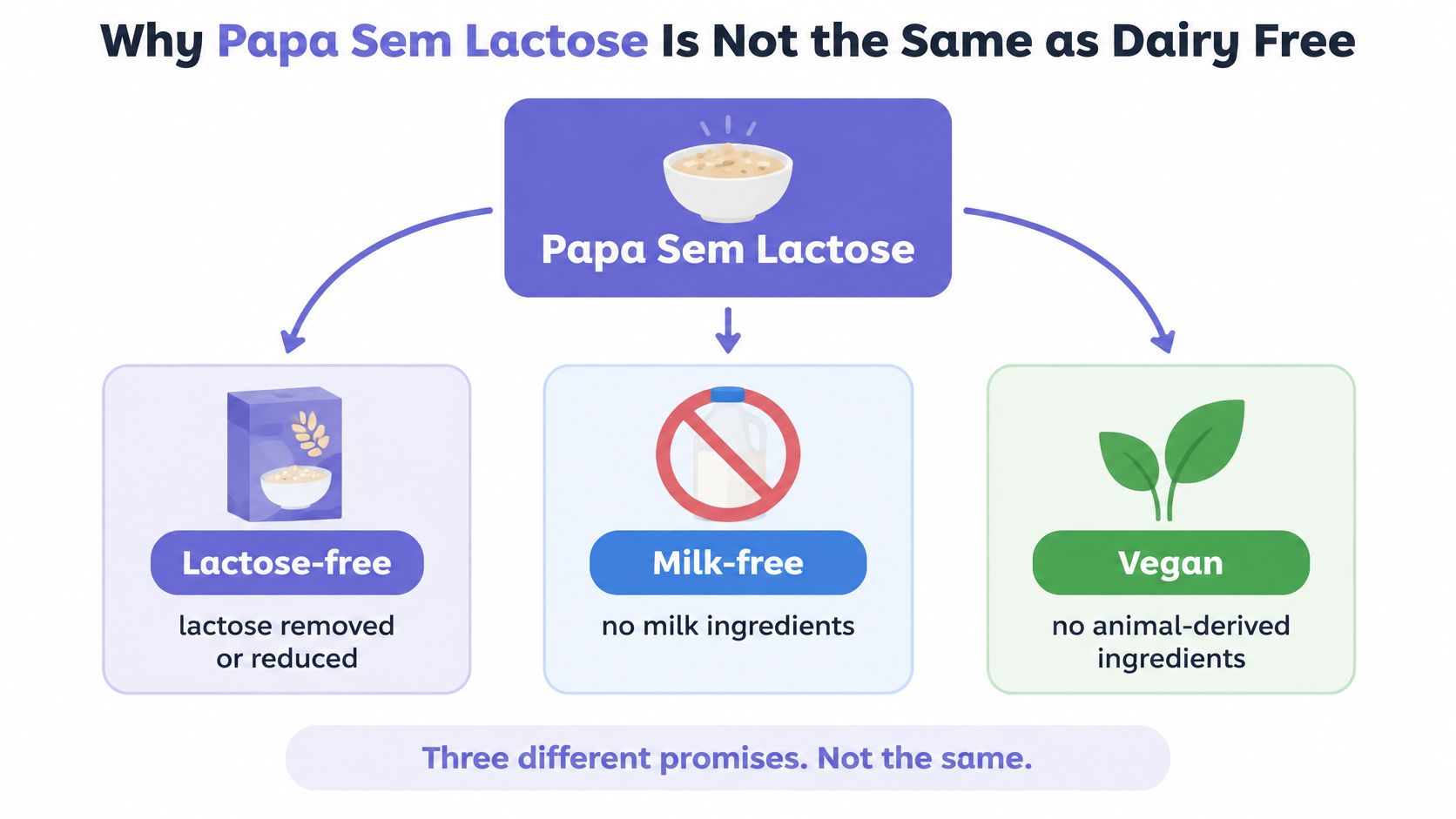
Three labels, three different questions
- Lactose-free: The food has no lactose, or its lactose has been reduced or broken down. It may still contain milk proteins.
- Milk-free: The food contains no milk ingredients. This is a different consideration for someone with a milk-protein allergy.
- Vegan: The food contains no animal-derived ingredients. A vegan product is generally milk-free, but check the complete ingredient and allergen information on the package.
A child with lactose intolerance and a child with a milk-protein allergy don't necessarily need the same food. Lactose-free cow's milk is still milk, even though lactase helps break down its lactose. Removing lactose doesn't remove milk proteins. If allergy is a concern, don't use a lactose-free label as a safety guarantee; discuss the child's symptoms and diet with a health professional. Unexplained digestive symptoms also deserve proper assessment rather than an automatic lactose-intolerance diagnosis.
Parents sometimes connect feeding discomfort with colic. A guide to baby colic symptoms, causes and ways to relieve discomfort can help with general context, but a product label can't diagnose the cause of a baby's symptoms.
Practical rule: Decide what you need to avoid before you shop. Then check the ingredients and allergen statement, not just the large words on the front.
Reading a European Cereal Label Like a Pharmacist
A parent stands in the aisle holding two boxes that both say sem lactose on the front. One is mixed with water, the other with the baby's usual milk, and the ingredient lists tell two different stories. The large print can't tell you any of that. After years behind a pharmacy counter, I read a cereal pack in a set order, because each detail answers a different question: what's in it, who it's for, and how it's meant to be prepared.
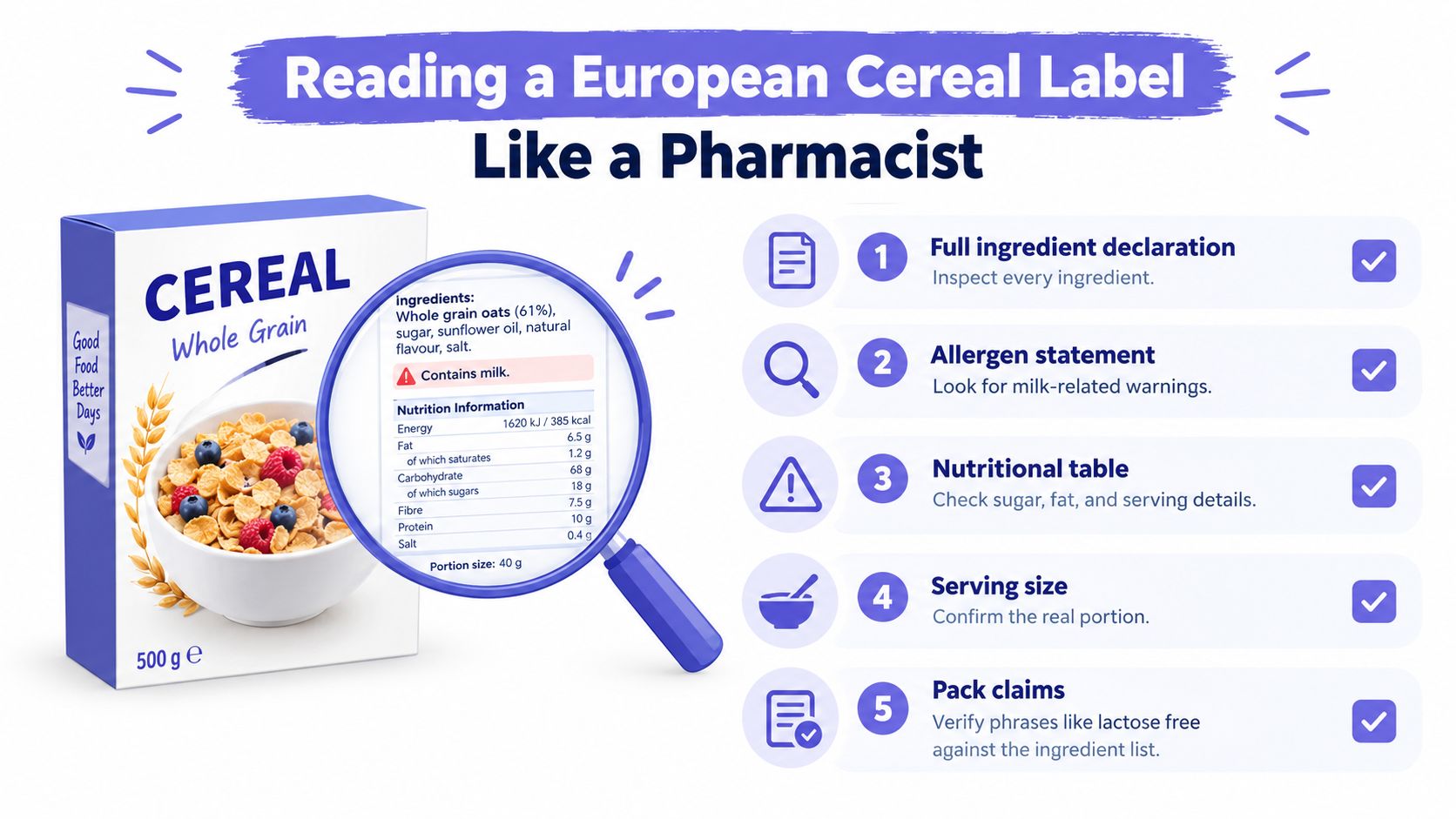
Check the details that change the choice
- Read the complete ingredient declaration. Look for the cereal base and any milk-derived ingredients. An allergy-related decision needs the full list, not a guess based on the product name.
- Read the allergen statement. Check for milk and any other relevant allergens. The declaration matters even when the front of the pack says lactose-free.
- Find the preparation liquid. The directions may call for water, breast milk or the baby's usual milk. That choice changes what ends up in the bowl.
- Confirm the minimum age and serving guidance. A cereal's stated age and preparation quantities are product-specific.
- Check pack size and storage directions. These help you plan use after opening.
Two Portuguese products show why this order matters. Nutribén Primeira Papa Sem Lactose comes in a 250 g pack labeled for babies from 4 months, with a stated cereal base of maize and rice. The pack itself describes the cereal as containing no lactose, no milk traces, no gluten, no added sugar and no palm oil. The part parents miss sits in the directions: the cereal is prepared with the baby's milk, so the finished bowl can still contain milk even though the powder doesn't.
Nestlé Expert Sinlac reads differently. The Nestlé Expert Sinlac listing describes a 250 g cereal for babies from 4 months that is prepared with water, with a composition of 71.7% hydrolysed rice flour and 17.3% carob-seed flour plus vegetable oils, minerals and vitamins. The same listing states it contains no milk, lactose, gluten or soy, adds no sugars, and includes iron, zinc and vitamins A, B1 and C.
Same two-word promise on the front. Different cereal base, different allergen profile, different liquid in the bowl.
I'm certain that once a parent has run this audit on two products side by side, they never shop from the front panel again. For another example of how European baby cereals are named, you can compare Nutribén gluten-free multifruit cereal, then check that product's own label rather than assuming its ingredients or preparation match the examples above.
If a healthcare professional has discussed lactase with you, Coliprev Oral Solution Drops - 15ml is described as an enzyme supplement indicated for babies from birth. Its stated enzyme, lactase of plant origin, facilitates the hydrolysis of lactose in milk. It isn't a substitute for checking whether a cereal is suitable for an allergy-related diet.
Making Lactose Free Baby Porridge from Scratch
Homemade porridge gives you control over the ingredients and texture, but the liquid choice deserves as much thought as the cereal. A simple method is to choose a cereal base, decide what liquid is appropriate for your baby, cook until smooth, then cool before serving.
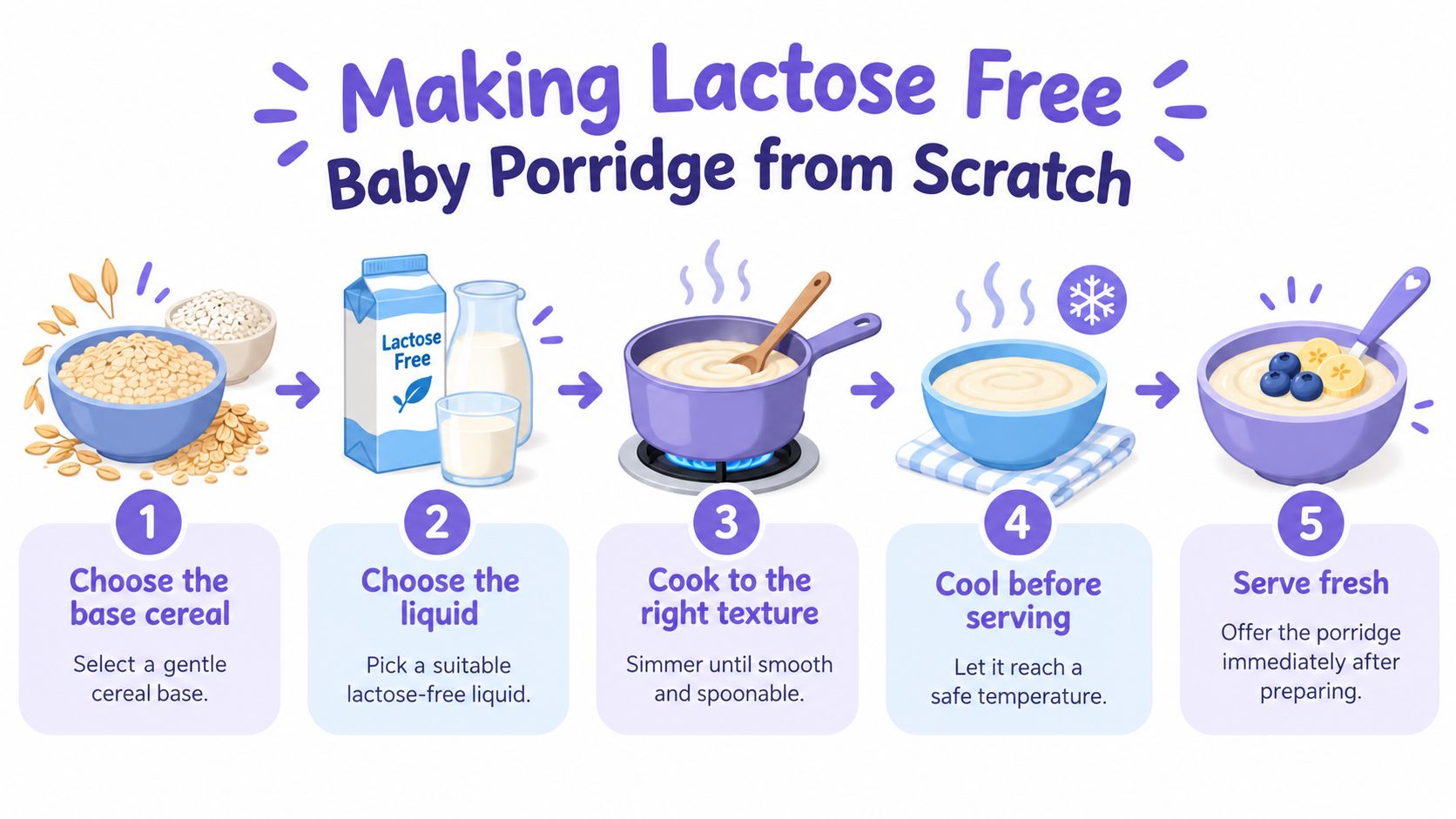
Choose a base and build the texture
For an early introduction, use a suitable single-grain base such as rice or maize, following age guidance from your child's healthcare professional and the cereal's package instructions. Once the baby is managing the first cereal, you can consider mixed cereals if they suit the child's needs and the ingredient and allergen information checks out.
Cook the cereal with the chosen liquid according to the product directions, stirring as it warms so it doesn't clump. If the mixture is too thick, loosen it gradually with a little more of the same suitable liquid. If it's too thin, allow it to cook a little longer where the product directions permit, then check the consistency again. Aim for smooth porridge that's easy to offer from a spoon, and let it cool before serving.
The liquid isn't an interchangeable detail. Lactose-free cow's milk contains milk, so it may suit a child avoiding lactose but not one who must avoid milk proteins. Water can work with a cereal formulated to be prepared that way, such as Sinlac, but a homemade cereal cooked with water isn't nutritionally equivalent to one made with milk or a fortified plant drink.
Keep new ingredients traceable
Introduce one new ingredient at a time so that, if a reaction occurs, it's easier to identify what was added. For a milk-free or vegan bowl, inspect every ingredient you use, including the cereal and any flavourings. Watch for milk powder, whey, butter, cream and milk-derived flavourings, and follow allergy advice from your child's healthcare professional.
Don't assume a homemade bowl is allergy-safe because it looks simple. The ingredient list and preparation environment still matter.
Prepare the porridge fresh, cool it before offering, and serve it promptly. The video below shows a practical preparation demonstration; use the directions on your chosen product and your child's feeding guidance where they differ.
Choosing the Right Milk or Plant Drink for the Bowl
There isn't one best liquid for every family. The right choice depends on whether you're avoiding lactose, milk itself, or animal-derived ingredients, and on whether the drink suits your child's age and nutritional needs.
| Liquid | Protein | Calcium and Vitamin D | Sweetness | Texture in Porridge | Best Suited To |
|---|---|---|---|---|---|
| Lactose-free cow's milk | Provides milk protein | Retains milk nutrients; check the carton for details | Familiar milk taste | Creamy and familiar | A child avoiding lactose who doesn't need to avoid milk proteins |
| Fortified soya drink | Often more protein than many nut or coconut drinks | Compare fortification on the carton | Depends on the product | Usually gives a fuller result than water | Families needing a plant-based option and checking protein and fortification |
| Oat drink | Often contributes more carbohydrate than many nut or coconut drinks | Calcium and vitamin D depend on fortification | Can taste naturally cereal-like | Pairs naturally with cereal | A child for whom the specific product is appropriate |
| Rice drink | Check the nutrition label for the individual product | Check fortification on the carton | Varies by product | Usually blends into a mild porridge | Not for children younger than five years, according to NHS paediatric guidance |
| Water | Doesn't add milk protein | Doesn't provide the nutrients found in fortified drinks | Neutral | Can make a lighter bowl | A cereal specifically intended to be prepared with water |
Plant drinks aren't nutritionally interchangeable. NHS guidance lists soya, rice, oat, almond, hazelnut, coconut, quinoa and potato drinks among available alternatives, as well as non-dairy yogurt and cheese products. For a drink used regularly, compare protein, calcium, vitamin D, added sugar and fortification on the exact carton. NHS paediatric guidance advises choosing calcium-enriched alternatives and says rice drinks shouldn't be used for children younger than five years. NHS guidance on milk and dairy nutrition provides more detail on alternatives.
Water is not a universal shortcut. It works for a formulation whose directions specifically call for water, but it doesn't make every cereal nutritionally equivalent to a milk-prepared bowl. Likewise, a fortified plant drink isn't automatically suitable just because it's dairy-free. If you're comparing specialist feeding products, Aptamil 1 Profutura Care LT LAC is a product name you may encounter; follow the product information and your child's feeding guidance rather than substituting a drink based on name alone.
Portion Sizes and Nutrition by Age
A four-month-old's first bowl and a seven-month-old's breakfast are not the same meal. Nutribén Primeira Papa Sem Lactose makes that concrete: its directions print different quantities for different age ranges, and those amounts are product-specific directions, not a universal recipe for every baby cereal.
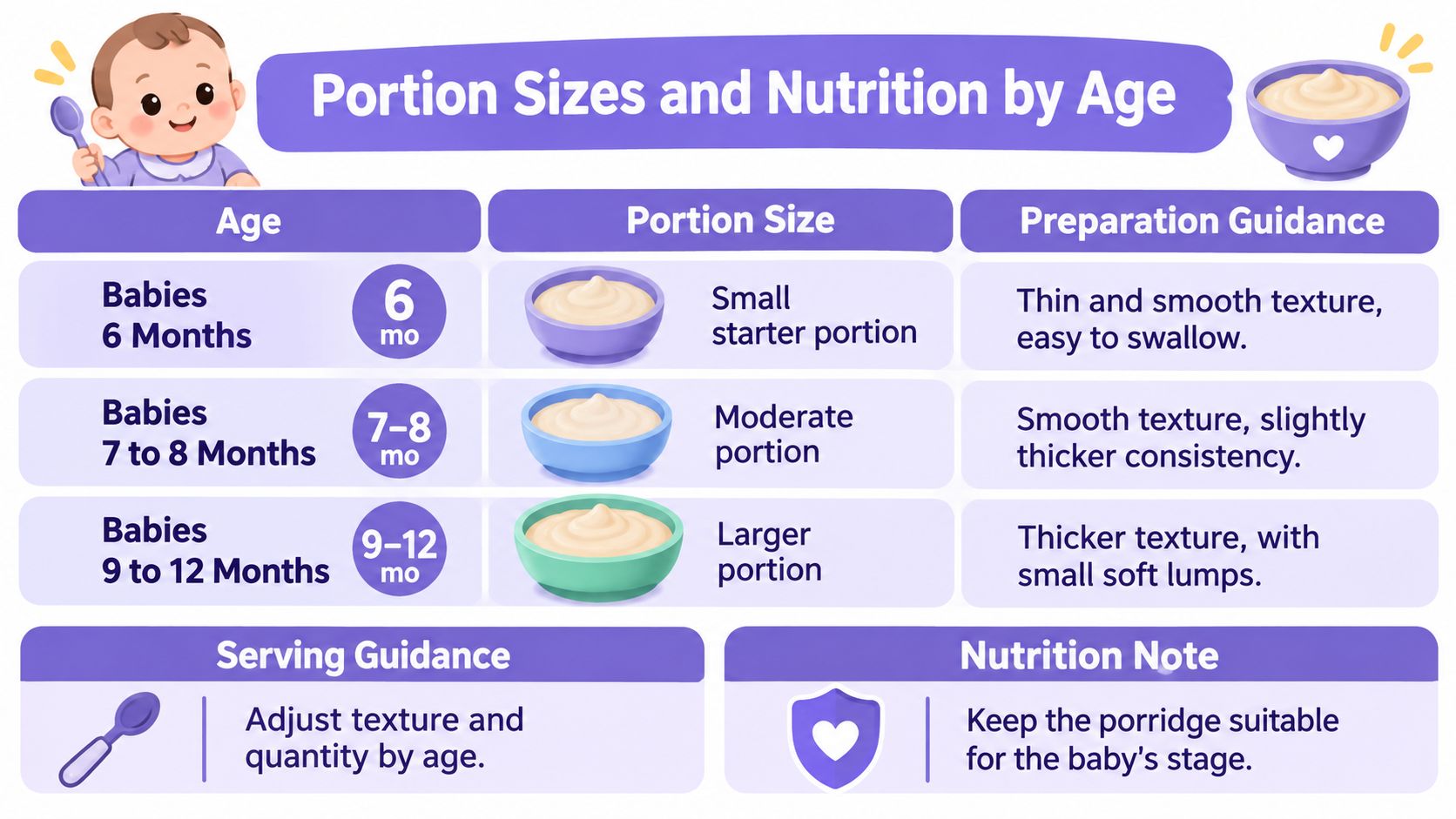
Follow the pack, then consider what goes in the bowl
| Age on the Nutribén directions | Cereal quantity | Milk quantity |
|---|---|---|
| 4–5 months | 2–3 tablespoons | 150 mL |
| 5–6 months | 3–4 tablespoons | 180 mL |
| From 6 months onward | 4–5 tablespoons | 210 mL |
Those figures come from the directions printed on the pack, the same label table noted earlier. They also make one point plainly: "sem lactose" describes the cereal, not the liquid. The directions still call for the baby's milk, so a family avoiding milk protein as well as lactose needs to check both the cereal and what goes into the bowl before assuming the product fits.
No single pack can tell you how much of another cereal to serve. Use the specific package instructions, pay attention to the stated age suitability, and follow your child's feeding guidance. A thicker bowl isn't automatically more nourishing, and a larger portion isn't automatically right for every baby.
I believe the harder trade-off sits on the nutrition side. Removing all milk products can reduce calcium and vitamin D intake, so a regular replacement deserves thought rather than guesswork. Complete dairy avoidance also isn't necessary for everyone with lactose intolerance: many people tolerate some lactose, and management may involve smaller portions, having dairy with food or choosing lactose-free products. The NIH's overview of lactose intolerance discusses these management approaches and the nutritional consideration of removing milk products.
If digestive symptoms continue, or you're unsure whether the issue is lactose or a milk allergy, get professional advice before restricting more foods. A pack designed for a specific use, such as Nutribén Hidrolisado 2 Leite, should be assessed on its own product information and your child's feeding needs, not chosen on a product name alone.
Storing and Reheating Porridge Safely
A parent once told me she treated an open box of baby cereal like a tin of coffee: lid loose, scooped with whatever spoon was in the drawer. Dry cereal is forgiving, but it isn't indestructible. Follow the opened-pack storage period and preparation guidance printed on the exact product, close the pack firmly after each use, and keep it in a cool, dry place away from steamy cupboards above the kettle.
Use a dry, clean scoop. A damp spoon introduces moisture into the powder, and a loosely closed pack can take on moisture or pantry smells. Write the opening date on the box with a marker if the packaging gives you no space for it. That small habit matters more than it sounds, because dry cereal does not last indefinitely once opened.
Prepared porridge is a different situation entirely. Once the powder meets liquid, the dry-pack storage directions no longer apply. Prepare a fresh portion, let it cool, and serve it promptly rather than leaving a bowl sitting at room temperature while you attend to other tasks. If you prepare food ahead, follow suitable food-safety advice for your baby instead of assuming the cereal's packaging covers a cooked bowl.
If reheating is appropriate under your food-safety guidance, warm the portion gently and stir thoroughly so the temperature evens out. A bowl can hide hot spots even when the surface feels comfortable, so check before serving. Reheat a portion once, not repeatedly.
Families using expressed breast milk may find this guide on expressing milk for bottle feeds useful when planning feeds and preparation. For the cereal itself, the package directions determine the intended liquid and handling.
Buying Store Bought Options and Your Next Step
A bought cereal can be reassuring when you're introducing porridge: it gives you a stated composition, a minimum age and directions for preparation. A homemade bowl offers more control over the liquid and texture, which may help a family avoiding dairy, but you'll need to inspect each ingredient and choose a suitable liquid deliberately.
When two packs both say lactose-free, compare the ingredient declaration, allergen statement, cereal base, preparation liquid, age guidance and pack size. If you're ordering from outside the EU, also check whether the product is sold to your destination and review the shipping details before you choose. European pharmacy products can be less familiar than local shelf options, so the label audit matters more than brand recognition.
For shoppers comparing cereal formats, you can look at Nutribén apple cereal and assess its own label against your child's needs. If your choice is an oat-based option, shop gluten-free porridge oats only after checking the product details and whether that form is appropriate for your intended preparation.
The next step is simple: choose the liquid first, choose the cereal second, then confirm the age guidance on the exact pack before offering the first spoonful. If you're uncertain about allergy, symptoms or the right feeding choice, ask a healthcare professional rather than relying on “sem lactose” alone.
Healtsy is a Portugal-based online store for European pharmacy and parapharmacy products, including baby and child care, shipped from Europe to customers worldwide. If you're looking for a specific European product for your family, visit Healtsy to browse the range and check product information before choosing.