


A paleta de maquilhagem groups coordinated cosmetic shades and finishes in one portable case, helping you build consistent looks with fewer separate products. Pressed powders, creams or pigments for the eyes, face and lips sit side by side as a ready-made set.
You might be comparing a small neutral palette with a larger one full of colours you may never touch, or wondering why two similar-looking compacts perform so differently on the skin. In my 16 years in the health and beauty sector, I've learned that the right choice rarely comes down to the prettiest colour story. The questions I ask first are the safety ones: which pigments are cleared for use near the eyes, how the palette should be stored, how long it stays safe once opened, and whether someone with low vision can tell the shades apart.
Those checks take little time once you know them. A pharmacist's eye for labels, hygiene and shelf life turns a pretty case into a tool you can trust.
What a Paleta de Maquilhagem Really Is
A single eyeshadow is a colour. A paleta de maquilhagem is a decision already made for you: someone has grouped shades and finishes that are meant to work together in one portable case. That case might hold eyeshadows, blush, contour powders, lip colours or a mix.
The concept is ancient. A slate cosmetic palette excavated at Abydos in 1902, from the Osiris Temple precinct and Tomb M12, sits in the Metropolitan Museum of Art's collection, as noted earlier. What that artifact reveals is deliberate design: cosmetics were ground and stored on a dedicated surface built for the job. Coordinated, portable storage has always been the point of the format, and it still is.
A format built for coordination
Today's palettes hold pressed powders, creams or pigments arranged around a look or a task. Grouping shades in one case lets you move from a soft daytime eye to a deeper evening one in the same compact, and it means travelling with fewer loose products. In my experience, people who end up disappointed with a palette bought it for the colour story and only later discovered that half the pans didn't suit where they wanted to wear them.
There is a safety angle here that shade roundups tend to skip. Eye, cheek and lip products are not interchangeable, even when they share a palette. Colour additives cleared for cheeks or lips may not be cleared for the eye area, and a mixed set can contain shades intended for different zones. I have seen irritated, watering eyes caused by a blush shade worn on the lids, so check each shade's intended use on the label before it goes anywhere near the eyes. A clearly organised palette also helps anyone with low vision: consistent pan positions and readable labels turn application into routine rather than guesswork.
A useful starting point: Choose a palette for the areas where you will apply it, not simply for the number of pans or the appeal of its colour story.
Once you are clear on what a palette is meant to do and where its shades belong, comparing families, finishes and labels becomes far easier than judging by packaging alone.
Palette Types and Finishes Explained
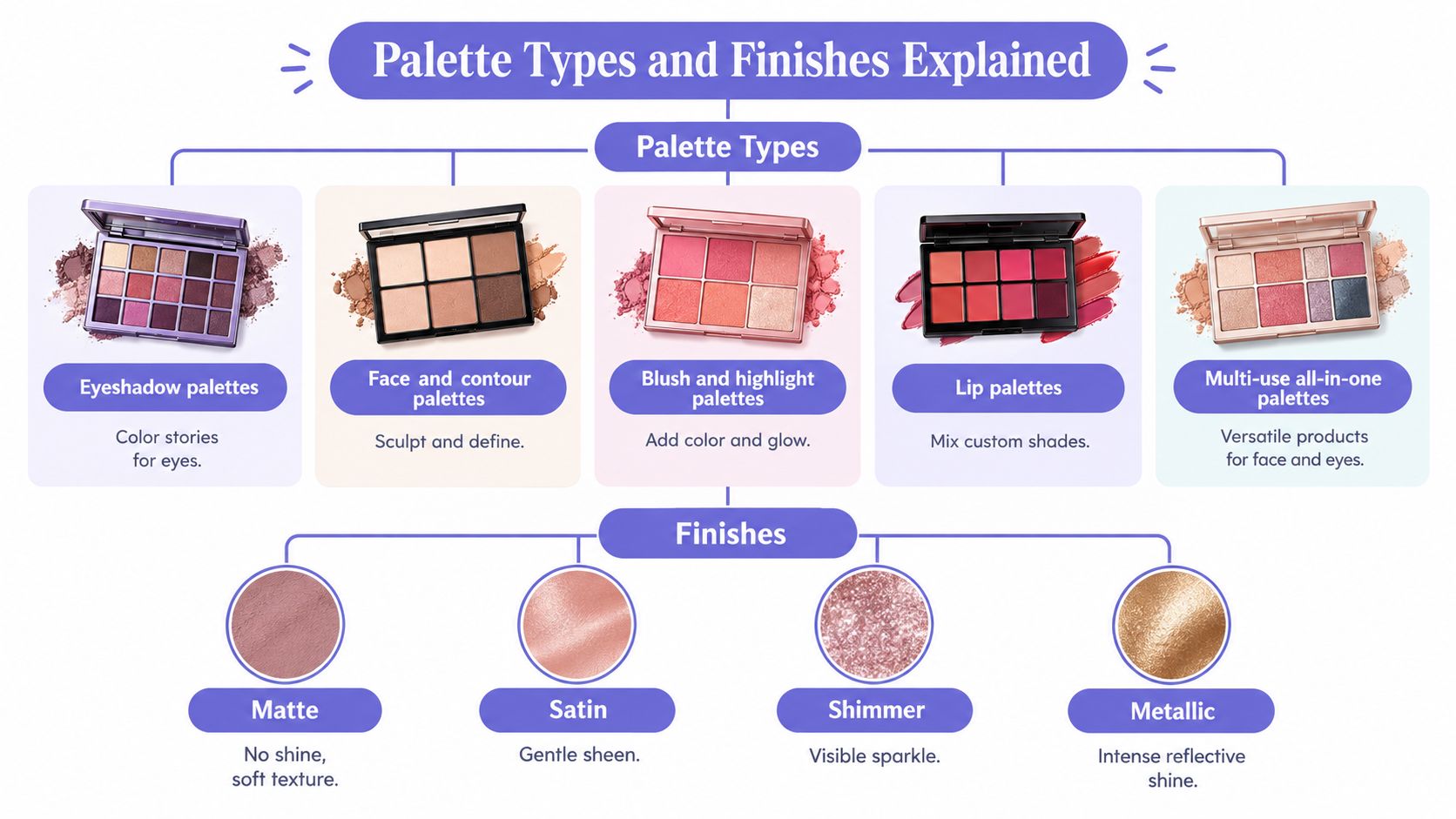
Start by identifying the palette's intended use. The main families differ in what they contain and where you apply them. Then look at the finishes, which influence how a shade appears and what role it can play in a look.
- Eyeshadow palettes group colours for the eyelids and surrounding eye area. A neutral set might pair softer transition shades with deeper colours for definition.
- Face and contour palettes bring together products used to sculpt or define the face. Don't assume every shade is suitable for the eyes; intended use and labelling matter.
- Blush and highlight palettes combine shades for cheek colour and light-catching accents. A wearer might choose a softer blush for work and add highlight for an evening look.
- Lip palettes contain lip colours that can be applied individually or mixed. They're useful when someone wants to adjust a shade rather than carry several separate lip products.
- Multi-use all-in-one palettes combine products for the face and eyes. Their convenience is appealing, but each product still needs to be used only where its label allows.
The global colour-cosmetics market provides context for the breadth of products on offer, but it isn't a measure of palette sales alone. One estimate valued the overall category at USD 100.2 billion in 2025, projected USD 105.2 billion in 2026 and USD 148.7 billion by 2033, with a projected 5.1% compound annual growth rate from 2026 to 2033. It identified Asia-Pacific as the largest regional market, with 33.8% of global revenue in 2025. These figures cover colour cosmetics broadly, including products such as eyeshadow, foundation, blush, lipstick and mascara, rather than palettes alone (Grand View Research's colour-cosmetics market estimate).
Four finishes to recognise
A palette may combine several surface effects. Matte has no visible shine and is useful for soft structure, such as blending a crease shade. Satin gives a gentle sheen, making it a flexible choice when a flat matte feels too subdued. Shimmer has visible sparkle and can add light to the lid. Metallic creates a more reflective, intense finish, often suited to a focused accent.
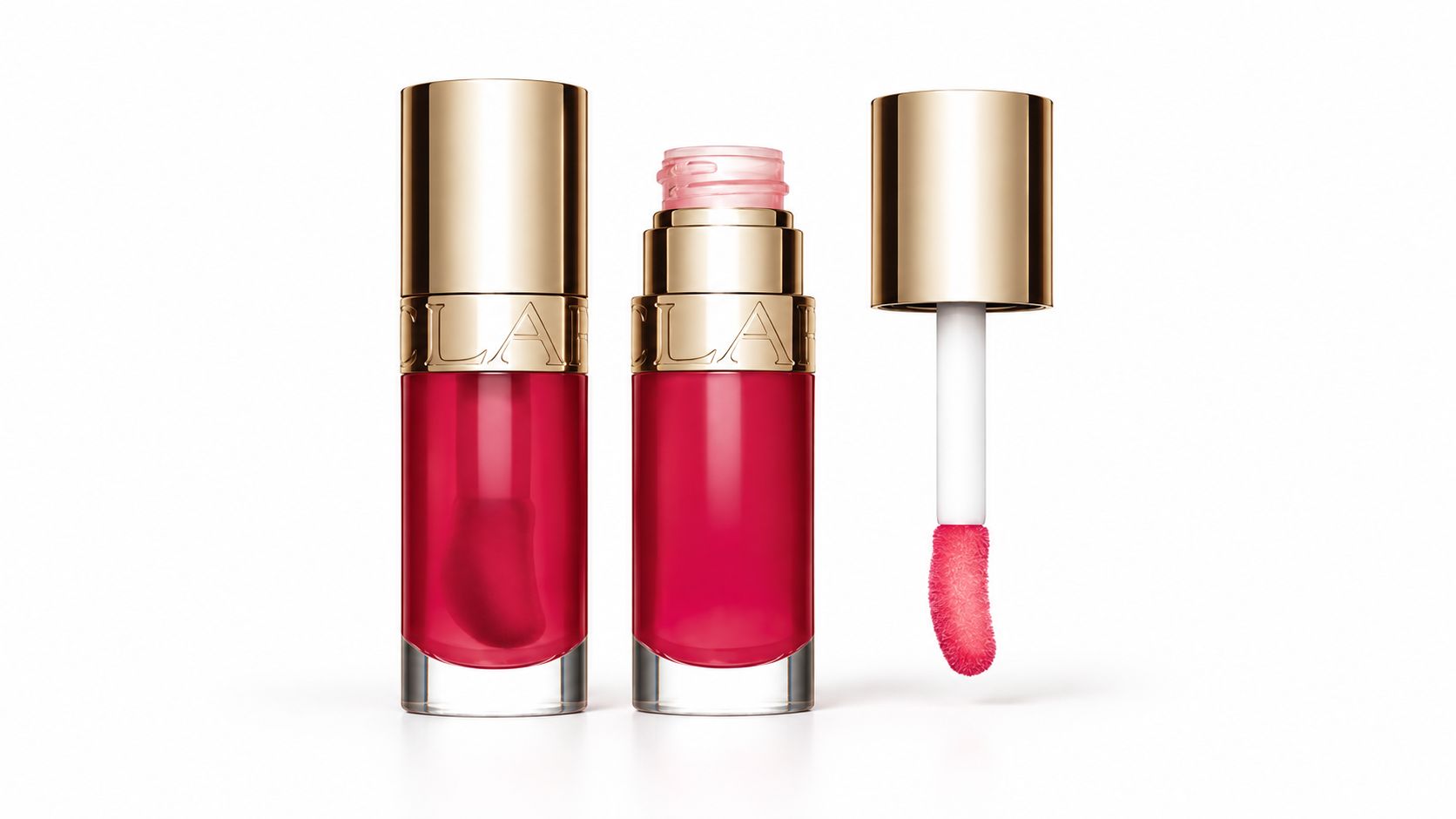
For a real-life example, a simple neutral eye could use matte shades to define and blend, then a shimmer on the lid. If you're planning a festive look, a guide to makeup for New Year's Eve can help you think through how a more noticeable finish fits the occasion. For lips, Clarins Lip Comfort Oil 16 is a tinted lip oil that provides shine, nourishment and comfort.
How to Choose the Right Palette for Your Skin
A good choice starts with your routine, not a rule that one skin tone must use one particular colour. Undertone can help you shortlist shades: warm undertones often pair naturally with golden, peach or bronze families, while cooler undertones may lead you toward pink, mauve or taupe. Neutral undertones can often wear a wider mix. These are starting points, not restrictions. Eye colour can also guide your preferences, but personal taste and intended use matter more than a strict matching formula.
Think about how many shades you can use confidently. Someone who wants a five-minute neutral look may get more from a compact palette with a few wearable shades than from a large collection full of colours that stay untouched. A traveller might prefer a compact with eyes and cheeks together, but only if every product has a clear intended use and the selection fits their routine.
Compare the palette to your real routine
| Palette Type | Typical Contents | Best For | Finish Notes |
|---|---|---|---|
| Eyeshadow | Coordinated eye colours | Everyday or occasion looks focused on the eyes | Look for finishes you'll use, such as matte and shimmer |
| Face and contour | Sculpting or defining shades | A routine that includes face definition | Confirm the intended application area on the label |
| Blush and highlight | Cheek colour and highlighting shades | Adding colour and a brighter-looking accent | Consider whether you prefer a soft sheen or more visible reflection |
| Lip | Several lip colours | Mixing or varying lip shades | Check the product form and directions |
| Multi-use | A mix of products for face and eyes | Fewer separate cases, especially when travelling | Use each shade only for its labelled purpose |
Finish variety is only useful if you'll reach for it. If you rarely wear sparkle, a palette loaded with shimmer may look versatile on the shelf but offer little value in your daily routine. Likewise, a larger shade count can mean more choice, but it can also make a palette harder to use.
Your preferred makeup should feel comfortable on your eyes. Hylo Eye Lubricant Eye Gel - 10ml is described as an eye gel for chronic, excessively dry eyes; its gel-like viscosity is intended to remain on the ocular surface longer. That's a separate eye-care product, not a reason to use makeup differently or to apply palette products near the eye itself.
If you're narrowing down colours for a particular look, this guide to eye makeup for blue eyes and pale skin offers another reference point. My practical test is to ask whether you'd use the palette on an ordinary day, not only for an imagined special occasion.
Reading Palette Ingredients and Safety Labels
Read a palette label as a set of practical checks. Look for the ingredient list, the named colour additives, the stated intended use and any precautions. In the European Union, cosmetic packaging must also provide the responsible person's name and address, product contents and ingredient list. If a product contains a nanomaterial, the ingredient list identifies it with “nano” in brackets after the substance name, such as titanium dioxide (nano) (European Commission information on cosmetics legislation).
The reason to pay attention to pigments is that mineral ingredients and fillers can introduce trace metals. FDA surveillance found that eyeshadows, blushes and compact powders generally contained more arsenic, cadmium, chromium, cobalt, lead, mercury and nickel than other cosmetic categories. The agency reported reference limits of no more than 3 ppm arsenic, 20 ppm lead and 1 ppm mercury, while noting that the measured amounts were generally very small and not considered an identified health risk (FDA information on colour additives permitted in cosmetics).
The cheek-versus-eyelid distinction
A shade isn't automatically suitable everywhere just because it comes in a makeup palette. In the United States, colour additives must be approved for their intended use, and an additive permitted for general cosmetics isn't automatically permitted around the eyes. A pigment acceptable for cheeks may not be appropriate for eyelids. Follow the product's use directions rather than moving a striking metallic face shade onto the eye area.
Eye-area rules are specific. FDA guidance defines the eye area to include the eyebrows, eyelids, eyelashes, conjunctival sac, eyeball and surrounding tissue inside the orbital ridge. It also states that kohl, kajal and surma aren't approved for cosmetic use in the United States, despite their use in some regions to emphasise the eyes (FDA guidance on eye cosmetic safety).
The United States and European Union both regulate cosmetics, but packaging and colour-additive rules aren't interchangeable. In the United States, cosmetics generally don't need FDA pre-approval before sale, but they must be safe when used according to their labelling or customary use, and each colour additive must be approved for its intended purpose. For a product marketed in the United States, an imported palette still has to meet applicable U.S. colour-additive rules.
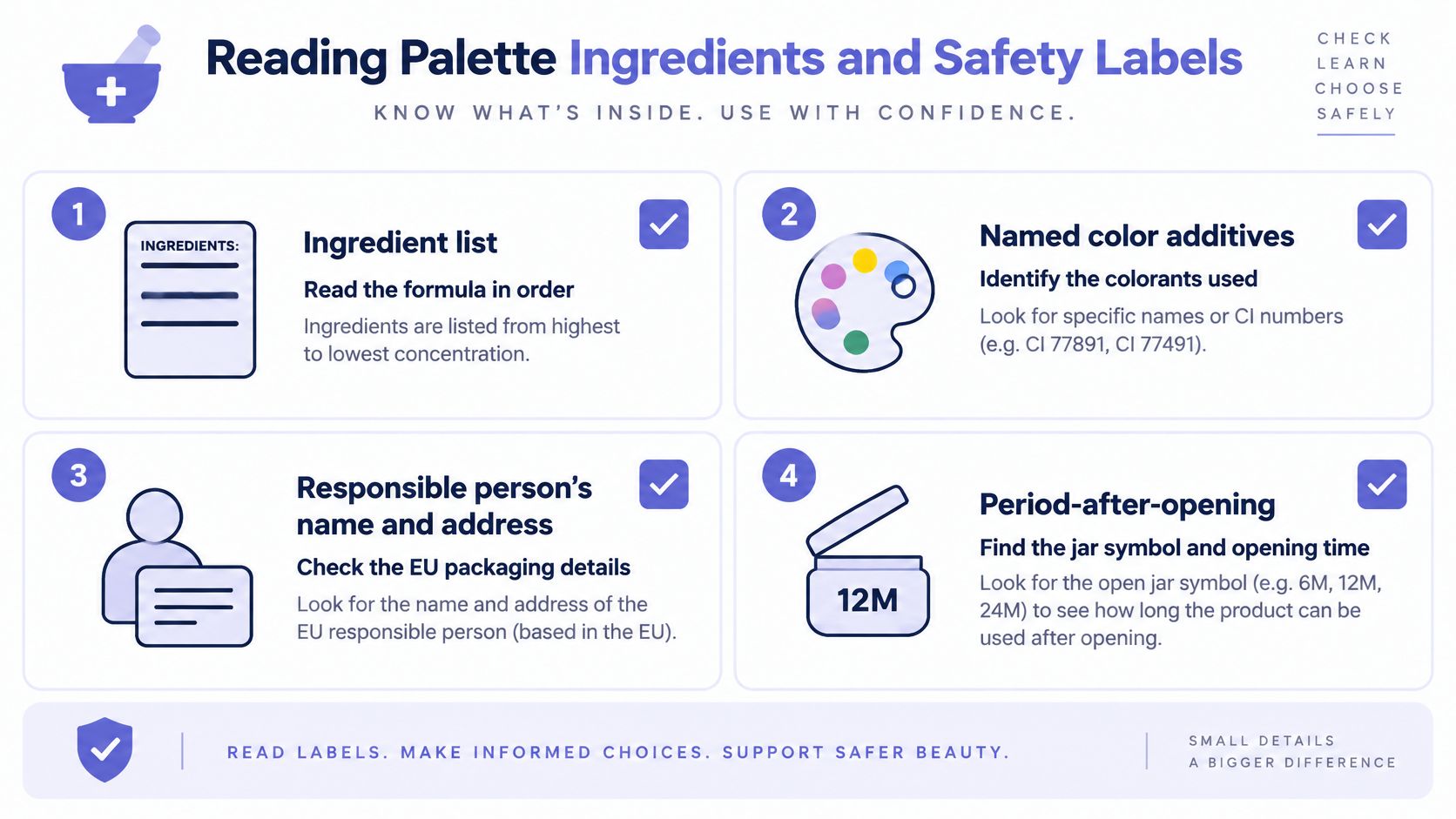
A straightforward label check is to confirm what the palette is for, read its listed ingredients and colourants, identify the responsible party where required, and follow precautions and use instructions. If you're considering other products used close to the eye, lash adhesive safety tips from Afterglow offer a separate resource on that part of a makeup routine. For people with reactive skin, this guide to makeup for rosacea can help frame product choices around careful label reading.
Keeping Your Palette Clean and Knowing When to Replace It
Pressed powders are typically less water-rich than creams, which makes them less supportive of microbial growth. That doesn't make a palette immune to contamination. Brushes, fingers, skin oils and moisture can transfer material into the pans, especially if the palette is shared or kept in a humid place.
A peer-reviewed investigation of topical cosmetics reported microbial contamination in 14 tested products. Its makeup-powder sample had a microbial load of 1,161.5 CFU/ml; the same study also detected high levels of elemental impurities in some products (the investigation of microbial contamination in topical cosmetics). That result is a reason for sensible care, not evidence that ordinary palettes are dangerous.
Habits that reduce avoidable contamination
Keep the case closed and dry between uses. Clean brushes before they touch the pans, don't share applicators, and avoid adding water or saliva to powder. These habits limit the transfer of moisture and microorganisms. Store makeup away from humid bathrooms when possible, since heat and humidity can affect product texture and performance.
Watch for changes in smell, texture or appearance, including visible growth. If a product has changed in a way that concerns you, stop using it rather than trying to restore it with a homemade spray. For brands, manufacturing hygiene, low water activity, packaging protection and microbiological release testing are important controls for dry powders; cream and liquid pans also require an appropriate preservative strategy.
There's no universal expiry period for ordinary cosmetics in the United States, and U.S. law doesn't require them to display a specific expiration date. Shelf life depends on product type, use and storage, so keep track of when you opened a palette and follow its period-after-opening guidance. Eye-area cosmetics deserve extra caution because they generally have shorter usable lives than other makeup and contamination may contribute to serious eye infections. FDA's example of mascara, which manufacturers commonly recommend disposing of two to four months after purchase, doesn't set the same timeframe for palettes; follow the palette's own label and condition instead (FDA guidance on cosmetic shelf life and expiration dating).
Applying Your Palette With Confidence
A simple eye look doesn't need complicated technique. Begin with a lighter shade across the lid or as a base, then use a matte colour in the crease to add soft definition. Blend the edge before adding a deeper shade at the outer corner. A shimmer placed on the lid can add light without requiring a complicated pattern.
Brush choice changes the result. A dry brush usually gives a softer application, while a damp brush can increase pigment payoff with some powders. That doesn't make every shade suitable for wet application, so follow the product directions and avoid adding water directly to the pan. Use a separate, clean brush if you want to try a more concentrated finish.
Face-palette products need the same care as eyeshadows. Apply cheek or contour shades only where the label says they're intended to go. If a multi-use palette doesn't clearly identify which shades are suitable for the eye area, don't assume that every pan can be used there.
Making shade identification more accessible
Many palette instructions assume that users can see pan colours, read small print and follow visual tutorials. Blind, low-vision and colour-blind users can face barriers in identifying products, reading labels, distinguishing colours and getting reliable shade information online. Research on inclusive cosmetic design also identifies unreadable product information, limited tactile features and packaging shapes that are difficult to tell apart as challenges.
Practical design can combine tactile markers, high-contrast labels, differentiated shapes, sound cues, a logical light-to-dark layout and QR codes with readable information. Braille can help identify a product or location, but Braille alone doesn't describe shade, finish, intensity or placement. An audio or QR description should provide those details clearly, and a product page can help shoppers understand colours before purchase. These features can support independent use, but they don't guarantee that a palette will suit every person's access needs.
A simple non-visual routine can use a consistent pan order, tactile markers and a clean brush for each shade. Someone might mark the lightest pan, then the crease shade and the deeper accent, and follow the same sequence each time. For more ideas on keeping a look simple or making it more dramatic, see this guide to choosing products for a simple and glamorous makeup look.
Where to Find Palettes You Can Trust
The best palette is one whose purpose, shades, finishes, ingredients and directions you can verify. The format has a long history because it brings colours together in one object, but convenience shouldn't replace checking whether a product is intended for your eyes, face or lips. A clear label and practical shade selection are more useful than a large pan count you'll rarely use.
Healtsy is a Portugal-based online store for European pharmacy and parapharmacy products, shipped from Europe to customers worldwide. Our makeup range includes palettes, eyeshadows, foundations, mascaras, lip products and accessories, alongside other face and eye makeup. Our catalogue also includes products from brands such as Apivita, Avène, Bioderma, Clarins, Esthederm, Filorga, Lierac, Martiderm, Neutrogena, SVR, Uriage and Eucerin. We offer Conscious Beauty, Natural Formulas, Sustainable and Vegan collections, and a pharmacist reviews product information.
Make the final check before you buy
For international purchases, consider whether the listing clearly states the palette's intended use, shade details, ingredients and precautions. Healtsy sources products through authorised distribution, and orders ship by DHL from Europe, with import duties included for the main non-EU markets. You can also explore our guide to organic makeup brands in the UK when comparing product preferences. If you're assembling a bag for a special day, this guide to wedding morning essentials offers another perspective on planning what to pack.
I believe the most dependable choice is the one you can use comfortably and safely, with a label you understand and shades that fit your routine. You now have a practical way to assess a paleta de maquilhagem, from its intended application to how you'll store and identify it.
Explore Healtsy's makeup range for palettes, eyeshadows, face makeup and lip products, with pharmacist-reviewed product information and authorised sourcing. Visit Healtsy to compare options and choose a palette that fits your routine.