


How to Reduce Hyperpigmentation: Expert Guide
Most advice on hyperpigmentation starts with a stronger acid, a more powerful peel, or several brightening serums used together. I believe that approach often misses the central problem. Inflammation can create the very pigment you're trying to remove, so an aggressive routine may leave you with darker, more persistent marks.
After 16 years in pharmacy and skincare, I've seen this pattern repeatedly: someone treats an old acne mark with multiple exfoliants, develops burning and peeling, then assumes the products need more time. In reality, the skin may be experiencing a fresh inflammatory injury. The most dependable path is usually slower, simpler, and easier to continue.
This is the complete guide to how to reduce hyperpigmentation with a lowest-irritation strategy. It focuses on identifying the cause, protecting against the light that stimulates pigment, choosing one tolerable active, and knowing when cosmetic care has reached its limits.
Why Aggressive Skincare Routines Often Backfire
Stronger treatment can leave dark spots darker. High-strength peels and layered acids may remove surface cells, yet they can also irritate skin whose barrier is already strained by acne, shaving, eczema, friction, or picking. The lowest-irritation pathway often produces better progress than a demanding brightening routine because it removes causes of inflammation before adding more treatment.
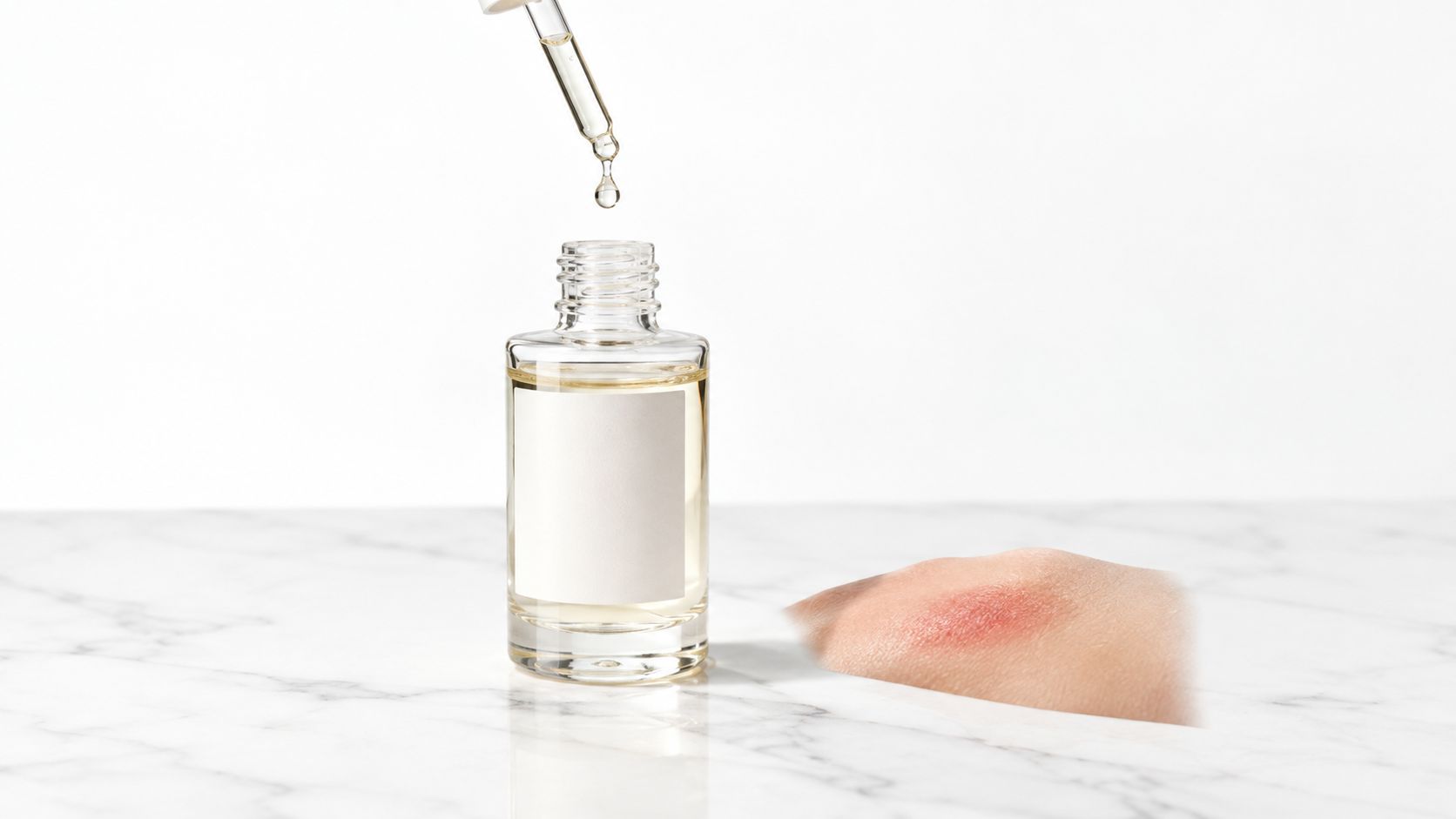
Post-inflammatory hyperpigmentation, or PIH, develops after inflammation or injury. Inflamed skin can prompt pigment-producing cells to increase melanin production or distribute pigment unevenly. Scrubbing an old mark may therefore restart the problem instead of clearing it.
The irritation trap
Irritation is not always dramatic at first. Mild, brief tingling can occur with some products, but burning, persistent redness, swelling, marked peeling, or tenderness signals that the routine may be provoking inflammation. A product marketed as “intense” does not become more effective when it keeps the skin inflamed.
This concern is particularly relevant for deeper skin tones, which may develop more visible pigment changes after irritation. Consensus guidance indicates that hydroquinone used alone and standalone chemical peels may have limited effectiveness in darker skin and may aggravate PIH through irritation. If a routine has caused tightness, flaking, or sensitivity, follow a practical guide to repairing a damaged skin barrier before adding another active.
Procedures are not automatically superior. A 2024 systematic review of 41 studies involving 877 patients found complete response in 5.4% of topical-treatment patients, 18.1% after laser or energy-based devices, and 2.4% after combination therapies; poor or no response occurred in 22.2% of topical-treatment patients, 18.1% of laser or energy-device patients, and 66.7% of peel-treated patients, while hyperpigmentation worsened in 2.6% of patients receiving laser or energy-based treatment (systematic review data). Among 346 untreated participants in a separate 2024 review focused on skin of colour, none achieved complete resolution, 62% had partial pigment reduction, 4% had partial lesion-size reduction, and 33% showed no response.
A slower routine can be the stronger routine
Start by removing the trigger rather than adding another active. Control breakouts, stop picking, reduce friction, manage dermatitis, and simplify products before asking a pigment serum to work.
Practical rule: If a product causes continuing inflammation, it may be working against your pigmentation goal, regardless of how long its ingredient list is.
Pigment correction takes time. These findings cannot predict one person's result, but they support realistic expectations and make rapid escalation less appealing. A routine that the skin tolerates is easier to continue, and consistency matters more than intensity.
Identifying Your Pigmentation Type and Triggers
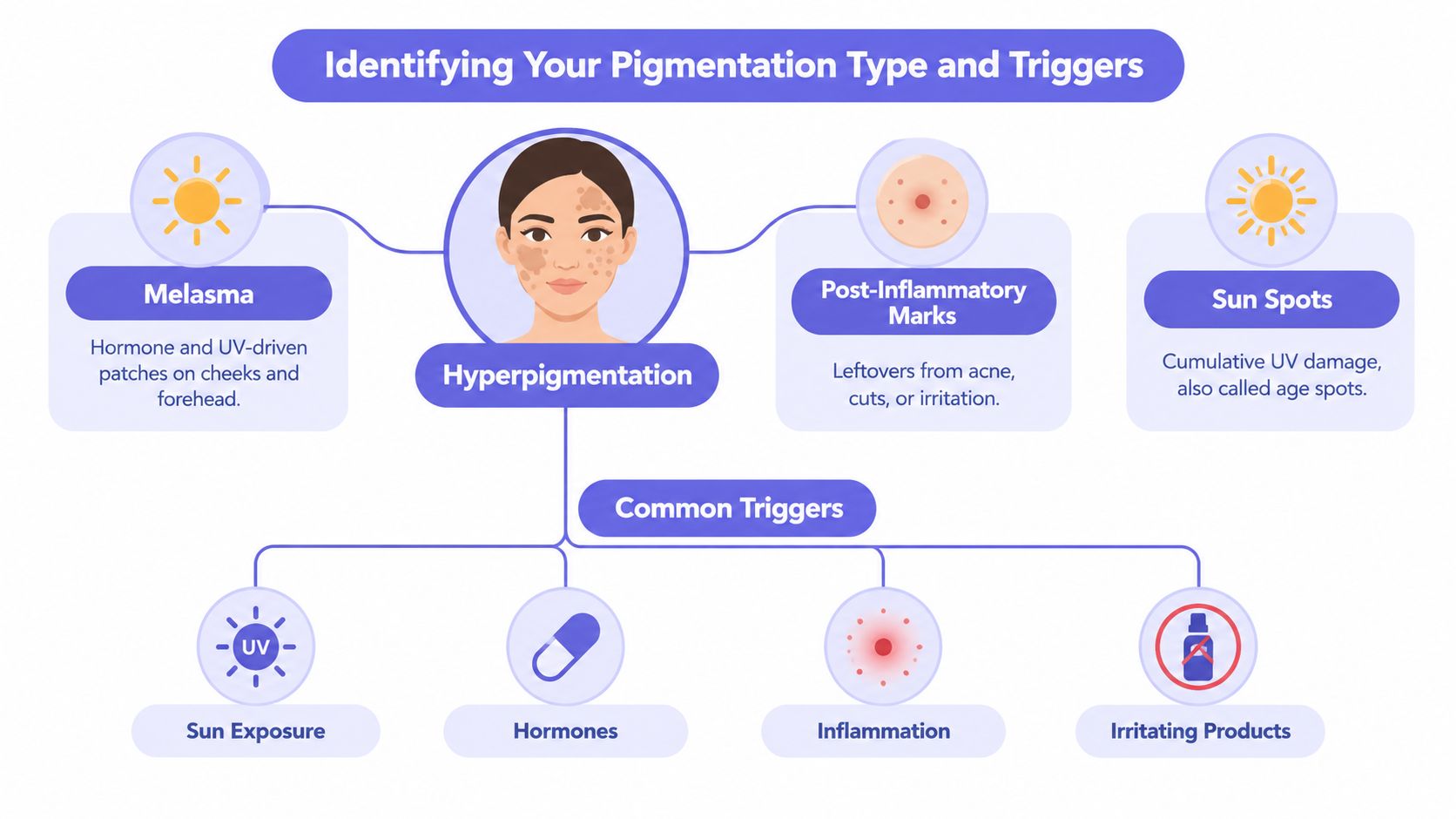
Before choosing an ingredient, look at the pattern, history, and location of the discoloration. “Dark spots” can describe several conditions, and a product that suits one may irritate or disappoint another.
Melasma
Melasma often appears as relatively broad brown or grey-brown patches on the cheeks, forehead, upper lip, or other facial areas. It can be recurrent and sensitive to both ultraviolet and visible light. Hormonal changes may contribute, but sunlight and visible light can keep the process active even when the original hormonal trigger has changed.
For recurring facial patches, think beyond a single “spot treatment.” Morning photoprotection, consistent application, and a tolerable night-time active are more appropriate than repeatedly attacking the surface with peels.
Post-inflammatory marks
PIH follows an identifiable event. The mark may appear after a blemish, eczema flare, ingrown hair, shaving irritation, cut, bite, cosmetic reaction, or picking. A useful question is, what happened in this exact area before it became dark?
If the answer is active acne, the acne needs attention. If the answer is dermatitis, burning, or itching, the inflammatory condition needs management. Treating the colour while the trigger continues is like repainting a wall while water is still entering it.
For practical guidance on reducing future discoloration, use this resource on preventing hyperpigmentation alongside your routine review.
Sun-induced lentigines
Sun spots, also called lentigines, tend to reflect cumulative exposure and may appear as distinct, relatively stable brown areas on exposed skin. They're different from a flat mark left by one recent pimple, although both can coexist.
A simple home assessment can help you choose a sensible starting point:
Pigmentation that is blue-grey, sharply asymmetric, rapidly changing, or unexplained deserves professional assessment. Superficial cosmetic products perform poorly when pigment sits deeper in the skin, and continued experimentation can delay the correct diagnosis.
Building a Tolerable Active Ingredient Routine
The safest routine introduces one pigment-modulating active at a time and gives the skin enough space to show whether it can tolerate it. I prefer this approach because it makes cause and effect clearer. If you start a retinoid, exfoliating acid, vitamin C formula, and pigment serum together, you won't know which product helped or which one caused the setback.
Start with one sensible option
Azelaic acid is a useful non-hydroquinone pathway, particularly when acne-related inflammation and pigmentation occur together. Evidence for melasma supports attention to concentration: a Cochrane review found 20% azelaic acid significantly more effective than 2% hydroquinone, with a relative risk of 1.25 and a 95% confidence interval of 1.06 to 1.48 (Cochrane evidence on azelaic acid). The same review found no statistically significant difference between 20% azelaic acid and 4% hydroquinone, reporting a relative risk of 1.11 with a 95% confidence interval of 0.94 to 1.32.
That doesn't mean every dark mark will respond in the same way. Cause, pigment depth, sensitivity, and photoprotection all influence results, so check the actual concentration rather than relying on a vague “brightening” claim.
Niacinamide can be considered when the priority is a generally gentle routine, while a retinoid may suit someone who can tolerate gradual cell-turnover support. Vitamin C, tranexamic acid, kojic acid, and arbutin-based products are other possibilities, but more options don't mean more should be used at once. If you're comparing a dedicated tranexamic acid serum, read the label and introduce it independently from other strong actives.
Product GuideTranexamic Acid Serum →Use a staged introduction
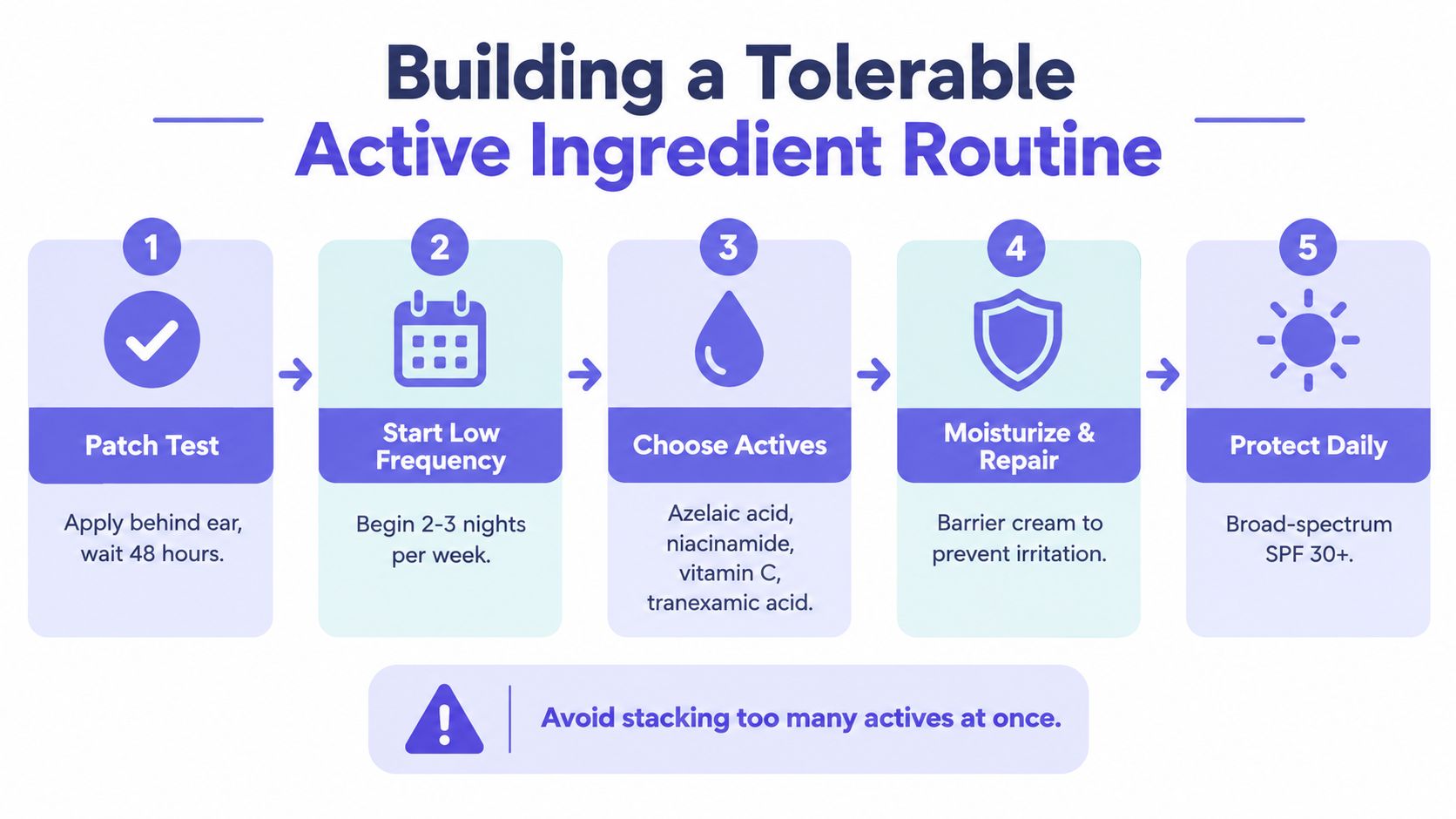
A practical sequence looks like this:
- Patch test first. Apply a small amount to an inconspicuous area according to the product's directions. A patch test doesn't guarantee facial tolerance, but it can reveal an obvious reaction before full-face use.
- Begin two or three nights weekly. Apply the chosen active to clean, dry skin, unless the label says otherwise. Keep the frequency steady before considering an increase.
- Buffer if needed. Apply moisturizer before or after the active when sensitivity is a concern. Buffering can reduce contact intensity while preserving a manageable routine.
- Keep the rest uncomplicated. Use a gentle cleanser and moisturizer. Avoid starting retinoids, abrasive scrubs, exfoliating acids, and strong oxidizing vitamin C formulas simultaneously.
- Reassess after 8–12 weeks. Look at standardized photographs in consistent lighting rather than judging the mark under different bathroom lights each day.
A small tingle that disappears quickly is different from burning that continues after application. Persistent redness, scaling, swelling, or discomfort means reduce frequency or stop and seek advice, especially if the reaction is worsening.
What the tolerability evidence suggests
Ingredient choice should reflect both potential benefit and the chance of maintaining regular use. A 2023 systematic review reported irritation in 50.9% of participants using hydroquinone-containing combination therapy, 42.2% using cysteamine, 18.7% using azelaic acid, 5.3% using kojic acid, and 0.8% using tranexamic acid (review of topical-agent irritation). These are population-level findings, not a prediction for one person, and products with the same ingredient can differ.
The practical conclusion is straightforward. The most potent-looking product isn't automatically the best product if irritation stops you from using it consistently. If your skin becomes inflamed, comfort and barrier recovery take priority over adding another treatment.
The Non-Negotiable Role of Advanced Sun Protection
The most advanced brightening routine cannot overcome regular exposure to light that stimulates pigment. Sunscreen limits that stimulation and gives other treatments a better chance to work. It belongs in the morning routine, not as an afterthought added only on sunny days.
Ultraviolet protection is familiar, but visible light also matters in melasma and recurrent facial pigmentation. A review of nine relevant publications found that broad-spectrum protection covering UVA and UVB, with added visible-light protection where appropriate, can support improvement or stabilization of melasma and PIH, particularly in skin of colour. The same source reported that, among 404 adults with facial hyperpigmentation, 67.5% reported using a sunscreen-containing product and 91% said they used SPF 21 or higher. Only 7.6% reported reapplying every two hours, and 48.5% didn't know whether their sunscreen was broad-spectrum (review of sunscreen and hyperpigmentation).
Choosing between untinted and tinted formulas
A tinted sunscreen containing iron oxides is useful when visible light seems to worsen melasma or persistent facial pigment. You do not need to force a tinted formula for every low-exposure indoor situation. Consider it for time near sunny windows, driving, outdoor work, commuting, and other periods of strong daylight.
Choose the formula you can apply consistently and generously. On deeper skin tones, a white cast can make sunscreen unpleasant to wear, so a suitable tint may improve regular use. Check the stated SPF, broad-spectrum or UVA protection, water-resistance instructions, and the presence of iron oxides when visible-light protection is relevant.
DermNet recommends broad-spectrum SPF 50+ on exposed pigmented areas. A 2023 systematic review of melasma therapies gave broad-spectrum sunscreen an evidence-grade A recommendation, with at least SPF 30 and protection against UVA, UVB, and visible light (DermNet guidance for PIH). Follow the product's application directions, then add shade, hats, and protective clothing when exposure is prolonged.
Making the habit work in real life
Apply sunscreen each morning to exposed skin before leaving home. Reapply during extended outdoor exposure and after swimming or sweating. Indoor reapplication may be less demanding when you are away from direct sunlight, but driving, sitting beside a bright window, and outdoor exercise increase the need.
For a practical application method, follow this guide on how to apply sunscreen on face. A comfortable texture, suitable finish, and acceptable shade remove common reasons for skipping the routine. Consistency protects the progress made by every other pigment treatment.
Navigating Professional Treatments and Prescriptions
Over-the-counter skincare can help, but an unidentified dark mark should not automatically receive a stronger routine. A dermatologist can distinguish epidermal from deeper pigment, assess lesions that are changing, and decide whether prescription treatment or a procedure is appropriate. That diagnostic step matters because inflammation from the wrong treatment can leave deeper skin tones with more persistent discoloration.
For diagnosed melasma, prescription combinations have stronger evidence than many cosmetic brightening claims. An evidence-based melasma treatment review identifies a triple-combination cream containing hydroquinone, tretinoin, and a corticosteroid as the most effective treatment for melasma, with hydroquinone alone also supported. A commonly cited combination contains hydroquinone 4%, tretinoin 0.05%, and fluocinolone acetonide 0.01%. These are medical regimens, not routine solutions for an unexplained mark. Hydroquinone combinations require clinician supervision, particularly when treatment continues for a prolonged period.
Comparing the options
| Treatment Type | Best For | Irritation Risk | Supervision Needed |
|---|---|---|---|
| Gentle topical routine | Mild or recent marks after the trigger is controlled | Lower when introduced gradually | Pharmacist or clinician advice if symptoms persist |
| Prescription topical treatment | Diagnosed melasma or resistant pigmentation | Moderate to high, depending on the regimen | Yes |
| Chemical peels | Carefully selected superficial pigment concerns | Can be significant if the peel inflames skin | Yes |
| Laser or energy-based devices | Selected cases after diagnosis and risk assessment | May worsen pigmentation in some patients | Yes, with an experienced medical provider |
Procedures require particular caution in darker skin tones. The review cited earlier reported worsening hyperpigmentation among some patients treated with laser or energy-based devices. That risk does not rule out every device, but it makes diagnosis, skin phototype, conservative settings, aftercare, and provider experience important parts of the decision. A lower-irritation approach is often safer than pursuing the fastest possible change.
After a cosmetic or laser procedure, follow the treating clinic's instructions rather than adding acids or retinoids immediately. The NYC Laser Hair Removal post-care resource explains why post-procedure irritation and sun exposure need careful management, although it cannot replace advice from the clinician who treated you.
When a consultation is the safer choice
Arrange dermatology assessment before treating pigmentation that is rapidly changing, sharply asymmetric, blue-grey, unusually persistent, or associated with active dermatitis. Oral tranexamic acid and procedures should not be self-directed, particularly with a clotting history, pregnancy, darker phototypes, or previous pigment worsening.
Supportive cosmetic products can sit within a broader routine, but they do not replace diagnosis or prescription supervision. A European pharmacy and parapharmacy retailer such as Healtsy's PDRN serum selection can help you compare labelled skincare products. Check their ingredients and tolerability, and introduce only one new product at a time.
Product GuideHealtsy's PDRN Serum Selection →Maintaining Results and Knowing When to Seek Help
Pigmentation often returns when the original trigger returns. Maintenance therefore means protecting the skin without creating a new cycle of irritation. I believe the most sustainable routine is the one that remains comfortable on an ordinary workday, not the one that looks impressive on a product shelf.
A simple maintenance rhythm
In the morning, cleanse gently if needed, moisturize, and apply broad-spectrum sunscreen to exposed skin. Use shade, hats, and protective clothing during extended exposure. Reapply during outdoor activity, after sweating or swimming, and according to the product's directions.
At night, keep the routine modest. Continue one well-tolerated brightening active two or three times weekly if it's helping and causing no inflammation. Don't keep increasing strength just because progress feels slow. A stable routine protects the result better than a sequence of repeated setbacks.
Avoid picking, scratching, abrasive tools, and friction over active spots. If acne, eczema, shaving bumps, or another inflammatory condition returns, address that trigger promptly rather than applying stronger pigment products over it.
Signs that self-care has reached its limit
Seek professional assessment if:
- The pattern changes quickly: A rapidly changing or spreading area needs examination.
- The shape is sharply uneven: Marked asymmetry or an unusual border shouldn't be managed indefinitely with cosmetics.
- The colour is blue-grey: This can suggest deeper pigment that responds poorly to superficial products.
- The trigger remains active: Ongoing dermatitis, burning, scaling, or breakouts need appropriate care first.
- The mark resists a careful routine: Persistent pigmentation despite consistent trigger control and photoprotection deserves a diagnosis.
- Your skin is reacting: Peeling, swelling, burning, or persistent redness is a reason to stop escalating.
The aim isn't to remove all melanin. Melanin has a protective role, and cosmetic care should focus on reducing uneven excess pigmentation while preserving the skin barrier. With a cause-led plan, reliable photoprotection, and realistic expectations, you can make progress without repeatedly provoking the skin.
Build a tolerable, cause-led routine
Healtsy offers European pharmacy and parapharmacy skincare, with product information that identifies active ingredients, concentrations, suitability, and use. If you're looking for clearly labelled options to support a tolerable hyperpigmentation routine, compare products with your trigger, skin sensitivity, and daily sun-protection habits in mind.
Visit Healtsy