


How to Get Rid of Dark Spots and Hyperpigmentation
You're standing at the bathroom mirror, turning your face toward the window and then away from it, hoping the light will make a stubborn brown mark look less obvious. Perhaps you've bought three brightening serums in four months, layered them more aggressively each time, and ended up with a patchy forehead or an acne mark that looks darker instead of lighter.
After 16 years working in pharmacy, I've learned that people rarely ask only how to fade a spot. They're usually asking why it won't go away, why it came back, and whether they've damaged their skin by trying too many products. I believe the most useful advice starts with the cause, then chooses ingredients, timelines, and professional treatment with care.
This is the complete guide to how to get rid of dark spots and hyperpigmentation without treating your skin like a stain that needs scrubbing. We'll look at what works, what commonly backfires, and when a dermatologist should take over.
The Frustrating Truth About Dark Spots
A customer once came to the pharmacy counter with a stubborn mark across her forehead. She'd been using several brightening products at once, including exfoliating acids and a retinoid, because she thought stronger treatment would produce faster results. Instead, her skin felt tight and irritated, and the uneven patch seemed more noticeable.
That pattern is common. Hyperpigmentation isn't surface dirt. Melanocytes, the cells that produce melanin, can remain overactive after inflammation, hormonal changes, or light exposure. Scrubs remove surface cells, but they don't switch off the signal telling the skin to produce more pigment. Repeated irritation can add another signal.
A practical rule: If a product burns, stings persistently, or leaves your skin visibly inflamed, it may be working against your dark-spot routine.
The emotional burden is real, even when the pigmentation itself isn't medically dangerous. People get tired of checking their face in phone cameras, adjusting concealer before meetings, or worrying that a mark will stand out at an event. That frustration can push someone into product stacking, which often creates a cycle of irritation, more pigment, and more products.
Sun exposure is another reason progress can appear disappointing. A helpful overview of sun damage and skin repair explains why repeated exposure can keep uneven tone active even when a person is using a good serum.
The honest premise is simple: identify the trigger first, protect the skin daily, introduce one useful active at a time, and measure progress over months rather than days. In my experience, a calm routine followed consistently usually beats an impressive shelf full of products used unpredictably.
What's Actually Causing Your Hyperpigmentation
Dark spots usually fall into overlapping categories rather than one neat diagnosis. Sun exposure is the ignition key, hormones can act like a thermostat stuck on high, inflammation leaves a shadow behind, and visible light can steadily reinforce the process.
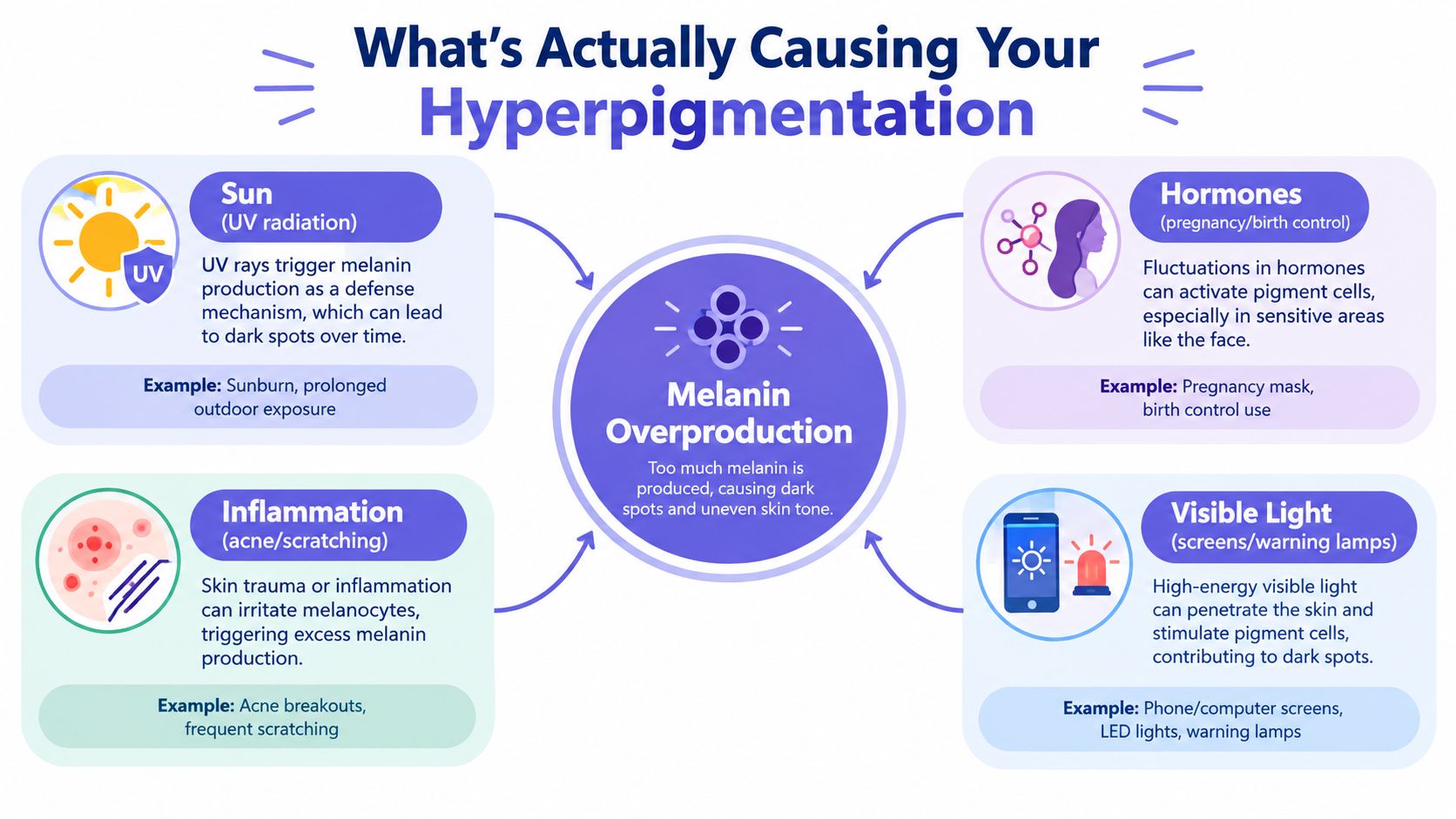
Start with the pattern you can see
Melasma often appears as symmetrical patches on the cheeks, forehead, nose, or upper lip. It's associated with hormonal influences and light exposure, and it tends to behave as a long-term condition. Cleveland Clinic estimates that melasma affects about 15% to 50% of pregnant women and 1.5% to 33% of the general population, with onset most often between ages 20 and 40. Those figures are summarized in the American Academy of Dermatology's melasma treatment guidance.
Post-inflammatory hyperpigmentation, or PIH, is the shadow left after acne, eczema, a burn, a cut, scratching, waxing, or another source of inflammation. Merck Manual notes that focal hyperpigmentation is most often post-inflammatory, while chronic sun exposure commonly causes solar lentigines, the flat brown spots often seen on sun-exposed skin.
A quick self-check helps:
Symmetrical patches
Cheek, forehead, and upper-lip patches suggest melasma.
Marks after inflammation
Scattered spots following acne, eczema, picking, or waxing suggest PIH.
Flat sun-exposed spots
Individual brown patches on the face, chest, or hands suggest solar lentigines.
Don't overlook light
UV exposure stimulates pigment production, but visible or blue-violet light can also worsen pigmentation, particularly in darker skin tones. That's why tinted sunscreen is often more useful for melasma-prone skin than an untinted formula that addresses UV alone.
Mixed patterns are very common. Someone may have melasma across the cheeks, PIH from acne along the jaw, and solar lentigines on the hands. A clear explanation of hyperpigmentation types and causes can help you match the appearance and history to the likely category, but a dermatologist is needed when a mark looks unusual or changes.
The underlying trigger still matters most. If acne or eczema remains active, fading products may reduce existing colour while new marks continue to appear. Guidance on preventing hyperpigmentation is therefore inseparable from treating the pigment already visible.
The Active Ingredients That Actually Fade Spots
No single ingredient wins for every person. Vitamin C, retinoids, azelaic acid, niacinamide, exfoliating acids, hydroquinone, tranexamic acid, and cysteamine work through different pathways and carry different irritation risks.
A useful way to choose is to ask what you need most. If inflammation drives your marks, calming treatment matters. If melasma is the pattern, photoprotection and pigment suppression need to work together. If your barrier is already sore, adding another strong active is usually the wrong first move.
| Ingredient | What It Does | Realistic Timeline | Best For | Caution |
|---|---|---|---|---|
| Vitamin C | Supports antioxidant protection and helps moderate melanin formation | Gradual change with consistent use | Sun-exposed uneven tone | Sensitive or eczema-prone skin may react to acidic formulas |
| Retinoids | Increase cell turnover and help disperse pigmented cells | Gradual improvement over several skin cycles | PIH, acne-prone skin, texture | Irritation can deepen marks, especially in darker skin tones |
| AHAs | Loosen pigmented surface cells and improve texture | Progressive fading with regular, gentle use | Rough texture and superficial discoloration | High-strength or frequent use can trigger inflammation |
| Azelaic acid | Helps reduce pigment production while calming inflammation | Steady, gradual fading | Acne-related marks, redness, sensitive skin | Introduce slowly if the barrier is compromised |
| Niacinamide | Supports barrier function and helps reduce uneven pigment transfer | Gentle, cumulative improvement | Sensitive, combination, or oily skin | High concentrations can irritate some users |
| Hydroquinone | Directly inhibits tyrosinase, a key enzyme in melanin production | Often assessed over a defined treatment course | Stubborn facial pigmentation under supervision | Not an open-ended treatment; irritation and inappropriate use are concerns |
| Tranexamic acid | Helps interrupt pigment-driving pathways associated with melasma | Gradual improvement | Melasma and non-HQ routines | Oral use requires medical assessment |
| Cysteamine | Non-HQ pigment-lightening alternative | Gradual improvement with regular use | People avoiding hydroquinone | Odour and irritation can affect adherence |
Hydroquinone still earns a place in supervised treatment. Dermatology references commonly describe combination therapy using hydroquinone 2% to 4%, tretinoin 0.05% to 1%, and a class V to VII topical corticosteroid as a first-line option for facial hyperpigmentation. Another clinical reference recommends applying a thin layer once or twice daily for up to 3 months, stopping if there's no improvement after 2 to 3 months. Many dermatologists then use treatment breaks or cycling rather than continuous, open-ended use.
The difference between retinol and a retinoid matters because prescription retinoids are more potent and more likely to irritate. In practice, I'd rather see someone tolerate a modest routine than abandon a powerful one after a week of peeling.
Reviews support tranexamic acid across topical, oral, and intradermal routes, while azelaic acid, kojic acid, and cysteamine can offer credible non-hydroquinone options. Procedures should be considered carefully, especially for richer skin tones, because inflammation can create another round of PIH.
At-Home Routine vs In-Clinic Treatments
At-home care is slower, but it gives you control over frequency, irritation, and maintenance. In-clinic treatments can be useful for resistant pigmentation, but the device or peel must match the pigment type and skin tone.
| Treatment | Typical Cost (USD) | Sessions / Duration | Best For | Skin-Tone Safety |
|---|---|---|---|---|
| Azelaic acid serum | Qualitative range varies by product | Consistent home use over months | PIH, acne-prone or sensitive skin | Generally approachable when introduced gradually |
| Prescription combination therapy | Varies by clinician and prescription | Defined course with review | Persistent facial pigmentation | Needs medical supervision |
| Chemical peel | Varies by clinic and peel | Planned course with recovery between treatments | Selected superficial pigmentation | Requires careful strength selection |
| Microneedling | Varies by provider | Multiple appointments may be needed | Texture and selected marks | PIH risk must be assessed |
| IPL | Varies by provider | A course may be recommended | Carefully selected sun-related pigmentation | Higher caution for richly pigmented skin |
| Laser toning | Varies by provider | Repeated sessions may be proposed | Refractory cases under specialist care | Heat and inflammation can worsen PIH |
Chemical peels can help when a clinician selects the depth and ingredient appropriately. Glycolic, lactic, TCA, and Jessner peels aren't interchangeable. Microneedling may improve texture and pigment in selected patients, but creating controlled injury still carries a risk of inflammation.
IPL and laser toning, including Q-switched, pico, and non-ablative fractional approaches, can be tempting because they sound faster. Yet a 2024 systematic review reported complete response rates of 18.1% for laser and energy-based devices, 5.4% for topicals, and 2.4% for combination therapies, with PIH worsening in 2.6% of laser-treated patients. The review concluded that complete responses remained unsatisfactory across current approaches. These figures come from the Journal of the European Academy of Dermatology and Venereology review.
Richer skin tones face greater PIH risk after heat-based procedures. A sensible clinic plan may include several weeks of preparation with a tyrosinase-inhibiting topical, but the exact preparation belongs with the treating professional. A consultation such as schedule a Lumecca consultation should be used to discuss candidacy, expected recovery, and the risk of rebound rather than to assume IPL is automatically suitable.
My practical verdict is that a modest azelaic acid routine can outperform an expensive laser for the right PIH pattern, particularly when the trigger is still active or sunscreen use is inconsistent. A carefully chosen peel combined with a stable home routine may help, while stacking procedures with aggressive retinoids and acids can backfire.
How to Layer Products Without Wrecking Your Skin
Sequence matters less than tolerance, but applying products from lighter to heavier textures usually makes a routine easier to follow. Clean skin receives the treatment step first, while moisturiser helps reduce water loss and sunscreen forms the daytime protective layer.
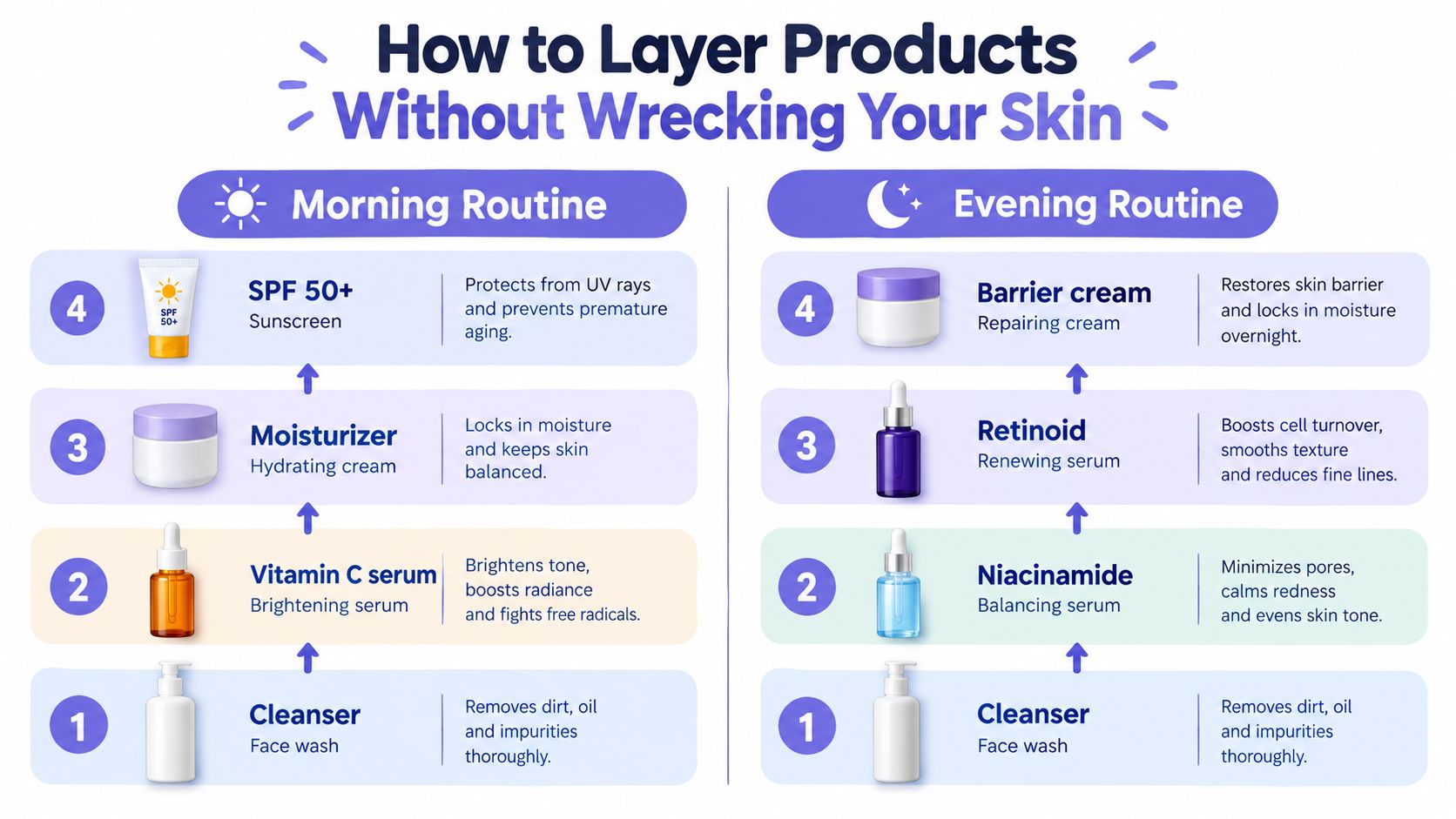
A calm morning sequence
- Cleanser: Use a gentle cleanser, or rinse with water if cleansing leaves your skin tight.
- Vitamin C or another antioxidant: Apply one serum, not several competing brighteners.
- Moisturiser: Choose a barrier-supportive formula suited to your skin type.
- Tinted broad-spectrum sunscreen: Use SPF 30 or higher, with visible-light protection where possible.
L-ascorbic acid formulas are often placed early because their acidic environment can be affected by heavier products. The important point isn't chasing a perfect pH routine. It's avoiding a congested sequence that makes pilling, stinging, and skipped sunscreen more likely.
A simpler evening sequence
- Cleanser: Remove sunscreen and makeup without scrubbing.
- One treatment active: Use azelaic acid, niacinamide, a retinoid, or a prescribed product according to tolerance.
- Moisturiser: Seal the routine with a cream that supports the barrier.
You can find a practical overview of skincare routine steps, but your skin's response should guide the pace.
Vitamin C and niacinamide can be used together; the old warning that they must never be combined is largely a formulation and tolerance misunderstanding. Benzoyl peroxide may interfere with some forms of vitamin C and can add irritation when paired with hydroquinone or a retinoid, so separating them is often sensible.
Avoid using a high-percentage AHA on the same night as tretinoin until a clinician has helped you establish tolerance. Exfoliating acids layered with benzoyl peroxide can also produce unnecessary dryness. If you've overdone it, stop the actives, use a bland cleanser and moisturiser, and return to treatment only after the skin feels comfortable.
Patch-test a new product along the jawline before applying it across the face. For acne-prone skin, control active breakouts first. For mature or sensitive skin, fewer treatment nights and more moisturiser often produce better long-term adherence.
Why Sunscreen Is Doing More Than You Think
Sunscreen isn't the final decorative step in a dark-spot routine. It's part of active treatment. Without consistent photoprotection, UV and visible light can keep stimulating the same pigment process that your serum is trying to quiet.
The American Academy of Dermatology recommends a tinted, broad-spectrum sunscreen with SPF 30 or higher, alongside shade and sun-protective clothing, because visible light can worsen hyperpigmentation, particularly in darker skin tones. The recommendation is outlined in the AAD sunscreen information.
Think of pigment production as a tap. Your treatment products are trying to turn the tap down, while repeated unprotected exposure keeps opening it. A missed application does not erase a week of progress overnight, but regular exposure can make fading appear stalled and can contribute to relapse.
What your sunscreen should cover
- UVB: Helps reduce the radiation that causes sunburn and stimulates new pigment activity.
- UVA: Reaches deeper into the skin and contributes to persistent uneven tone.
- Visible light: Tinted formulas, often using iron oxides, can provide more relevant protection for melasma-prone skin.
- Daily exposure: Daylight near windows, commuting, and short outdoor errands still count.
Reapply when you're outdoors, sweating, or wiping your face. Over makeup, a sunscreen mist or powder can be convenient, but it shouldn't become an excuse for applying too little in the morning. A generous initial layer remains the foundation.
For additional practical guidance, the Mesoderm RX dark spot guide discusses sunscreen selection in the context of uneven pigmentation. The central pharmacy message remains uncomplicated: choose a product you'll apply generously and consistently.
If you're unsure how much to use or how to cover the face evenly, this guide on how to apply sunscreen on your face can make the routine more practical.
Realistic Timelines and When to See a Dermatologist
The fastest safe answer to “how to get rid of dark spots and hyperpigmentation” is usually not a stronger product. It's a routine that controls the cause, protects against light, and stays gentle enough to continue.
A 30-60-90 day approach gives you a useful framework. The first month is for barrier repair and reliable sunscreen. The second is for introducing one active and checking tolerance. The third is when consistent users can compare photographs rather than relying on memory.
| Spot Type | First Visible Change | Meaningful Clearance | Realistic Ceiling with Home Care |
|---|---|---|---|
| Recent PIH | Gradual change after consistent care | Often requires several months | Can fade substantially, but depends on depth and ongoing inflammation |
| Melasma | Improvement is usually gradual | Often takes months and needs maintenance | Cleveland Clinic and dermatology guidance describe long-term management; triple-combination therapy has reported improvement or clearance in about 60% to 80% of treated patients, as described by DermNet and RACGP guidance |
| Solar lentigines | Slow change with protection and treatment | May need professional assessment | Home care may soften contrast without fully removing the spot |
| Recurrent pigmentation | Progress may remain limited | Requires trigger control and maintenance | Ongoing exposure or inflammation can keep creating new pigment |
For melasma, recurrence is a central concern. In one prospective study, relapse reached 58.8% at 1 year, while a separate randomized trial reported 100% relapse after treatment. These findings are discussed in an evidence review of tranexamic acid and melasma treatment at the National Library of Medicine. That doesn't mean treatment is pointless. It means maintenance isn't an optional afterthought.
Know when self-treatment should stop
Book a dermatologist promptly if a spot:
- Bleeds or crusts: It needs assessment rather than another fading serum.
- Grows or changes unevenly: New evolution deserves professional examination.
- Appears on a palm or nail: Pigmentation in these locations should be checked.
- Doesn't budge after 12 consistent weeks: The diagnosis or treatment plan may be wrong.
Photograph the area monthly in the same bathroom light. Patch-test new products on the jawline, and don't introduce four actives at once. If you can't tell whether your skin is improving or just becoming irritated, that's a good reason to seek clinical advice.
I believe hyperpigmentation is best managed like dental hygiene. It may be quiet most days, but it still needs consistent prevention, a dependable brightening option during flare seasons, and professional review when the pattern changes.
Build a routine around your trigger and tolerance
Healtsy offers pharmacy and dermatologist-oriented skincare, including targeted options for dark spots, acne-prone skin, sensitive skin, and sun protection. Explore suitable products and use the skincare quiz for more personalised recommendations.
Visit Healtsy