


Sun Damage Skin Repair That Actually Works
You look in the mirror after summer and notice what wasn't there before: a scattering of brown spots across the cheeks, a duller tone around the forehead, and roughness that moisturizer no longer seems to smooth. Sometimes the skin feels tight after cleansing, even though it becomes oily later in the day. This is a common moment, and it can feel as though the damage has appeared overnight.
After sixteen years working in skincare, I believe the most useful message is also the most balanced one: sun damage can improve, but repair starts when new ultraviolet injury stops. A landmark review found that both the epidermis and dermis can achieve moderate self-restoration after sunlight avoidance or broad-spectrum, high-SPF sunscreen use. It also reported that topical retinoic acid can support dermal repair by promoting new collagen deposition beneath the epidermis. The original PubMed review helped move photoaging away from the idea of being entirely permanent.
This is the complete guide to sun damage skin repair, from assessing what you see to building an at-home routine, choosing targeted actives, and deciding when professional treatment makes sense. The important distinction is between changes that may respond relatively quickly, such as dehydration and surface dullness, and deeper changes that require sustained collagen and elastic-fiber remodeling.
I believe this approach is the best knowledge I can give from my experience in the sector. I'm certain it will solve the most common source of confusion, which is not knowing whether to start with a brightening serum, a retinoid, a professional procedure, or a better sunscreen. Repair and prevention aren't competing goals. Once UV exposure is controlled, prevention gives the skin room to recover.
How Sun Damages Skin and What to Look For
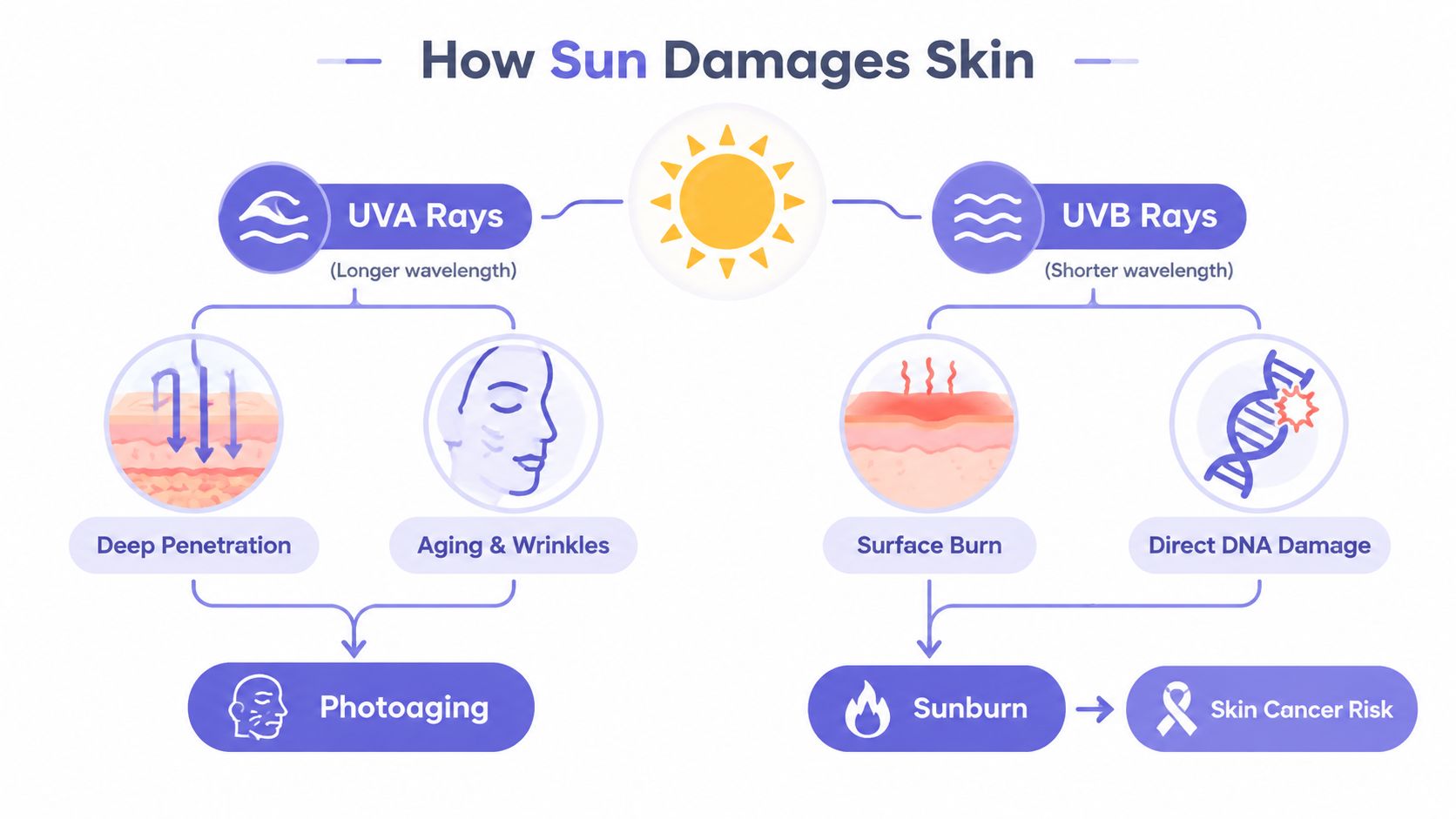
Ultraviolet radiation doesn't affect every layer of skin in the same way. UVA penetrates more and is linked more strongly with premature aging, while UVB more strongly causes sunburn and direct DNA photolesions such as thymine dimers. UVA also has limited repair capacity in human skin, which helps explain why repeated exposure can leave a long-term imprint. The difference between UVA and UVB is more than a technical detail because your daily protection needs to address both.
UV-related DNA injury also isn't corrected immediately. An explainer from the University of Queensland reports a half-life of UV-induced DNA defects of about 20 to 30 hours, and notes that nearly 25% of the damage seen at 24 hours was still present at 72 hours in one study. This explanation of post-exposure skin repair illustrates why aggressive exfoliation immediately after overexposure can be counterproductive.
Reading the visible pattern
Look first at the type of change, not the product label.
A product can make the surface look brighter while deeper structural change remains. Assessing both appearance and feel prevents unrealistic expectations.
Some people want a more formal view of oxidative stress and DNA-related injury, especially after repeated occupational or recreational exposure. A clinician can explain whether a DNA oxidative damage test is relevant to their situation. It shouldn't replace a skin examination, particularly when a spot is changing, bleeding, crusting, or refusing to heal.
Pigment also needs careful handling. A routine for preventing hyperpigmentation should focus on stopping the trigger before adding multiple brightening products. Otherwise, irritation from an overactive routine can prolong discoloration rather than improve it.
Your At-Home Repair Routine That Supports Recovery
A good routine should feel repeatable on an ordinary weekday, not like a laboratory protocol. I prefer a staged flow that first calms and hydrates the skin, then introduces correction, and only later increases intensity if the barrier remains comfortable.
Morning care
Start with a gentle cleanser or rinse with lukewarm water if the skin is dry and not heavily soiled. Avoid the squeaky-clean feeling. That sensation often signals excessive cleansing, especially when the face feels tight soon afterward.
An antioxidant serum can be useful for supporting a more even-looking complexion. Vitamin C is a common choice, but sensitive skin may prefer a simpler hydrating serum until stinging has settled. Follow with a moisturizer containing barrier-supportive ingredients such as ceramides, then apply a broad-spectrum, high-SPF sunscreen as the final morning skincare step.
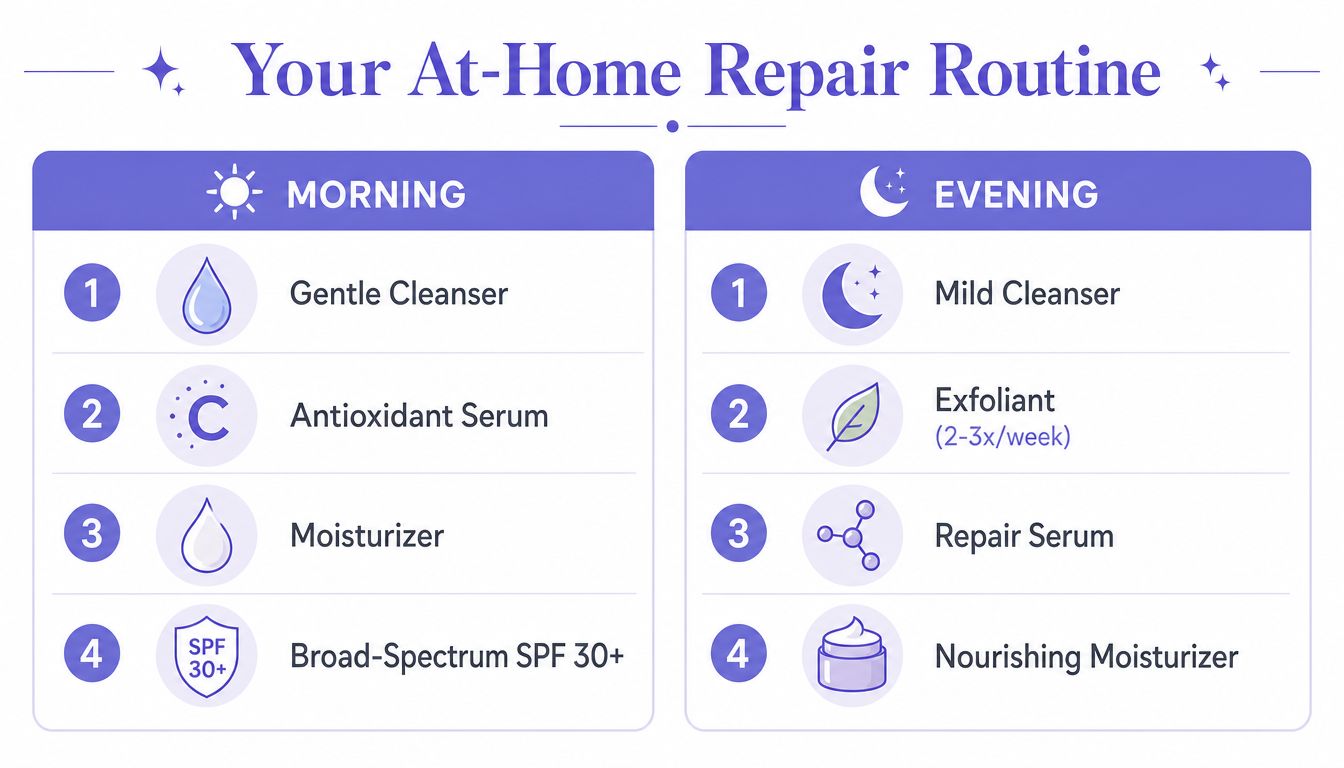
Sunscreen doesn't erase established damage, but it prevents fresh UV injury from working against repair. Reapply when outdoor exposure, sweating, swimming, or rubbing reduces the protective film. A hat, sunglasses, and shade add practical protection that skincare alone can't provide.
Evening care
Cleanse mildly, especially if you've worn sunscreen or makeup. If the skin is still hot, peeling, tender, or unusually reactive after sun exposure, pause retinoids, acids, and fragranced products. A soothing resource on post-sun aloe vera care can help you think through comfort-focused recovery without treating peeling as an invitation to scrub.
Once the barrier feels stable, introduce a retinoid slowly. Use a pea-sized amount on completely dry skin, spread across the face rather than applied as thick dots to individual wrinkles. Begin on occasional evenings, use moisturizer before or after it if needed, and increase only when redness, scaling, and dryness remain manageable.
The evidence is strongest for prescription tretinoin among topical options. Controlled studies report statistically significant improvements in photodamage after about 3 to 6 months of daily use.
Controlled studies and reviews report statistically significant improvements in photodamage after about 3 to 6 months of daily use, while a practical response may become visible earlier and strengthen with continued use. The clinical tretinoin study supports its role in improving roughness, pigmentation, wrinkles, and sallowness.
Adjusting for real skin
Sensitive skin may need more recovery evenings and a moisturizer-led routine. Oily skin can still be dehydrated, so choose light barrier support rather than skipping moisturizer altogether. Mature, dry skin often benefits from a slower retinoid introduction and a richer cream to reduce treatment dropout.
A simple checklist keeps the program sustainable:
- Stabilize first: Stop exfoliation and retinoids while the skin stings or peels.
- Introduce one active: Adding several new products makes irritation difficult to identify.
- Use less product: A pea-sized retinoid amount is enough for the face.
- Protect every morning: Repair is harder when new UV exposure continues.
- Track comfort: Persistent burning isn't a sign that a treatment is working better.
Choosing Actives for Pigment, Texture, and Collagen Loss
The right active depends on what you want to change. Vitamin C and niacinamide are generally more useful for tone, antioxidant support, and barrier function. Retinoids have a stronger clinical position for wrinkles, texture, and photoaging. Hyaluronic acid and ceramides support hydration and barrier comfort, but they don't replace a remodeling active.
| Active Ingredient | Best For | Evidence Strength | Watch Out For |
|---|---|---|---|
| Vitamin C | Brightness and uneven-looking tone | Useful supportive option | Stinging or instability can affect tolerance |
| Niacinamide | Barrier support, dullness, and oil balance | Useful supportive option | High-strength formulas may irritate some skin |
| Retinol | Fine lines, texture, and gradual tone correction | Supported, but generally less direct than prescription tretinoin | Dryness, peeling, and slow introduction |
| Tretinoin | Wrinkles, roughness, pigmentation, and photodamage | Strongest topical support at concentrations of 0.02% or higher according to a clinical review | Prescription access and irritant dermatitis |
| Hyaluronic acid | Dehydration and temporary plumping | Hydration support | Doesn't remodel collagen |
| Ceramides | Barrier weakness and dryness | Barrier-supportive | Doesn't directly fade established pigmentation |
The review of therapeutic interventions for solar elastosis and photoaging included 22 studies with 608 participants and reported consistent improvements in visible photoaging outcomes and skin elasticity, with generally mild and transient adverse events. A separate 2025 systematic review and network meta-analysis included 23 randomized controlled trials with 3,905 participants. It found that isotretinoin, retinol, and tretinoin significantly improved fine wrinkles, tazarotene performed best for coarse wrinkles, and tretinoin and retinol were superior for hyperpigmentation. These findings are detailed in the review.
The practical choice is still personal. A person with sensitive skin may choose niacinamide, ceramides, and a carefully introduced retinol before considering tretinoin. Someone with pronounced photodamage and medical access may discuss prescription tretinoin with a dermatologist. If you're uncertain about terminology, retinol versus retinoid is a useful distinction before you buy.
Don't combine every active at once. Vitamin C in the morning and a retinoid at night can be reasonable for tolerant skin, while exfoliating acids should be used sparingly. If redness develops, remove the newest or strongest active first, not the moisturizer and sunscreen that support adherence.
Professional Treatments, Timelines, and Prevention That Locks In Results
Professional procedures can help when topical care has reached its practical limit, but timing matters. A peel can address selected surface changes, laser treatment can target pigment or stimulate remodeling, and microneedling can create controlled injury that encourages a repair response. These options vary by skin tone, pigment tendency, lesion type, downtime, and operator skill, so an in-person assessment is more valuable than choosing a procedure from a menu.
Barrier stabilization comes first. Treating actively irritated, recently sunburned skin with an aggressive procedure can increase discomfort and may worsen discoloration. A clinician should also distinguish ordinary photoaging from lesions that need medical assessment rather than cosmetic treatment.
What realistic timing looks like
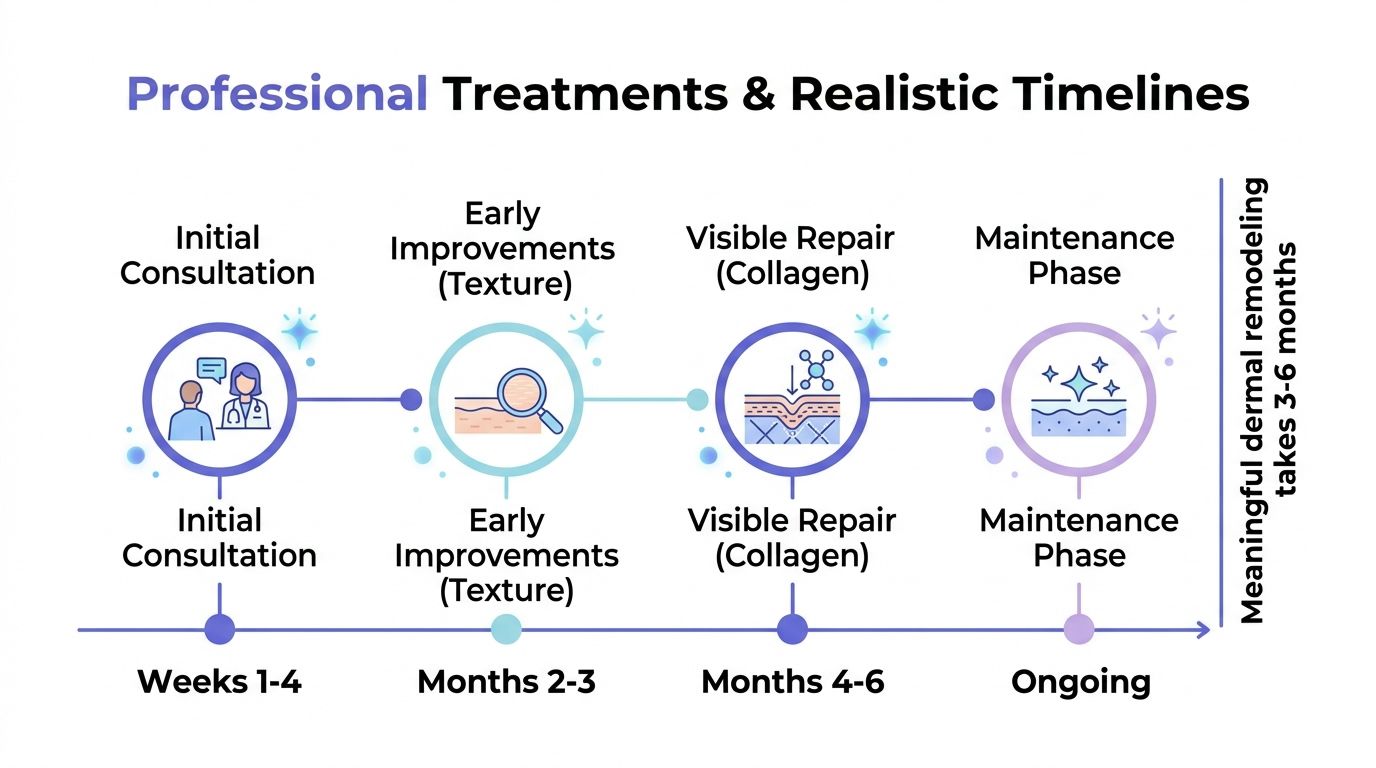
Photodamage remodeling is slow because the skin must normalize its epidermis and reorganize the dermal matrix. Histologic improvement after tretinoin 0.02% was documented at 12 months, including a smoother epidermis and more organized elastic and collagen fibers in the dermis. The long-term histologic findings explain why a few days of peeling shouldn't be mistaken for completed repair.
Fine texture and hydration may look better sooner. Pigment and wrinkles can continue improving with prolonged use and maintenance, while tactile roughness may persist. Higher tretinoin concentrations, including 0.1%, produced more substantial improvement in vehicle-controlled trials but also required careful titration for tolerability, so stronger isn't automatically wiser.
If you're comparing procedures, consider the purpose rather than the trend:
People researching treatment budgets may find a discussion of laser sun spot removal cost useful for planning questions, although the final price and suitability depend on the clinic, treatment area, and clinical assessment.
Protecting the work
Use a broad-spectrum sunscreen with high SPF every morning, apply enough to cover exposed facial skin, and reapply during extended outdoor exposure or after sweating and swimming. Protective clothing, shade, a hat, and sunglasses reduce the burden placed on sunscreen.
Some consumers also explore newer repair-focused ingredients. A recent 2026 PubMed-indexed review reported that peptide-based TriHex formulations produced histologic evidence of extracellular matrix remodeling, with 74% of cases showing removal of amorphous elastotic deposits, new elastin formation, strengthened dermal-epidermal junction markers, and improved hydration signals. The review is available through PubMed. This is promising but should be interpreted as a developing area, not a reason to abandon established photoprotection or dermatologist-guided treatment. Discussions about supportive regenerative products, including PDRN serum, should stay grounded in the difference between early evidence and established clinical practice.
Your Personalized Plan and Next Steps for Lasting Glow
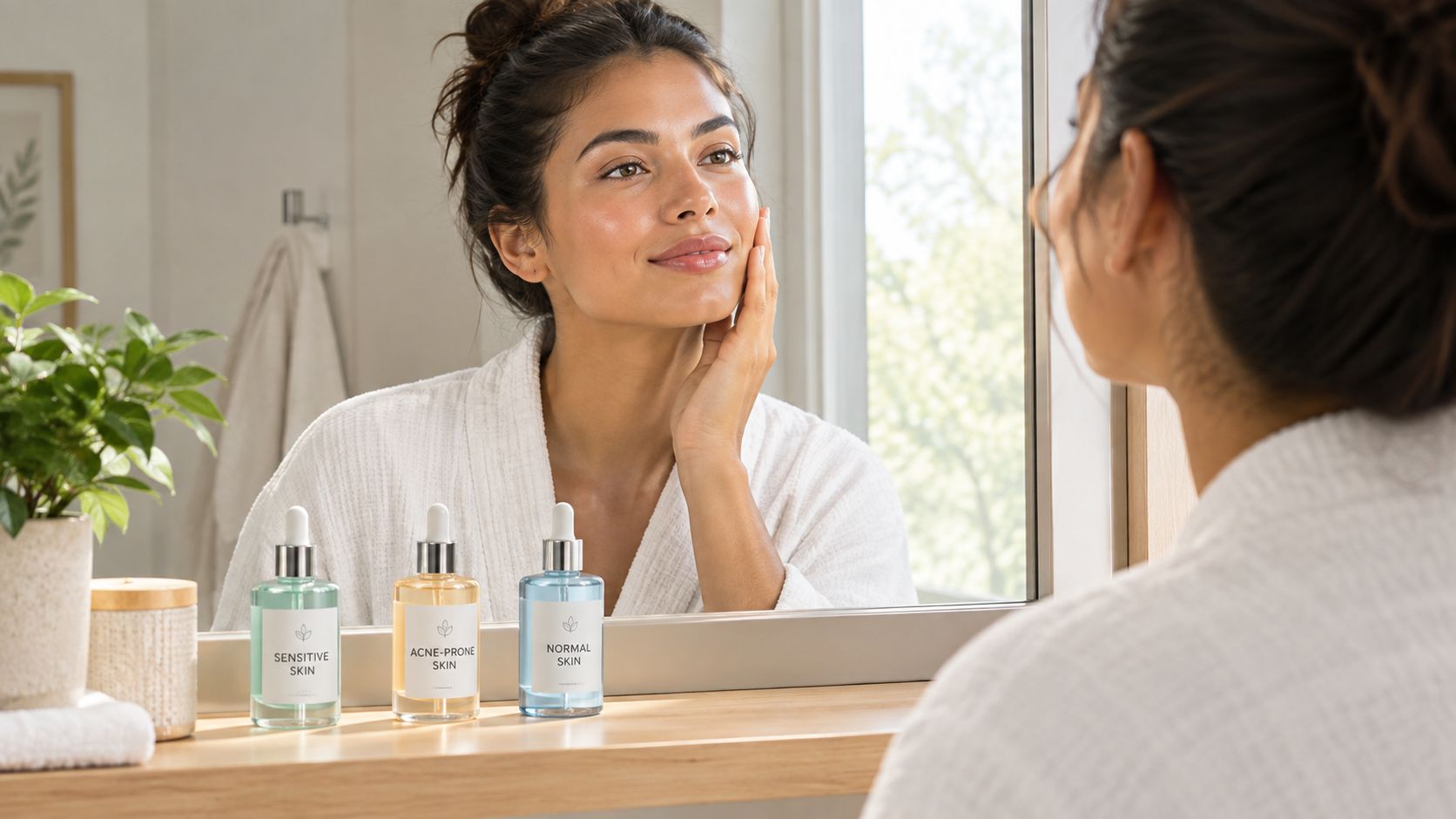
The most effective plan is the one your skin can tolerate long enough to use consistently. For sensitive skin, begin with a gentle cleanser, ceramide moisturizer, and broad-spectrum sunscreen, then consider a low-irritation brightening active before a retinoid. For acne-prone skin, choose light hydration, non-comedogenic textures, and introduce retinoid care cautiously because irritation can worsen the appearance of marks.
Dry, mature skin usually needs barrier support before correction. Pair a nourishing moisturizer with a gradual retinoid schedule, and don't treat flaking as a reason to add more exfoliation. Oily or combination skin can use lightweight hydrators and a fluid sunscreen, while keeping the routine simple enough to avoid congestion and over-treatment.
For product shopping, Healtsy offers dermatologist-approved lines, French pharmacy staples, sunscreens, moisturizers, and targeted serums for concerns including pigmentation and sensitivity. Its skincare quiz provides personalized recommendations and an introductory 10% discount, which can be useful when you're choosing between several active categories rather than buying everything at once.
Keep the long-term plan uncomplicated:
- Morning: Gentle cleanse, optional antioxidant, moisturizer, and broad-spectrum high-SPF sunscreen.
- Evening: Mild cleanse, retinoid on suitable nights, and barrier-supportive moisturizer.
- Weekly: Exfoliate only when the skin is calm and tolerant.
- Ongoing: Reassess persistent spots, changing lesions, or irritation with a dermatologist.
I believe this staged approach is the most reliable interpretation of sixteen years in skincare: stabilize, correct, then remodel. Sun damage skin repair won't deliver an overnight transformation, but consistent photoprotection and targeted care can help create smoother, more even-looking skin while protecting the progress you make.
Build your repair routine with Healtsy
Pharmacy-grade skincare, French pharmacy products, dermatologist-approved formulas, and high-SPF sun care — explore by skin concern or take the skincare quiz for personalized recommendations and the introductory discount.
Explore Healtsy