


Rosacea Treatment Dermatologist Guide
You catch your reflection in a shop window after a hot coffee and a warm bus ride. Your cheeks are bright red, the flush lasts longer than it used to, and a few small bumps have appeared around your nose. You've tried a soothing cream, mineral sunscreen, and a gentle cleanser, but your skin keeps dictating where you feel comfortable going.
That's the point at which many people search for a rosacea treatment dermatologist. I believe that's a sensible decision, not an overreaction. After 16 years in the pharmaceutical sector, I'm certain the most useful treatment plan starts by identifying what your rosacea is doing today, then matching the treatment to that pattern.
Rosacea is common, chronic, and often undercounted. A systematic review estimated that 5.46% of the general population, or about 415 million people worldwide, are affected, with substantial variation depending on how the condition is diagnosed (British Journal of Dermatology review). It is not merely a cosmetic inconvenience, and it shouldn't be treated as if every red face needs the same cream.
When Self-Care Stops Being Enough
The patient in the shop window doesn't necessarily need stronger skincare. She may need a diagnosis. Her cheeks flush after coffee, heated rooms, and sunlight. At first, a fragrance-free moisturiser and mineral sunscreen calm things down. Then the redness stays for hours, papules appear, and fine vessels begin to map across the cheeks.
That progression changes the conversation. A dermatologist can distinguish rosacea from acne, contact dermatitis, seborrhoeic dermatitis, lupus, and other causes of facial redness. The value isn't merely access to a prescription. It's the ability to identify the dominant phenotype and avoid years of buying products that irritate rather than help.
If flushing is lasting longer, bumps are recurring, or visible vessels are becoming easier to see, stop treating the problem as ordinary sensitivity.
A useful starting point is a guide to treating rosacea at home, especially if your symptoms are mild and occasional. But self-care has limits. Once inflammation, persistent erythema, or eye symptoms become regular, professional assessment gives you a safer route.
What changes at a dermatology appointment
The dermatologist will usually examine the distribution of redness, the type of bumps, visible vessels, skin texture, and any eye involvement. That assessment leads to a phenotype-matched plan, which may include:
- Prescription topicals: Metronidazole, azelaic acid, or ivermectin for inflammatory lesions.
- Redness-directed treatment: Brimonidine or oxymetazoline when persistent erythema is the leading complaint.
- Oral anti-inflammatory therapy: Used when topical treatment doesn't control more extensive inflammation.
- Vascular devices: Pulsed dye laser, Nd:YAG laser, or intense pulsed light for resistant redness and telangiectasia.
Dermatologists are also the main ongoing-care providers for rosacea. In a U.S. claims analysis, dermatologists handled 65% to 72% of rosacea visits, while 80% of people with rosacea in one survey reported being under dermatological care (U.S. rosacea care analysis). Those figures reinforce a practical point: rosacea management is a specialist-led discipline, not a product-selection contest.
I believe early assessment prevents unnecessary experimentation and gives inflamed skin a chance to settle before the pattern becomes harder to control. It also gives you a plan for what happens after improvement, which is where many otherwise good treatment attempts fail.
The Four Faces of Rosacea and Why They Matter
Rosacea doesn't have one universal appearance. Dermatologists now focus increasingly on the signs and symptoms present in the individual patient rather than relying only on rigid subtype labels (updated phenotype-based algorithms).
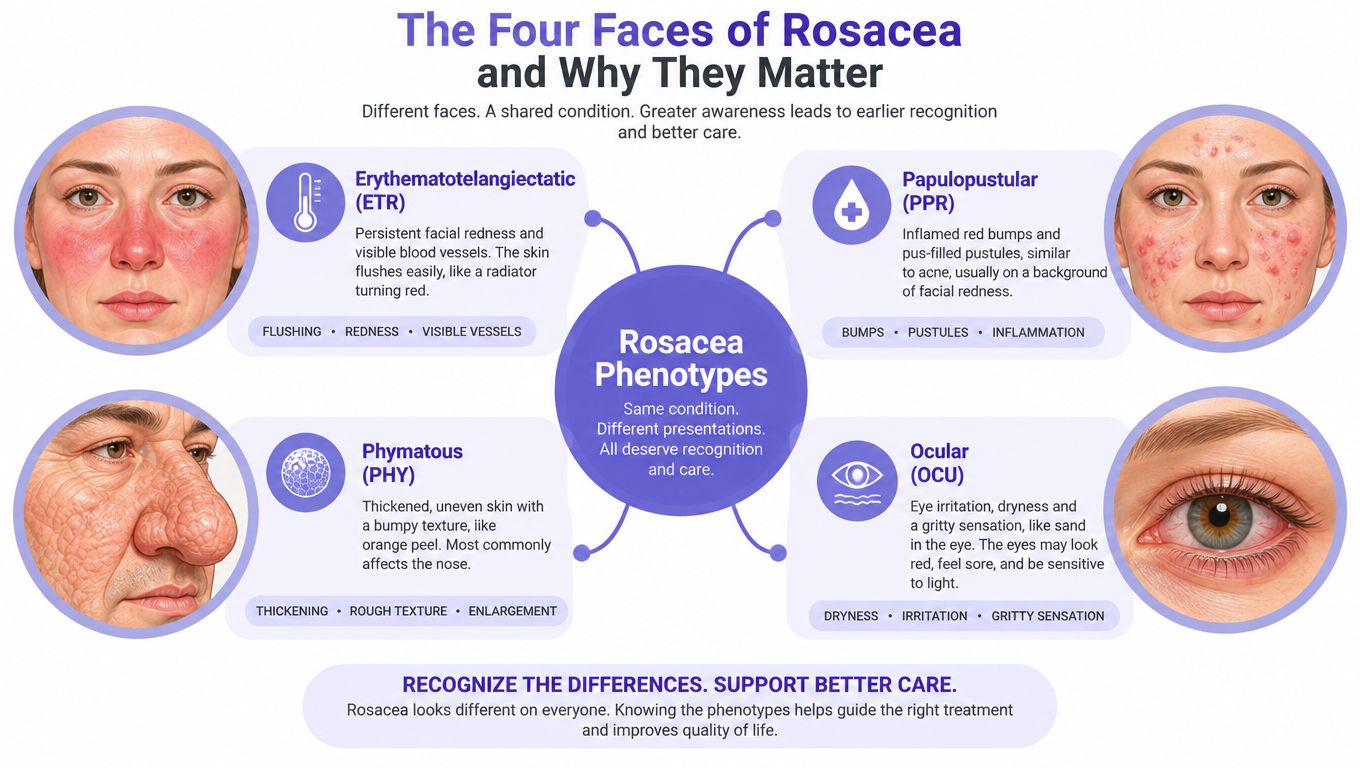
1. Erythematotelangiectatic rosacea
Think of a radiator that turns pink every time the room changes temperature. This pattern features flushing, persistent background redness, warmth, and visible small vessels. Coffee, sunlight, wind, alcohol, or emotional stress may trigger the colour change, but the redness can eventually remain between episodes.
2. Papulopustular rosacea
This resembles acne at first glance, but the bumps don't behave like ordinary teenage spots. Papules and pustules appear against a red, sensitive background, usually across the central face. Harsh acne products can aggravate this pattern because they add irritation to an already reactive barrier.
3. Phymatous rosacea
Here, the skin texture becomes thicker and more uneven in particular areas. The nose is a familiar location, but thickening can affect other facial zones. A dermatologist should assess this pattern early because texture change needs a different clinical approach from temporary flushing.
4. Ocular rosacea
The eyes may feel gritty, dry, burning, watery, or irritated after screen-heavy days. Some people notice eye symptoms alongside facial signs, while others notice the eyes first. Persistent ocular symptoms deserve medical attention, and an ophthalmologist may need to join the care team.
Many patients have mixed features. You might have persistent cheek redness, a few inflammatory bumps, and gritty eyes at the same time. That's why a dermatologist maps the primary pattern and the secondary signs before choosing treatment.
After reading this, name the pattern that dominates your daily experience: colour and vessels, bumps, thickened texture, or eyes. That simple distinction makes the rest of the treatment discussion much clearer.
A soothing ingredient such as niacinamide may support the barrier, but it doesn't replace phenotype assessment.
What a Dermatologist Actually Prescribes
A dermatologist doesn't reach for one universal rosacea cream. The prescription cabinet is organised around the dominant problem, whether that's inflammatory bumps, persistent colour, or a flare that hasn't responded to topical therapy.
Topicals for bumps and inflammation
For mild-to-moderate inflammatory rosacea, metronidazole, azelaic acid, and ivermectin are established options. UK guidance places ivermectin 1% once daily, azelaic acid 15%, and metronidazole among first-line choices for papulopustular disease. The same guidance describes ivermectin courses lasting 8 to 12 weeks, with review at about two months, while azelaic acid 15% gel is commonly applied twice daily and may begin showing improvement after about four weeks (UK rosacea guideline).
Metronidazole is often chosen for inflammatory papules and pustules. Azelaic acid can be useful when inflammation and uneven texture occur together. Ivermectin is particularly relevant when papulopustular rosacea is the leading phenotype.
If the main complaint is, “I look flushed all the time,” an anti-inflammatory alone may not be enough. Brimonidine and oxymetazoline constrict superficial facial blood vessels and can temporarily reduce visible erythema. They work more like a dimmer switch than a cure, so a dermatologist may combine one with metronidazole or azelaic acid when redness and bumps coexist (AAFP rosacea treatment summary).
Oral options need a clear reason
Low-dose doxycycline is used for its anti-inflammatory effect, not just because rosacea is an infection. It may be considered when inflammatory lesions are more extensive or topical therapy hasn't provided enough control. Sun sensitivity, stomach upset, and medication interactions are worth discussing before starting it.
Severe, refractory papulopustular disease may prompt a dermatologist to consider isotretinoin. That decision requires careful monitoring, discussion of pregnancy prevention where relevant, and review of laboratory and safety requirements. It isn't a casual escalation.
I don't promise overnight improvement. A defined topical trial commonly needs 8 to 12 weeks before the response can be judged properly, while oral anti-inflammatory treatment may begin calming a flare within 4 to 6 weeks. The exact timeline depends on the phenotype, severity, adherence, and whether triggers continue to provoke the skin.
| Medication | Form | Best For | Typical Timeline | Key Side Effects |
|---|---|---|---|---|
| Metronidazole | Topical cream, gel, or lotion | Inflammatory redness, papules, and pustules | Often assessed over 8 to 12 weeks | Local irritation or dryness |
| Azelaic acid 15% | Topical gel or foam | Mild-to-moderate inflammatory lesions and sensitive, uneven skin | Early improvement may appear after about 4 weeks | Stinging, burning, or dryness |
| Ivermectin 1% | Topical cream | Papulopustular rosacea | Often used for 8 to 12 weeks | Local irritation |
| Brimonidine | Topical gel | Persistent facial erythema | Temporary daily effect | Irritation or rebound redness in some patients |
| Oxymetazoline | Topical cream | Persistent facial erythema | Temporary daily effect | Irritation or worsening redness in some patients |
| Doxycycline | Oral anti-inflammatory treatment | More extensive inflammatory rosacea | Often assessed within 4 to 6 weeks | Sun sensitivity and gastrointestinal effects |
| Isotretinoin | Oral treatment | Severe, refractory papulopustular disease | Specialist-supervised | Monitoring and significant safety requirements |
You can also review practical considerations about azelaic acid, but your dermatologist should decide whether it fits your skin and current treatment plan.
Laser and Light Treatments for Stubborn Redness
Creams can reduce inflammation, but they don't erase established visible vessels. When persistent erythema or telangiectasia dominates, dermatology guidance shifts toward vascular devices, including pulsed dye laser, Nd:YAG laser, and intense pulsed light (vascular and nonpharmacological rosacea guidance).
How the devices differ
Pulsed dye laser, or PDL, is precise for superficial linear capillaries and concentrated red vessels. It targets blood within those vessels and is often considered when individual vessels are easy to see.
Nd:YAG 1064 nm penetrates more deeply. A dermatologist may choose it for deeper or thicker vessels, but the settings and operator experience matter greatly, particularly for darker skin tones.
IPL isn't technically a laser. It uses a broad range of light and can treat diffuse redness across larger areas. It may suit a face where flushing and general background colour matter more than a small number of sharply defined vessels.
The treatment experience varies by device and settings. Patients commonly describe a snapping or stinging sensation, while cooling systems can improve comfort. Temporary redness, swelling, bruising, and pigment changes are possible, so skin tone, tanning history, medication, and previous reactions must be discussed.
| Device | Best For | Sessions Needed | Downtime | Best Skin Tone |
|---|---|---|---|---|
| PDL | Linear capillaries and visible superficial vessels | Individual plan based on response | Usually short, with possible redness or bruising | Often strongest for lighter, untanned skin, with specialist assessment for other tones |
| Nd:YAG | Deeper or thicker vessels | Individual plan based on vessel depth | Usually short, with possible swelling or tenderness | Can be considered across skin tones when settings are carefully selected |
| IPL | Diffuse redness and broader facial flushing | Individual plan based on response | Usually short, with temporary redness possible | Best selected after assessment of tone, tanning, and pigment risk |
I won't give you a false promise about a single session. Devices reduce redness and visible vessels, but they don't cure the inflammatory tendency or guarantee that flushing will stop. A dermatologist may treat obvious vessels with PDL first, then use IPL for broader diffuse redness. If you're unsure whether a facial vessel is rosacea-related or another vascular issue, this resource on causes of facial spider veins offers useful background.
Ask three questions before booking: Which device brand and wavelength will you use? Who will operate it? Can you patch-test a small cheek area first? Also ask how the clinic handles darker skin tones and what aftercare follows treatment.
LED masks may be discussed as a supportive cosmetic tool, but they shouldn't replace vascular assessment. Keep expectations realistic.
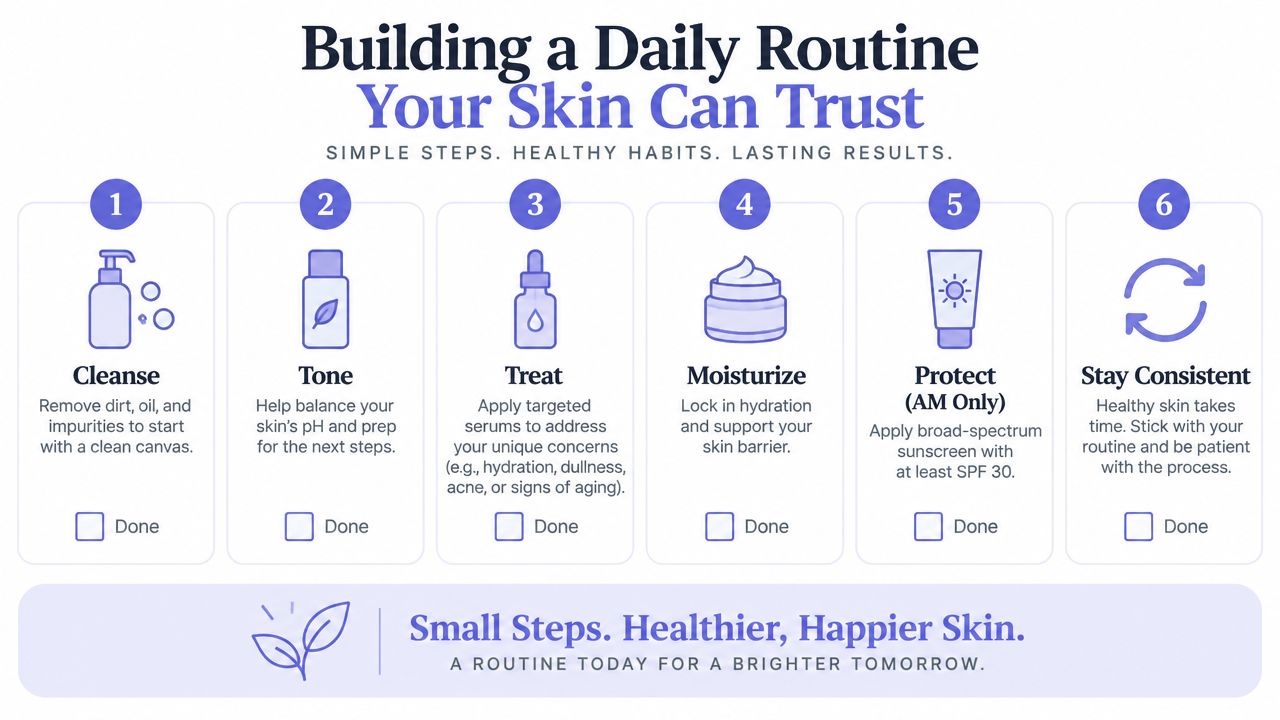
Building a Daily Routine Your Skin Can Trust
If your face feels hot after cleansing, or sunscreen stings before you leave for work, simplify the routine. I believe rosacea-prone skin responds best to fewer products used consistently, not a crowded shelf of active ingredients.
Morning
Cleanse with a low-pH, sulfate-free, fragrance-free cleanser and lukewarm water. Use your fingertips, rinse thoroughly, and pat dry. A rough towel can turn mild morning redness into a preventable flare.
Your phenotype should guide treatment. If redness dominates, your dermatologist may prescribe a vasoconstrictor or another redness-focused option. If bumps and inflammation dominate, azelaic acid 15% or metronidazole 0.75% may be prescribed. Apply the selected treatment after cleansing, exactly as directed, then let it settle before moisturising.
Niacinamide or centella can support the barrier when tolerated. Introduce only one new product at a time, so you can identify the cause if burning or worsening redness appears.
Finish with a mineral SPF 30 to 50 containing zinc oxide or titanium dioxide. Apply it as the final morning step and reapply every two hours during outdoor activity, swimming, sweating, or prolonged direct sunlight. Broad-spectrum protection matters because ultraviolet exposure can worsen flares and reduce treatment durability (British Journal of Dermatology guidance).
Evening
Remove sunscreen gently, cleanse without hot water, and apply your prescribed active if a second application is part of your dermatologist's schedule. Follow with a fragrance-free moisturiser that supports the barrier without a strong cooling, tingling, or tightening sensation.
Avoid the following, because “fresh” and “deep-cleaning” are poor reasons to tolerate irritation:
- Witch hazel toners
- Menthol
- Denatured alcohol
- Essential oils
- Physical exfoliants
- Strongly foaming micellar waters
A good routine should feel uneventful after application. Burning is information, not proof that a product is working.
For broader lifestyle context, see this guide to holistic skin health on daily habits and skin maintenance.
Keep this five-step order beside your mirror:
- Cleanse: Lukewarm water, gentle cleanser, pat dry.
- Treat: Use the dermatologist-selected treatment for your redness or bumps.
- Support: Apply moisturiser, with niacinamide or centella only if tolerated.
- Protect: Use mineral SPF 30 to 50 every morning.
- Repeat carefully: Follow the prescribed schedule instead of adding applications.
Tracking Triggers Without Obsessing Over Them
A patient once described the pattern perfectly: hot coffee in the morning, direct sunlight during a lunchtime walk, then a red, warm face by mid-afternoon. She didn't need to ban every enjoyable activity. She needed to find out which combination was repeatedly pushing her skin past its threshold.
I recommend a short two-week diary, not a lifelong spreadsheet. Each evening, record beverage temperature, time in sunlight, wind exposure, workout intensity, sleep, stress, and a simple skin score. The purpose is to identify repeatable associations, not to blame yourself for every flush.
Start with the common culprits
Guidance consistently highlights several aggravating factors, including ultraviolet exposure, alcohol, hot drinks, spicy food, temperature changes, and barrier disruption. A practical priority list looks like this:
- Ultraviolet exposure: Use daily sunscreen and seek shade during strong sunlight.
- Alcohol: Red wine and white wine may provoke flushing for some people.
- Spicy food: Hot sauces and chilli can activate flushing in susceptible patients.
- Hot beverages: Let coffee and tea cool before drinking if heat is a trigger.
- Cold and wind: Cover your cheeks and protect exposed skin in harsh weather.
- Stress and intense exercise: Notice whether heat, exertion, emotion, or sweat drives the reaction.
- Medicines and topical steroids: Review possible contributors with a clinician instead of stopping prescribed treatment independently.
The order isn't universal. One person may react to sunlight but tolerate spicy food. Another may tolerate wine but flush after a hot shower. A diary helps separate common triggers from your personal triggers.
Use a traffic-light system
Mark repeated problems red, occasional aggravators yellow, and comfortable exposures green. If hot coffee is red, try a cooler drink. If a spicy meal is yellow, reduce the portion and avoid combining it with alcohol and heat. Keep green activities in your life so rosacea management doesn't become a list of punishments.
I believe tracking works best as a short debugging exercise. Once you understand your pattern, stop recording everything and focus only on the variables that affect your face.
Maintenance and Long-Term Control
Months after the worst flare, many patients reach a quiet moment when they realise there's no permanent “cure date.” That doesn't mean treatment has failed. It means rosacea needs a maintenance plan that protects the calm period.
The maintenance phase usually begins after the initial treatment period, often 8 to 12 weeks after active therapy starts, once inflammatory lesions and persistent redness have been assessed. Your dermatologist may adjust prescriptions rather than stopping every treatment abruptly.

Four pillars keep control practical
Prescription tapering comes first. Depending on your response, a dermatologist may reduce metronidazole, azelaic acid, or ivermectin from daily use to every other day rather than stopping suddenly. Never change an oral medicine without medical advice.
Some patients with recurrent inflammation may remain on low-dose modified-release doxycycline for 12 to 24 months under supervision. That decision depends on the pattern of disease, response, risks, and the clinician's judgment.
Device maintenance is separate from anti-inflammatory care. Vascular laser can reduce established vessels, but new redness may develop because rosacea remains chronic. The treatment effect may last for years, and some guidance describes vascular laser results lasting 3 to 5 years before a maintenance session is considered.
Skincare continuity is the least glamorous and most dependable pillar. Cleanse gently, moisturise, and use sunscreen every day. SPF 30 or higher is a baseline in rosacea guidance, and photoprotection remains necessary even when your cheeks look calm (Mayo Clinic treatment overview).
Trigger surveillance means returning to the diary only when symptoms change. Seasonal redness, a new medication, a different climate, or a change in exercise can reveal a new pattern.
Flushing suddenly comes with eyelid swelling, your eyes feel persistently gritty, or the skin around your nose becomes thicker and more sebaceous.
I'm certain this maintenance approach is more sustainable than chasing every flare with a new product. Bring photographs of your skin during a flare, a complete medication list, and the trigger notes that show what happens in real life. That gives your dermatologist usable information, not just a description of how your face looked on the appointment day.
Build a routine your skin can trust
Healtsy offers pharmacy-grade skincare, sunscreen, eye-care products, and targeted rosacea selections that can support the routine your dermatologist recommends. Compare gentle cleansers, moisturisers, mineral sun protection, and relevant care products, then choose a routine you can realistically maintain.
Visit Healtsy