


How to Treat Eczema on Face Naturally: A Pharmacist's Guide
You've washed your face carefully, replaced your cleanser, stopped using makeup, and tried a kitchen remedy someone promised would calm the redness. Yet your cheeks still sting, your eyelids look puffy, and every new product feels like another gamble. After 16 years in community pharmacy, I've seen how quickly facial eczema can turn a simple skincare routine into a daily source of worry.
I believe the most useful answer to how to treat eczema on face naturally starts with a correction: natural care isn't a competition to find the most exotic oil or plant extract. It's a barrier-first plan that reduces irritation, adds moisture, and uses soothing ingredients only when the face can tolerate them. Atopic dermatitis affects an estimated 101.27 million adults and 102.78 million children worldwide, with reported prevalence of 2.0% in adults and 4.0% in children in one academic review, while another global analysis estimated adult prevalence at 9.6% (academic review of global atopic dermatitis). Facial eczema is common enough to deserve careful, practical guidance, not folklore.
Why Facial Eczema Feels Different From the Rest of Your Body
A person often reaches the bathroom mirror after another flare and sees raw cheeks, dry patches around the mouth, or swollen eyelids. They may have used the same cream successfully on an elbow, only to discover that it stings on the face. That experience isn't imagined. Facial skin has different demands, and it receives far more exposure throughout the day.
The skin around the eyes and mouth is relatively thin and has less tolerance for strong ingredients, rubbing, and repeated washing. The T-zone contains more sebaceous glands, while the cheeks can feel dry and tight. Weather, indoor heating, perspiration, sunscreen, makeup, masks, scarves, and frequent fingertip contact all reach the face directly. Hair follicles and oil distribution also vary across the face, so a product that feels protective on a forearm may feel greasy, clogging, or irritating around the nose and mouth.
Practical rule: Treat a facial flare like a compromised surface, not like an opportunity to test several remedies at once.
That's why facial eczema needs a shorter ingredient list and gentler handling. Fragrance, alcohol, essential oils, harsh surfactants, and aggressive exfoliation can add irritation when the barrier is already struggling. A cream that feels comforting on thicker body skin may trigger burning or aggravate a rash that resembles perioral dermatitis.
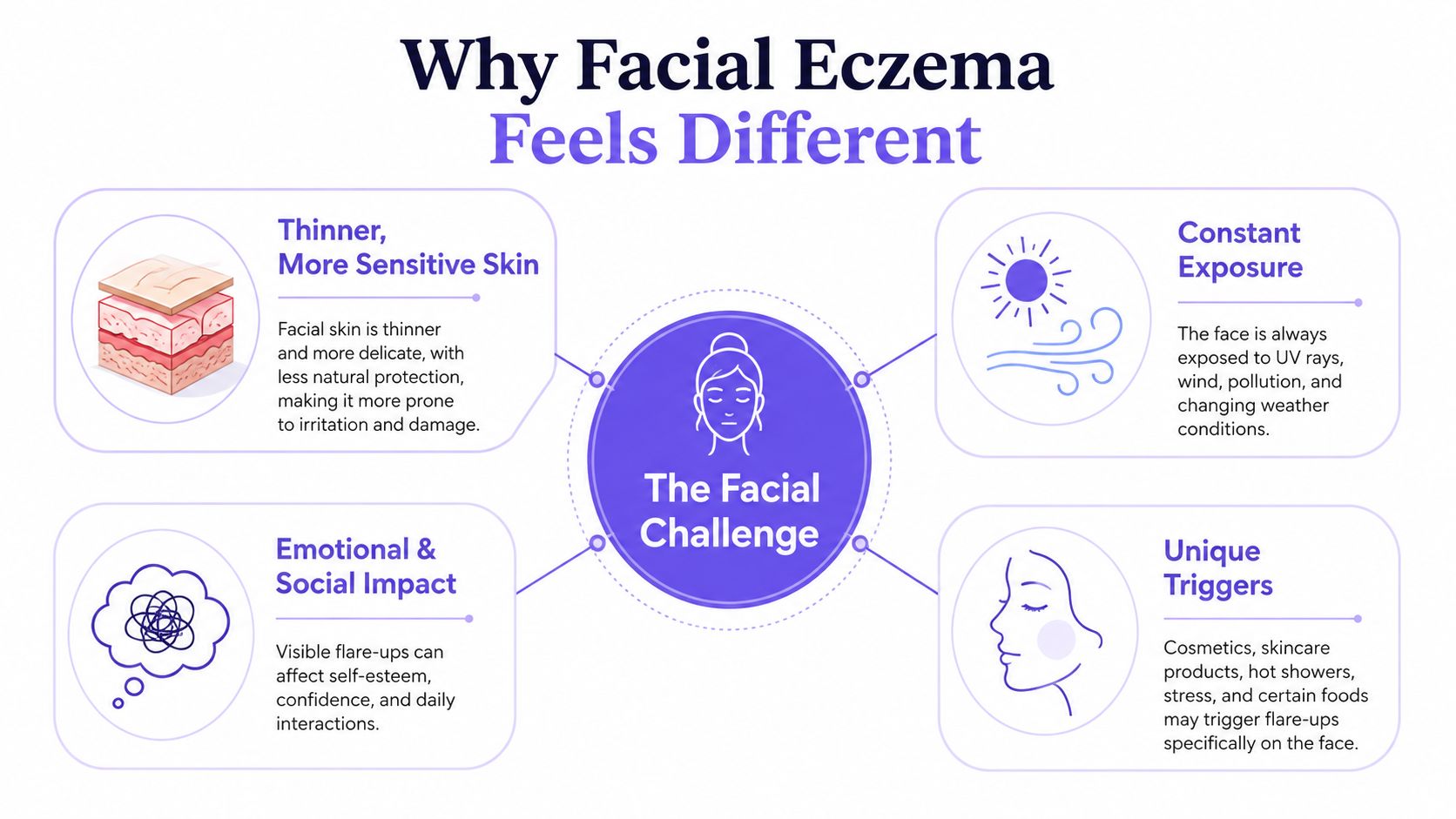
In my experience, the safest starting point is usually less activity, not more. A lukewarm wash, a bland moisturizer, and a pause on new products can reveal more than a crowded routine. If you're unsure whether your skin is reacting to a product or just losing moisture, this guide to identifying and caring for sensitive skin can help you think through the pattern. The remedies later in this article are ranked by facial tolerability and supporting evidence, not by how natural their labels sound.
Spotting Your Triggers and Confirming It Really Is Eczema
Before treating a facial rash, ask a basic question: is it atopic eczema? Several conditions look similar but need different care. Atopic eczema often causes dry, itchy, inflamed patches. Seborrheic dermatitis commonly affects the brows, sides of the nose, and other oilier areas, sometimes with fine or greasy scale. Perioral dermatitis tends to form small bumps or irritated patches around the mouth and can worsen with heavy creams or topical steroid use. Rosacea more often affects the central cheeks and nose, with flushing, warmth, visible vessels, or acne-like bumps.
| Feature | Atopic Eczema | Seborrheic Dermatitis | Perioral Dermatitis | Rosacea |
|---|---|---|---|---|
| Typical sensation | Itch, dryness, tightness | Itch or irritation with scale | Burning, stinging, or small bumps | Heat, flushing, burning |
| Common location | Cheeks, eyelids, folds, variable areas | Brows, nose folds, scalp margins | Around mouth, nose, or eyes | Central cheeks, nose, chin |
| Surface | Dry, rough, inflamed | Fine or greasy scale | Bumpy, sometimes flaky | Redness with possible bumps |
| Common clue | Sensitive barrier and recurring itch | Oilier distribution | Can react to heavy products or steroids | Triggered by heat, alcohol, spicy foods, or sunlight |
A bathroom-mirror check
Look at the distribution before applying anything. Is the rash on both sides, or is it sharply confined to one area? Did it begin after a new cleanser, sunscreen, fragrance, hair product, makeup item, or laundry product? A clearly defined border that matches product application may suggest contact dermatitis rather than classic atopic eczema.
For the next week, keep a simple diary. Write down your cleanser, moisturizer, sunscreen, makeup, hair products, weather, shower temperature, sleep quality, stress, and any foods that seem repeatedly associated with symptoms. Don't eliminate half your diet based on one flare. If you suspect a food reaction, use a medically sensible starting point such as learning about at-home food allergy testing while remembering that a food allergy assessment isn't the same as proving that food causes every eczema flare.
The four facial triggers I'd prioritize are fragrance, harsh surfactants, over-exfoliation, and temperature swings. Hot showers and cold wind can make a fragile barrier feel worse, while repeated acids, scrubs, retinoids, or cleansing brushes may keep the skin inflamed.
Self-observation is reasonable when the rash is mild, familiar, and improving after irritants are removed. Seek clinical advice when the diagnosis is unclear, the rash keeps returning despite a bland routine, or a product seems responsible. Patch testing can be particularly useful when contact allergy is suspected. If the pattern looks more like rosacea, compare it with this practical guide to managing rosacea at home, rather than assuming every red facial rash is eczema.
The Natural Options Worth Your Money and the Ones to Skip
The most useful natural-leaning ingredient for facial eczema is often the least glamorous: colloidal oatmeal. Finely milled oats contain avenanthramides and compounds that can soothe itch, bind water, and leave a light protective film on the skin. Oatmeal-based creams often make more sense than elaborate botanical blends because they combine a straightforward soothing role with barrier support.
Ceramides and squalane deserve a place in the same conversation. They aren't kitchen ingredients, but they behave like practical, skin-compatible materials. Ceramide-dominant moisturizers help replenish lipids found in the outer barrier, while squalane can soften dryness without the strong fragrance profile found in many plant oils. The strongest natural approach is often a well-formulated product rather than an undiluted ingredient.
Evening primrose oil and borage oil need an honest grade. Oral gamma-linolenic acid supplements have shown an uncertain overall benefit, and topical evening primrose can irritate facial skin. I wouldn't spend heavily on either as a first-line facial treatment when a plain emollient and colloidal oatmeal are more sensible starting points. Broader reviews also describe several herbal and supplement approaches as inconclusive (overview of natural eczema treatments).
| Ingredient | Evidence | Facial Tolerability | Recommended Role |
|---|---|---|---|
| Colloidal oatmeal | Most useful soothing natural-leaning option | Usually favorable, though oat sensitivity is possible | First botanical-style choice |
| Ceramides | Strong barrier-focused rationale | Generally well suited to sensitive skin | Core moisturizer ingredient |
| Squalane | Useful emollient support | Often comfortable when fragrance-free | Add softness to dry areas |
| Evening primrose or borage oil | Mixed or inconclusive support | Can irritate or feel heavy | Not a first purchase |
| Coconut oil | Moisturizing, but facial trade-offs matter | May clog pores or aggravate mouth and T-zone problems | Use cautiously, if at all |
| Aloe | Cooling sensation, limited eczema-specific certainty | Alcohol, fragrance, or preservatives can sting | Optional, simple formulation only |
| Black seed oil | Limited facial eczema evidence | Botanical allergy and irritation remain possible | Skip during an active flare |
| Honey | Medical formulations have a more controlled role | Sticky and potentially irritating in raw form | Don't use kitchen honey on broken facial skin |
Coconut oil is a good example of why natural doesn't mean gentle. It can reduce water loss for some people, but adult facial skin may respond with congestion or worsening irritation around the mouth. Aloe can feel soothing, yet a gel containing alcohol or perfume may undo that benefit. If you're researching gut-focused options, keep expectations realistic and review probiotics for gut health without treating supplements as a replacement for topical barrier care.
Patch-test every new botanical behind the ear or on another small area for 48 hours before using it on your face. Stop if you develop increasing redness, swelling, burning, or itching. A product that fails a patch test doesn't belong in a facial routine, however attractive its ingredient list appears.
Your Morning and Evening Routine Step by Step
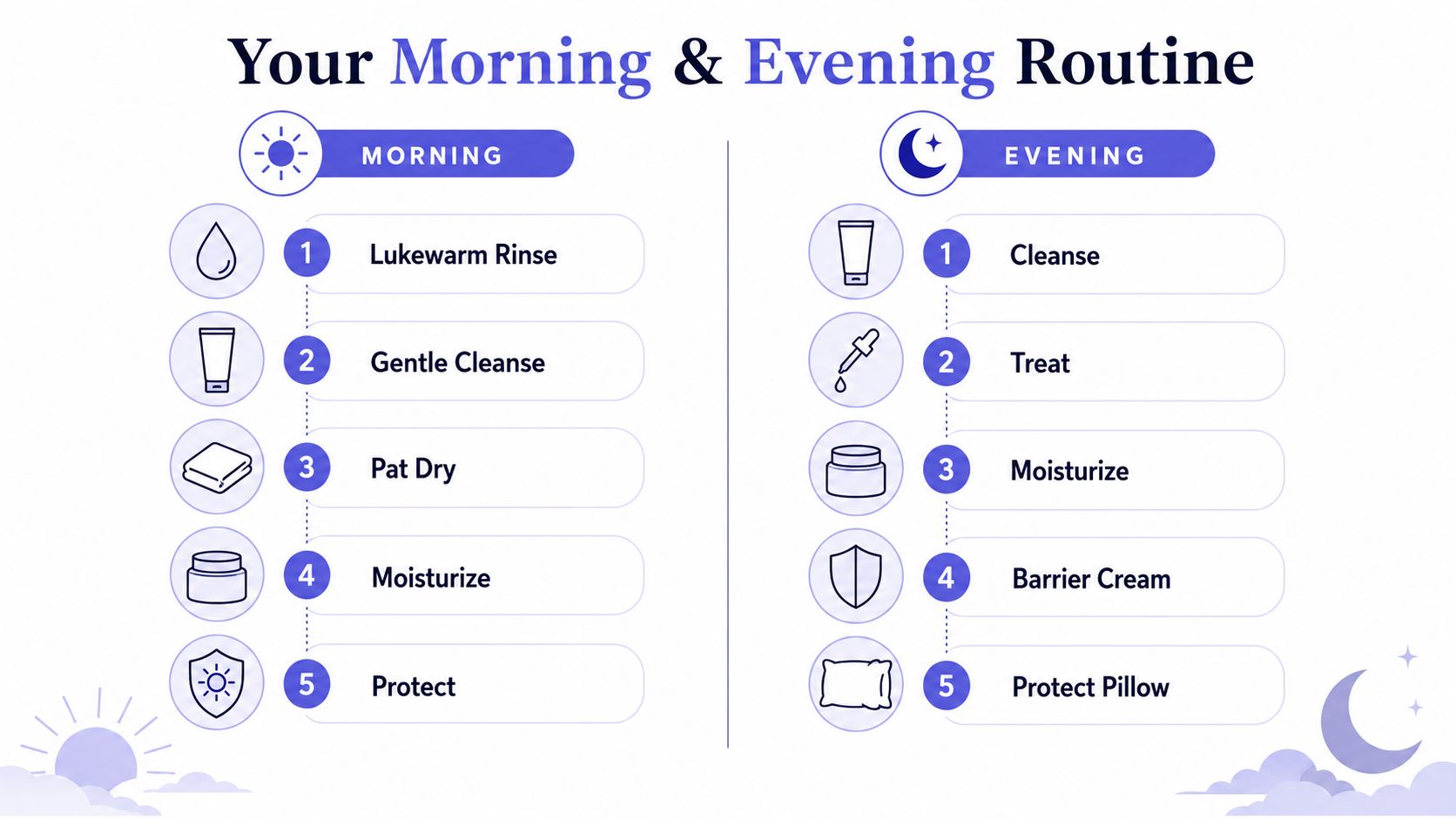
A routine must still work when your face feels sore and you are tired of trying products. Keep the order predictable, use lukewarm water, and give every product one clear purpose. In my experience, fewer well-tolerated steps usually outperform a crowded routine.
Morning at the sink
- Rinse gently. Use lukewarm water. If you applied little overnight and your skin feels comfortable, water alone may be enough.
- Cleanse only where needed. Choose a fragrance-free syndet or low-pH cream cleanser. Spread it over the face for about 30 seconds with clean fingertips, not a brush or washcloth. Skip morning cleanser if washing leaves your skin tight.
- Pat, don't polish. Press a soft towel against the skin and leave it slightly damp. Rubbing adds friction to an already weakened barrier.
- Moisturize promptly. Apply a ceramide-dominant, fragrance-free moisturizer within three minutes of washing. A simple cue helps: place it beside the sink and apply it two minutes after washing, while the skin still holds moisture.
- Protect last. Use a fragrance-free mineral sunscreen as the final step if it does not sting. Add it when the rest of the routine is stable, rather than testing sunscreen alongside several new products during a flare.
Evening when the face needs recovery
Remove makeup or sunscreen with a fragrance-free oil or balm cleanser, then rinse thoroughly. Follow with the same gentle second cleanser, stopping before the skin feels squeaky. A gentle cleanser for eczema-prone skin should leave your face comfortable rather than stripped.
Apply any prescribed treatment to active patches exactly as directed. If plain petrolatum is appropriate for a stubborn dry area, apply treatment first and petrolatum afterward, unless your prescriber has instructed otherwise. Finish with moisturizer. Use a humidifier only when the air is dry and you can clean the device consistently.
Keep botanical oils in their proper place. They do not replace prescribed treatment or basic barrier care just because their labels sound mild. Emollient care remains the foundation, while treatment for inflamed patches should follow the instructions given by your clinician or pharmacist.
For sleep, reduce avoidable friction and product transfer. These hair and skin pillowcase tips can help you assess fabric and hair-product contact. Change pillowcases regularly, particularly if you use styling products or sweat at night.
Lifestyle Habits That Quietly Feed Facial Flares
Natural care should be natural, not naive. Some lifestyle changes reduce friction and irritation. Others create a lot of mental work without addressing the skin's main problems.
Start with water temperature. Hot showers and long washing sessions can leave facial skin tighter, especially when indoor heating has already dried the air. Academic medical guidance identifies hot and cold temperatures, irritating fabrics, and hot showers as common eczema triggers (at-home eczema therapies from NYU Langone). Cold wind, sudden temperature changes, and heated rooms can all make exposed cheeks uncomfortable.
Sleep matters, but you don't need a perfect bedroom. Side or stomach sleeping can increase pillow friction, while hair products and fabric treatments can transfer to the face. Silk or satin may feel smoother than rougher fabric for some people, but clean, fragrance-free bedding matters more than chasing a particular material. Indoor humidity between 40% and 60% is a practical target for comfort, though a humidifier is only worthwhile when you can clean it consistently.
Stress isn't imaginary or merely emotional. It can intensify itch perception and make scratching more likely, creating a cycle that keeps the barrier disrupted. A short breathing exercise, a calmer bedtime routine, or reducing late-night product experimentation may help more than adding another serum.
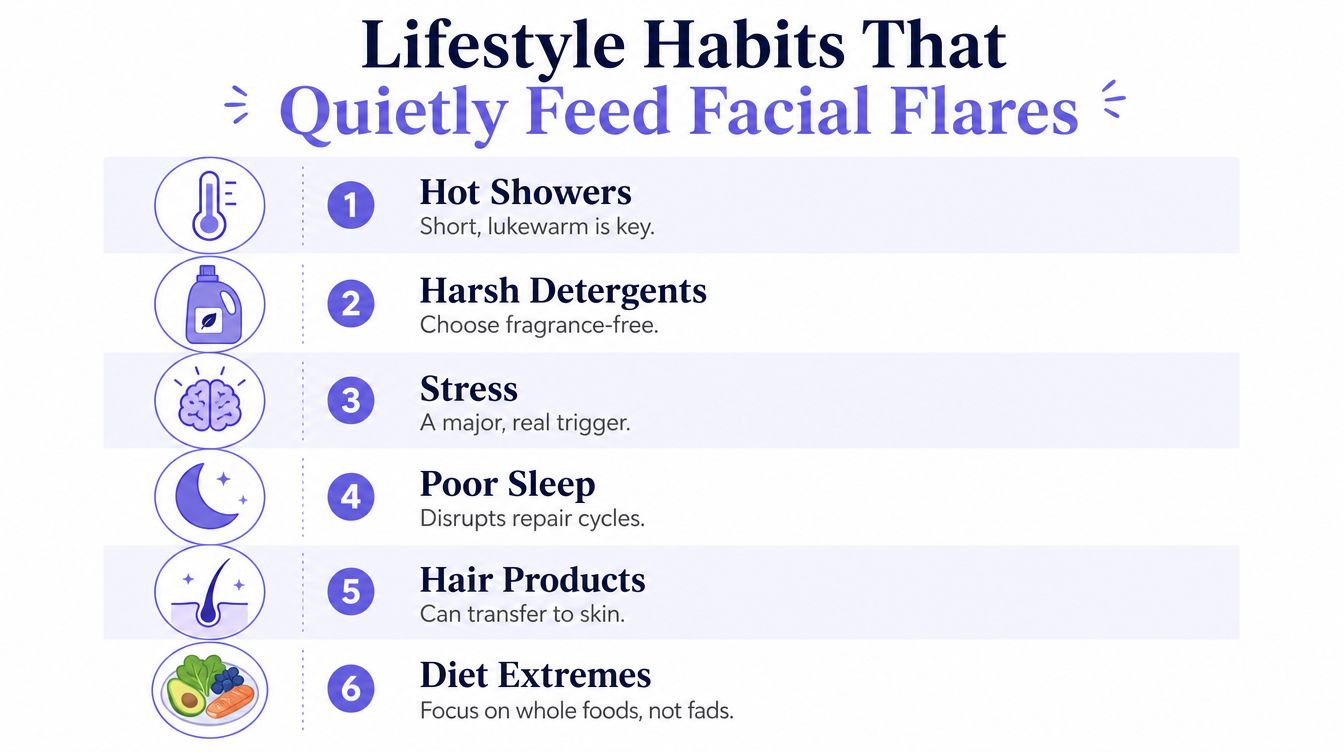
Diet deserves a measured approach. Elimination diets rarely solve facial eczema unless a genuine allergy or clear individual trigger exists. Some adults notice flares after alcohol, very spicy foods, or foods they personally associate with flushing, but a broad restrictive diet can create anxiety and nutritional problems without clarifying the cause.
If you want the biggest return for the least effort, prioritize these three habits:
- Keep washing lukewarm and brief: Reduce heat and rubbing before changing your entire diet.
- Protect the face from exposure: Use a soft scarf barrier in cold wind and avoid irritating fabric contact.
- Make evenings calmer: Improve sleep regularity and use a simple stress-reduction practice that you'll regularly repeat.
When Natural Care Is Not Enough and You Need a Professional
Home care suits a mild, familiar flare that improves after gentle cleansing and moisturization. It is not a safe default for every facial rash. Arrange professional assessment if the skin is worsening quickly, painful, infected-looking, or involved around the eye.
| See a Professional | Continue Home Care |
|---|---|
| Rash covers a large area of the face | Small, familiar dry or itchy patches |
| Weeping or honey-colored crust | No drainage, crusting, or marked pain |
| One-sided rash or rash around one eye only | Symmetrical irritation that is settling |
| Pain rather than itch | Mild itch without visual symptoms |
| Blistering, swelling, or rapid change | Stable symptoms after irritants are removed |
A GP, dermatologist, or allergist can check whether the problem is eczema or another condition, such as seborrheic dermatitis, rosacea, infection, or contact allergy. Patch testing may identify reactions to fragrance, preservatives, adhesives, or cosmetic ingredients. For eyelid eczema, a clinician may consider a topical calcineurin inhibitor. Other prescription choices depend on the diagnosis, the location, and how active the inflammation is, as outlined in this clinical review of facial eczema treatment.
Do not experiment with bleach baths on your face. Mayo Clinic guidance describes a carefully diluted bath using 1/4 cup of bleach in a 20-gallon tub, soaking from the neck down or limiting contact to affected body areas for 5 to 10 minutes, followed by rinsing and moisturizing while damp (Mayo Clinic bleach-bath guidance). That guidance does not support applying diluted bleach to facial skin.
Wet-wrap therapy also requires a defined method rather than improvised wrapping at the bathroom mirror. An NIH example uses a lukewarm soak of about 15 minutes, repeated three times a day, followed by topical medicine, with milder medicine used on the face than on the body (NIH wet-wrap therapy guidance). Ask a clinician before using this approach on facial skin, particularly if symptoms persist, recur around the eyes, or disrupt sleep and daily functioning.
While arranging advice, you can compare eczema cream options, but shopping should not replace diagnosis or prescribed treatment. In my experience, a short ingredient list is easier to assess than another complicated botanical blend.
Delaying care can let scratching cause lichenification, meaning thicker skin. Inflammation may also leave post-inflammatory color changes, while eye-area eczema can contribute to problems such as blepharitis. Seeking professional help is not a failure of natural care. It is the appropriate next step when barrier support needs medical backup.
Putting It All Together Without Losing Your Mind
Facial eczema is a chronic condition, not a weekend repair job. The routine that helps most is usually the one you can repeat when your skin is calm, busy, or disappointing. In my experience, consistency beats novelty. I've seen people improve after removing three irritating steps, not after adding a shelf of remedies.
For the next week, keep the plan deliberately small:
- Morning: Lukewarm rinse or gentle cleanse, damp-skin moisturizer, then tolerable sunscreen.
- Evening: Remove makeup or sunscreen gently, cleanse once or twice only when needed, apply prescribed treatment as directed, and moisturize.
- Lifestyle focus: Choose one target each day, such as cooler showers, less scarf friction, cleaner pillowcases, or a calmer bedtime.
Track the trend over 4 to 6 weeks, rather than judging your face after one morning. Note itch, tightness, stinging, sleep disruption, and the number of products used. A missed cleanse or a stressful day doesn't erase progress. Reset at the next wash with lukewarm water, a bland moisturizer, and no frantic product switching.
Keep two or three habits permanently: a fragrance-free barrier moisturizer, gentle cleansing, and one trigger you know affects your skin. Colloidal oatmeal can be a useful soothing addition if your face tolerates it, but it shouldn't distract you from the basics. I'm certain this barrier-first approach gives you a more realistic chance of calming recurring irritation than cycling through untested kitchen remedies.
Natural care works best alongside professional input, not in place of it. After 16 years in the sector, this is the complete guide I believe I can give you at the bathroom mirror: reduce irritation, support the barrier, test cautiously, and ask for help when the pattern stops behaving like a mild flare.
Build a simpler facial routine with less guesswork
Healtsy brings together pharmacy-grade skincare, fragrance-free moisturizers, gentle cleansers, sunscreens, and eczema-focused products so you can build a simpler facial routine with less guesswork. Explore sensitive-skin options and use the skincare quiz for more personalized product guidance.
Explore Healtsy