


Baby Care
Bepanthen Diaper Rash Cream: Label, Use and Buying Guide
Your baby's bottom is red during a middle-of-the-night change, there's a tube of Bepanthen diaper rash cream in the drawer, and you're not quite sure whether it's the right one. The useful question isn't whether Bepanthen is good for diaper rash. It's whether the ingredients, directions and age guidance on that particular tube match your baby's needs.
A familiar name can make the decision feel easier than it is, especially when you've bought the tube abroad. I believe the most helpful pharmaceutical advice starts with the label, then considers the routine and the point at which a baby needs medical assessment rather than another layer of ointment.
Bepanthen Diaper Rash Cream at a Glance
Although parents often call it a cream, the diaper-care product discussed here is a high-fat barrier ointment. That distinction matters: it leaves an oily protective film rather than disappearing like a light lotion. It isn't a steroid or an antibiotic, and you shouldn't expect it to work like either.
The Bepanthen patient-information leaflets describe an ointment containing 5% dexpanthenol, equivalent to 50 mg per gram, in a lipid-rich base. Dexpanthenol supports the skin barrier and its recovery; the base helps reduce direct contact with urine and stool and limits moisture loss.
What the Bepanthen Diaper Rash Cream label tells you
| Label item | What the label states | Why it matters |
|---|---|---|
| Active ingredient | Dexpanthenol, or provitamin B5 | Supports the skin barrier and its recovery, not a rapid antibiotic or steroid effect |
| Strength | The concentration described above | Confirm that your leaflet and ingredient declaration agree before comparing tubes |
| Base | High-fat ointment with lanolin, paraffins, beeswax, cetyl and stearyl alcohol, almond oil and purified water | Forms a protective film; lanolin and almond oil are important sensitivity checks |
| Fragrance and preservatives | Check your tube's claims; some presentations exclude fragrance, preservatives, colourants and antiseptics | Helps identify a simpler barrier formulation for delicate skin |
| Indication | Prevention and treatment of nappy rash in infants, where stated in the local leaflet | Doesn't mean it treats every possible cause of redness |
| Usual directions | Thin layer on clean, dry skin at every diaper change | Aim for continuous coverage rather than repeatedly adding thick layers |
Read beyond the front of the box
Say you find an old tube beside a newly imported one. Similar packaging doesn't establish that the ingredients or directions are identical. Read the full product name, dosage form and leaflet, not just the large Bepanthen lettering.
The high-fat texture can suit dry, chafed skin, but an ingredient that helps make the ointment comfortable to spread can still be unsuitable for a baby with a known sensitivity. Check both the active ingredient and the base today, before deciding which tube belongs beside the changing mat.
Newborns, Older Infants and Who Should Check First
A full-term baby with ordinary moisture or friction irritation can use an appropriately labelled diaper ointment as part of regular care. Appropriately labelled is the part that decides the rest. An infant indication printed on one market's box does not set the directions for every tube that carries the same brand name.
The official patient leaflet hosted by Israel's Ministry of Health lists prevention and treatment of diaper rash in infants and directs a thin layer at each change. It also says not to use the ointment when someone is allergic to an ingredient, and to contact a doctor about an unusual or worsening side effect.
Babies who deserve an extra check
For a newborn, and especially a premature baby, I would read that exact leaflet and check with the paediatrician before the first application. That is a cautious recommendation. It is not a claim that every Bepanthen presentation is barred for newborns. A baby already under specialist skin care needs a plan that matches the clinician's advice rather than a general changing routine.
Skip a formulation that lists lanolin or almond oil if your baby has a known sensitivity to either. Do not try to prove tolerance by putting the ointment on skin that is already sore.
The newborn question is narrower than a general label review. Ask whether the leaflet in this box describes use at your baby's age, including prematurity if that applies, and whether the clinician wants this base on skin that is still very thin. A shared brand name doesn't prove identical instructions. Wording that fits an older infant can still be the wrong starting point for a baby in the first weeks.
Parents working through washing, drying and what belongs in the changing bag can use the baby hygiene guide for the first months for that wider routine. It does not replace the leaflet that came with the tube.
How to Apply the Ointment at Each Diaper Change
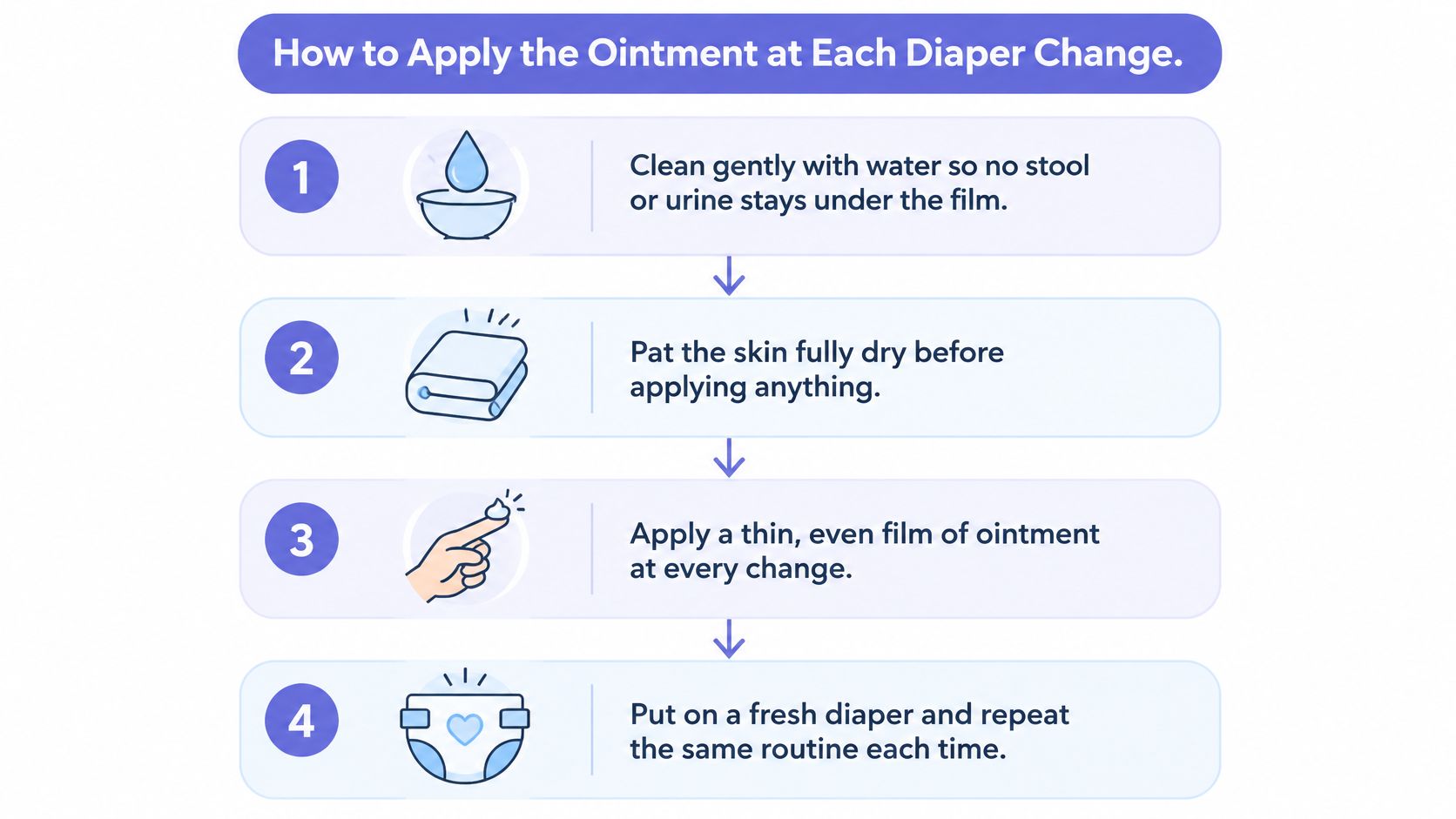
The best routine is one you can repeat gently when you're tired. Cleaning, drying and even coverage matter more than vigorous application. Putting an oily ointment over leftover stool or damp skin undermines the purpose of the protective layer.
The manufacturer's application guidance emphasises clean, dry skin, application at each change and bedtime use; one instruction describes approximately a dime-sized amount. That guidance also uses thick-layer wording, whereas some patient leaflets specify a thin layer, so follow the directions supplied with your exact presentation rather than combining instructions from different markets.
A gentle changing routine
- Clean the bottom with water. Remove urine and stool gently, including material caught in skin creases. Don't leave residue underneath the barrier you're about to apply.
- Pat the skin fully dry. Use a soft cloth and a light touch rather than scrubbing. An oily film applied over wet skin can hold unwanted moisture against it.
- Place a small amount on a clean fingertip. Use the quantity described in your own leaflet, adjusting coverage to the area you need to protect. A larger area needs sufficient ointment to cover it evenly, not a thicker mound in the middle.
- Spread a thin, continuous film where directed. For a presentation with thin-layer instructions, cover the buttocks and groin's external skin rather than dotting only the reddest spots. Keep application external and follow the leaflet's boundaries.
- Avoid vigorous rubbing or massage. Sore skin doesn't benefit from extra friction. Spread the ointment gently and stop working it once you've achieved even coverage.
- Fasten a fresh diaper. A little excess may transfer to the inside of the clean diaper. Don't keep adding more because the skin doesn't look heavily coated.
Bedtime and the next change
Bedtime deserves attention because the skin may spend longer in contact with a wet diaper. That doesn't make ointment a substitute for changing a soiled diaper or checking a baby who seems uncomfortable.
At the next change, remove contamination gently. You don't need to scrub the skin bare just to eliminate every visible trace of clean barrier ointment. Clean away stool and soiled product, inspect the skin and renew coverage according to the leaflet.
Practical rule: Don't judge the application by how much cream you can see. Judge the routine by gentle cleaning, dry skin and even protection.
Comfortable, soft skin that isn't becoming raw is reassuring. Worsening redness, cracking or pain isn't a reason to press harder or add more.
Signs a Rash Needs a Doctor, Not More Cream
Seek assessment the same day if fever, an unwell baby, broken skin, pus, swelling, or spreading satellite spots appears. A baby who feeds poorly, is unusually drowsy, or is hard to wake needs medical care. Damaged skin, or a rash whose cause is no longer clear, needs the same prompt look.
A dermatology review of diaper dermatitis and topical care separates barrier support from antimicrobial or corticosteroid effects. Satellite spots, marked swelling, broken skin, and persistent worsening are reasons to have the cause evaluated rather than keep increasing the amount applied.
- Fever or an unwell baby: Seek prompt medical advice if your baby feeds poorly, is unusually drowsy, or seems generally ill. A baby who is difficult to wake needs urgent help.
- Spreading redness or satellite spots: Contact a pharmacist or clinician. Small separate spots around a main rash can require a different assessment.
- Blisters, broken skin, bleeding, pus, or crusting: Arrange clinical review. Open or infected-looking skin is not routine chafing.
- Visible swelling: Have it assessed, particularly if the area is painful or worsening.
- Recurring or persistent irritation: If consistent gentle care is not helping after a few days, ask for advice rather than cycling through creams.
- Suspected fungal or infected rash: Bright redness, distinct edges, and surrounding spots can raise suspicion, but appearance alone is not a reliable home diagnosis.
- Rash during diarrhoea: Contact a clinician about the wider illness and skin-care plan, especially if frequent stools are leaving the skin raw.

When the same routine stops being enough
A parent can renew dexpanthenol ointment at every change and still see the skin crack. The leaflet sets the strength, the base, and how far a barrier may be used. It does not identify yeast, bacterial infection, or another inflammatory condition. Clinical review is the next step once the area is worsening despite gentle cleaning, dry skin, and even coverage.
A recurring rash may also need differentiation from other inflammatory skin problems. The guide to skincare for eczema offers background on that pattern of care, but it is not a way to diagnose a baby's diaper area.
Fever, pus, swelling, or satellite spots mean same-day assessment. A few days of careful barrier use without improvement is the other clear stop.
What the Clinical Studies Show
Two tubes can share a brand name and still differ in strength, base and leaflet. I treat the figures below as results for the formulations and routines that were studied, not as a result that follows the logo onto every box.
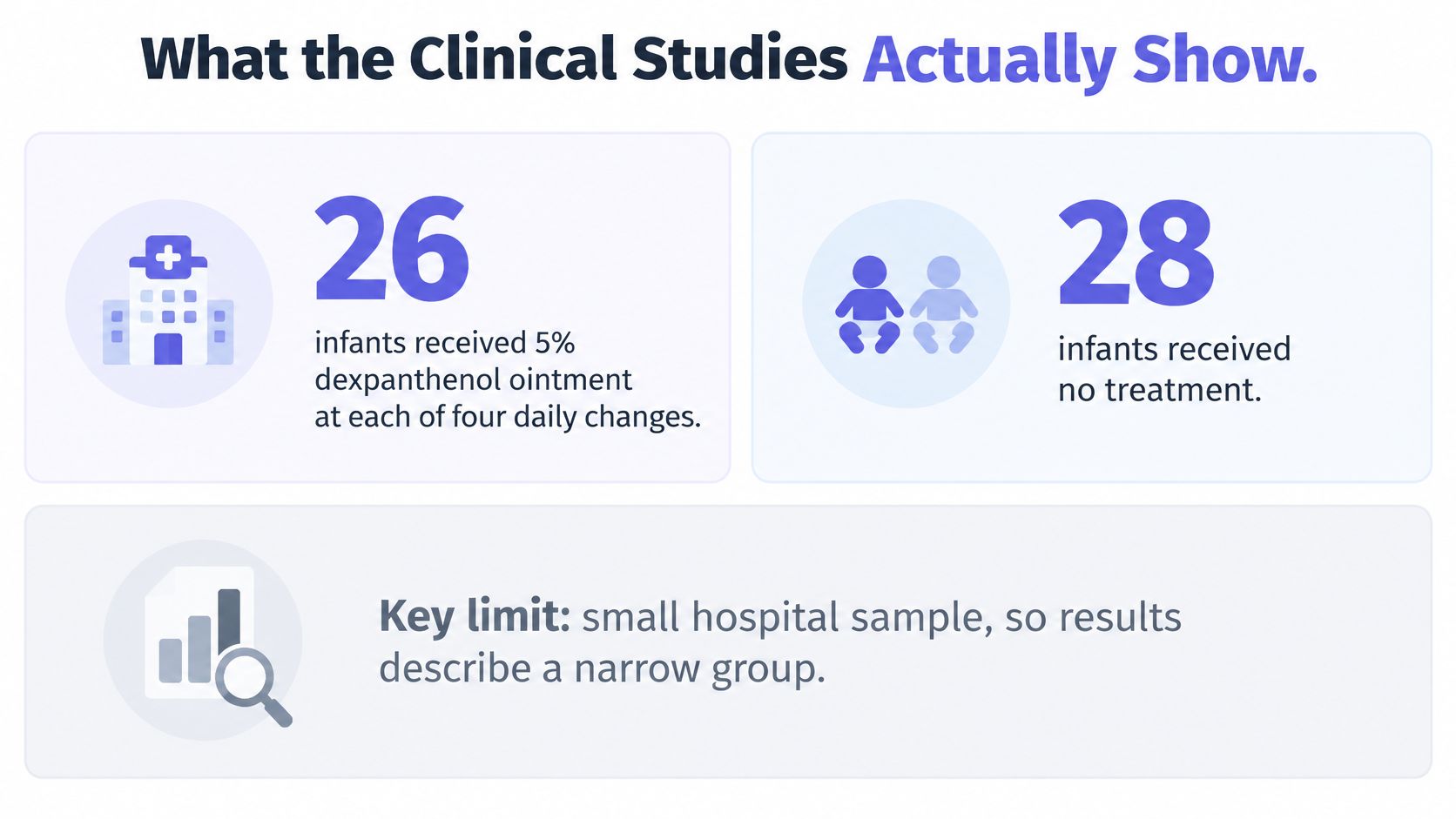
In a small randomised hospital study of newborns initially free from nappy rash, 31% developed rash with dexpanthenol ointment versus 57% without treatment, with 26 infants assigned to ointment at four daily diaper changes and 28 infants to no treatment over approximately two weeks (a difference of 26 percentage points, or about a 46% relative reduction), while a double-blind randomised trial of 109 children aged 3 to 24 months, predisposed to nappy rash and followed for 28 days, found dexpanthenol ointment comparable to a lipophilic zinc-oxide paste, with paediatricians assessing approximately 96% in both groups as free from clinically relevant rash, according to the clinical evidence described in Bepanthen's product information.
That is prevention evidence from a small hospital group, plus a comparison that lands near parity with a zinc-oxide paste. A scheduled oily film can lower the chance of rash in those settings. It does not show equal benefit for every baby, superiority of dexpanthenol over zinc oxide, or clearance of an infected or otherwise complicated rash. Whether a thick ointment stays on dry, chafed skin, or a mineral paste stands up to repeated wetness, still depends on the base in the exact box.
Prevention is not a cure timetable
A 2025 systematic review in Acta Dermatovenerologica, covering 13 studies and 2,935 children, found barrier-forming emollients containing zinc oxide or dexpanthenol effective with minimal side effects, and that review cites a retrospective cohort of 564 children using dexpanthenol ointment, with 83% improving within one day and 78% achieving complete resolution within two days. The same review's wider care points included absorbent diapers, gentle cleansing and regular barrier application.
Those fast changes cannot be credited to dexpanthenol alone. Other care, and the ordinary course of irritation, can move a mild rash in the same window. A retrospective series also lacks the untreated comparison used in the hospital prevention study.
Evidence boundary: Prevention and barrier support are reasonable expectations. A guaranteed treatment time isn't.
Match the leaflet's strength and base to the skin and the diaper routine, then watch that baby. A published percentage describes a group under a stated plan. It is a weak forecast for one child on a different formula.
Bepanthen or a Zinc-Oxide Barrier Cream
The name on the carton is the easy part. Strength, base and the leaflet in that exact box decide whether a dexpanthenol ointment or a zinc-oxide barrier belongs in the routine.
Dexpanthenol ointment and zinc-oxide barrier compared
| Feature | Dexpanthenol ointment | Zinc-oxide barrier |
|---|---|---|
| Main active | Dexpanthenol in the strength declared on the leaflet | Zinc oxide; check the individual concentration |
| How it protects | Oily film plus support for skin recovery | Mineral-containing protective film on the skin surface |
| Texture | Thick, high-fat ointment | Paste or cream; spreadability follows the particular base |
| Fragrance | Check the regional leaflet | Check the ingredient declaration and perfume claim |
| Sensitivity checks | Lanolin, almond oil and other listed ingredients | Zinc oxide and every ingredient in the base |
Read the columns as a label check, not a ranking. One active does not replace the other. Match the declared strength and the base to the exposure at that change: a high-fat film for recovery support, or a mineral film that sits on the surface.
The UK Bepanthen product information describes its nappy-care ointment as free from fragrance, preservatives, colourants and antiseptics. That is a regional formulation claim. An imported tube can list different ingredients, so only the leaflet in the box you hold settles fragrance, lanolin, almond oil and the rest.
Catalogue options and their differences
Healtsy's relevant options include a quickly absorbed water paste with zinc oxide, Biolin prebiotic, panthenol and antienzymes, without perfume and tested under dermatological and paediatric control, alongside a cream formulated with zinc oxide and tested by dermatologists. Spread, rinse-off and the full ingredient list still come from each product page.
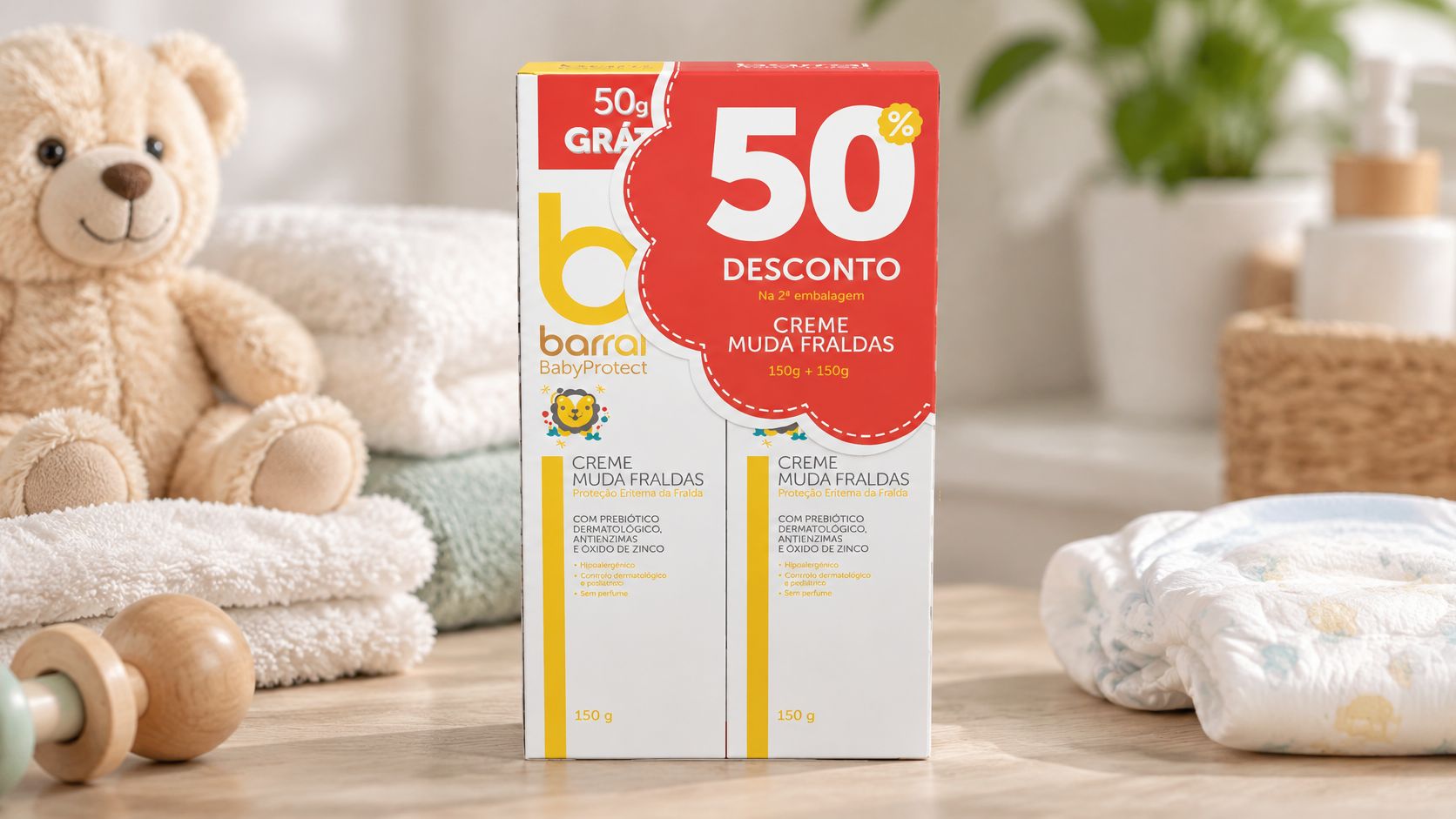
A parent dealing with repeated wetness after night feeds can use the table before the next change: a paste that stays through stool exposure, or a thicker ointment when the skin is dry and chafed and the leaflet allows it. I would keep one suitable barrier on the area. Stacking several bases makes it hard to tell which one caused irritation.
If you are also checking Lutsine E45 Eryplast water paste, ask the same questions of that label: what is in the base, how does it spread, and what does its own leaflet permit? The words water paste do not answer any of them.
Buying Bepanthen Outside Its Home Market
- Check the leaflet language and market presentation. You need instructions you can understand and an ingredient declaration you can verify. A foreign-market box needn't look like local packaging, but unclear age guidance or untranslated warnings deserve clarification before use.
- Inspect the batch and expiry information. Check the printed details on the box and tube for consistency, legibility and signs of alteration. The leaflet explains use and storage; it usually isn't a batch-specific authenticity certificate.
- Verify sourcing and returns before paying. Choose a seller that explains where its products come from and publishes a clear returns policy. Keep the order confirmation so there's a record if the parcel arrives damaged or different from the listing.
- Reject warning signs rather than rationalising them. Missing product information, damaged seals, altered printing or an implausibly low price warrant caution. A familiar photograph isn't enough to establish what will arrive.
Delivery is part of the care plan
For international orders, check the destination, carrier, shipping charges, duty arrangements and delivery estimate at checkout. Customs requirements can change, and an estimate isn't a guarantee that a parcel will arrive before a trip.
Consider a Canadian parent ordering before a holiday. If the parcel is delayed and the current tube runs out, the practical problem is a gap in the nightly routine. Keep an appropriate locally accessible option in mind rather than making essential care depend on a single shipment.
The same approach applies to shoppers in the USA, UK, Australia and Gulf states. Don't assume that a listing photograph establishes local regulatory status or that an imported ointment can replace advice from a local pharmacist.
Separate access from suitability
Our store ships European pharmacy and parapharmacy products internationally, but we sell no medicines. Our products are sourced through authorised distribution, and a pharmacist reviews product information; those safeguards don't remove the need to check whether a particular presentation suits your baby.
The guide to European pharmacy products not available in the US offers broader context on buying across markets. For this purchase, retain the leaflet from the box you receive, along with the packaging until you've checked it.
Check the Leaflet, Then Decide
The carton is open on the changing mat, and the next change is only a few minutes away. Treat the leaflet in that exact box as the decision tool: the base, the age line and the directions printed for this presentation.
Work through one sequence before you squeeze anything out. Match the age guidance, the ingredient list and the application directions to this baby. When those three fit and the redness looks like ordinary irritation, use only the labelled barrier routine, lightly. Leave the other creams in the cupboard.
If the base does not suit the problem you are seeing, do not add a second tube with an overlapping job. Return to the comparison of a dexpanthenol ointment with a zinc-oxide barrier and choose the single formulation you can apply at each change.
If the leaflet does not match, or you are not confident this rash is uncomplicated friction, stop adjusting home care. Ask a pharmacist or clinician, and take that tube and leaflet with you.
Keep the rest of the routine simple
A diaper barrier has one job at the change. A moisturiser used on the rest of the body is not automatically right for skin under a diaper, and the guide to fragrance-free baby lotion separates those two choices.
The limit is straightforward. Bepanthen diaper rash cream can be a useful barrier when the exact formulation fits the leaflet you received. It is not a substitute for a clinician.
Find a barrier that fits your baby's routine
Healtsy offers baby and mom care, including baby care products, baby atopic skin care and feeding tools. Compare the listed ingredients and usage information before the next change.
Explore Healtsy