


What Causes Eczema Flare Ups in Adults and How to Calm Them
You've gone years without trouble, then a stressful week, dry travel air, and one new laundry product leave your skin burning and itchy. The flare can feel random, but adult eczema usually reflects several pressures acting on an already vulnerable skin barrier.
After 16 years in dermatology and pharmaceutical practice, I believe the most useful advice is also the most honest: not every popular trigger has equal evidence. This complete guide to what causes eczema flare ups in adults separates clinically supported drivers from assumptions, then turns that distinction into practical daily care. You'll learn why the barrier fails, which triggers deserve attention first, and when self-care should give way to medical assessment.
Why Adult Eczema Can Feel So Unpredictable
A demanding week, a long-haul flight, and a new detergent can leave a 38-year-old waking with itchy patches behind the knees. Each factor may contribute differently. Stress can intensify itch, dry cabin air can increase tightness, and a product can irritate or sensitise the skin. The rash appears in one place, while the relevant exposures may have accumulated over several days.
After 16 years in dermatology and pharmaceutical practice, I've counselled many adults through this confusion. They often suspect one food, fabric, or weather change explains everything. A single exposure can matter, yet adult eczema more often reflects the interaction of barrier vulnerability, inflammation, and personal triggers.
Adult patterns aren't childhood patterns
Some adults continue to experience eczema that began in childhood. Others develop symptoms later, after occupational wet work, repeated cleansing, hormonal shifts, stress, or environmental exposure place new demands on the skin. Adult eczema may affect the hands, eyelids, neck, face, legs, and other sites, so the distribution and history deserve assessment rather than an automatic childhood-style explanation.
Reported triggers support a mixed picture, but reports do not prove that every suspected trigger causes inflammation. In a 2020 study of 588 adults with atopic dermatitis, 64.9% reported at least one itch trigger during the previous week, while 36.1% reported three or more. Stress, sweat, weather change, dry air, and heat were among the frequently reported triggers, according to this adult eczema trigger analysis.
Rank possible triggers by timing, repeatability, and clinical support. Avoid eliminating half your lifestyle because a social media post names one suspected culprit.
I believe this hierarchy leads to better decisions. Some triggers have stronger clinical support, some are plausible but highly individual, and others are popular explanations without convincing evidence. The goal is practical rather than perfect prediction: fewer surprises, less frantic product switching, and a routine that supports the skin before a flare takes control.
How the Skin Barrier Breaks Down in Adult Eczema
Think of the outer skin layer, the stratum corneum, as a brick wall. Corneocytes, the tough skin cells, act as the bricks, while lipids such as ceramides act as mortar. Together, they help keep water inside and unwanted substances outside.
When the mortar becomes uneven or insufficient, small gaps develop. Moisture escapes more easily, and soaps, sweat, allergens, and other irritants can move deeper into the skin. This is the practical meaning of a weakened barrier: the skin loses hydration while becoming more exposed.
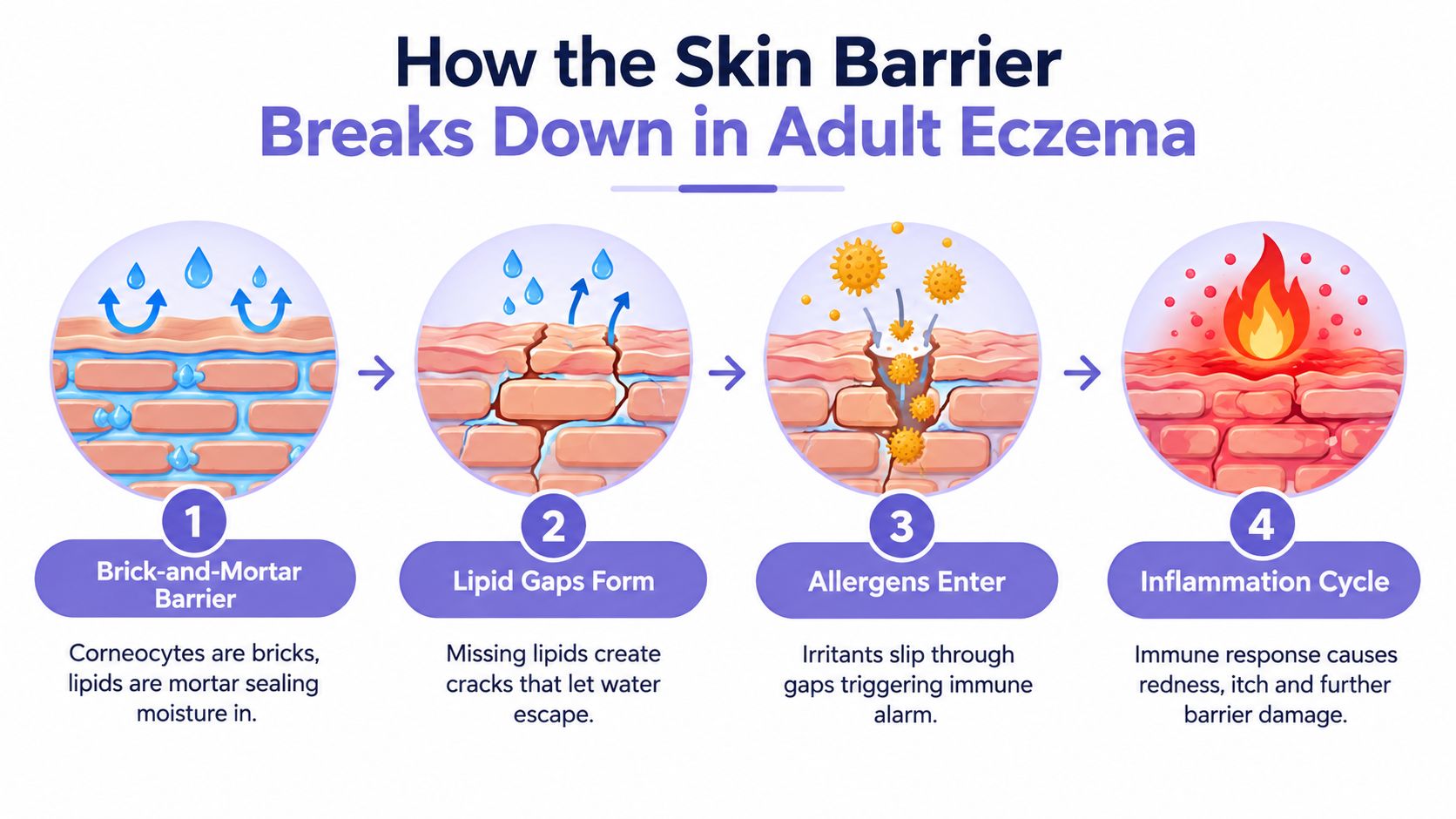
The four linked failures
- Barrier structure becomes less effective. Variations affecting filaggrin, changes in lipid composition, and repeated irritation can reduce the wall's ability to seal moisture.
- Transepidermal water loss rises. Water moves out through the compromised surface, leaving skin dry, tight, and more reactive.
- Irritants enter more easily. Everyday substances can reach immune cells that would normally remain protected.
- The itch-scratch cycle begins. Inflammation creates itch, scratching causes further injury, and the damaged surface permits more irritation.
The immune response also matters. Eczema commonly involves type 2, or Th2-driven, inflammation. In plain terms, immune signalling stays too alert and produces redness, swelling, and itch in response to exposures that healthy skin may tolerate.
Why adulthood can add pressure
Adult skin may face cumulative sun exposure, occupational wear, frequent handwashing, cleaning chemicals, long periods in air-conditioned buildings, or repeated contact with water. Barrier repair can also become slower with age, so a routine that was tolerated earlier in life may eventually become too demanding.
The skin microbiome, the community of microorganisms living on the surface, can become less balanced during active eczema. Merck Manual identifies sweating, dry air, local irritation, rough fabrics, excessive washing, harsh soaps, and emotional stress among factors that can worsen itch and lesions in atopic dermatitis, as described in its professional eczema review.
For practical barrier-support habits, readers can also explore this guide to repairing a damaged skin barrier. Once the wall is vulnerable, the next question is which real-world exposures place the greatest load on it.
Environmental Triggers and Everyday Irritants
External exposures don't affect every adult equally. A nurse washing hands repeatedly, a hotel worker handling cleaning products, and an office worker exposed to dry heating may have completely different trigger profiles.
The table below places common environmental factors into an evidence-aware order. The ranking reflects the strength and consistency of the supplied clinical evidence, not a guarantee that every person will react.
Environmental Triggers Ranked by Clinical Evidence
| Trigger | Mechanism | Evidence Strength |
|---|---|---|
| Dry air and temperature change | Increases dryness and can intensify itch | Strong clinical support |
| Sweat and heat | Sweat, overheating, and evaporation can aggravate sensitive skin | Strong clinical support |
| Soap and detergents | Repeated cleansing or chemical exposure can irritate vulnerable skin | Commonly recognised clinically, though systematic-review evidence is mixed |
| Rough clothing and wool | Friction, heat retention, and texture can worsen symptoms | Commonly recognised clinically, though evidence is mixed |
| House dust mites, pollen, and pet dander | Airborne allergens can activate inflammation in sensitised people | Relevant mainly when sensitisation is present |
| Fragrances, preservatives, metals, and disinfectants | May cause irritant or allergic contact reactions | Important when exposure and pattern fit |
| Smoke and particulate pollution | Can irritate skin and add environmental stress | Plausible and clinically recognised, with individual variation |
| Hard water and chlorinated pools | May leave skin feeling dry or irritated | Individual and less consistently established as a flare cause |
Match the exposure to the pattern
Irritant contact dermatitis usually follows cumulative damage. Hands may sting, crack, or become rough after repeated washing, sanitising, wet work, or solvent exposure. Healthcare, hospitality, cleaning, hairdressing, food preparation, and manual work can create this pattern.
Allergic contact dermatitis involves a delayed immune reaction to a specific substance, such as a fragrance ingredient, preservative, nickel, latex, or another contact allergen. The rash may extend beyond the exact contact area, and patch testing can help identify the responsible substance.
Cleveland Clinic lists dust, pollen, pet dander, some foods, dry air, smoke, sudden temperature changes, stress, hormonal changes, infection, medications, shampoos, detergents, disinfectants, wool, polyester, and nickel among possible eczema aggravators in its flare-up management guidance. For dust-sensitive households, practical proven dust elimination methods can help reduce indoor exposure without turning the home into a sterile environment.
A gentle cleanser strategy matters most when washing is frequent. Guidance on choosing a gentle cleanser for eczema-prone skin can support that decision, but the product should still be judged by your own skin response.
Internal Triggers from Stress to Hormones
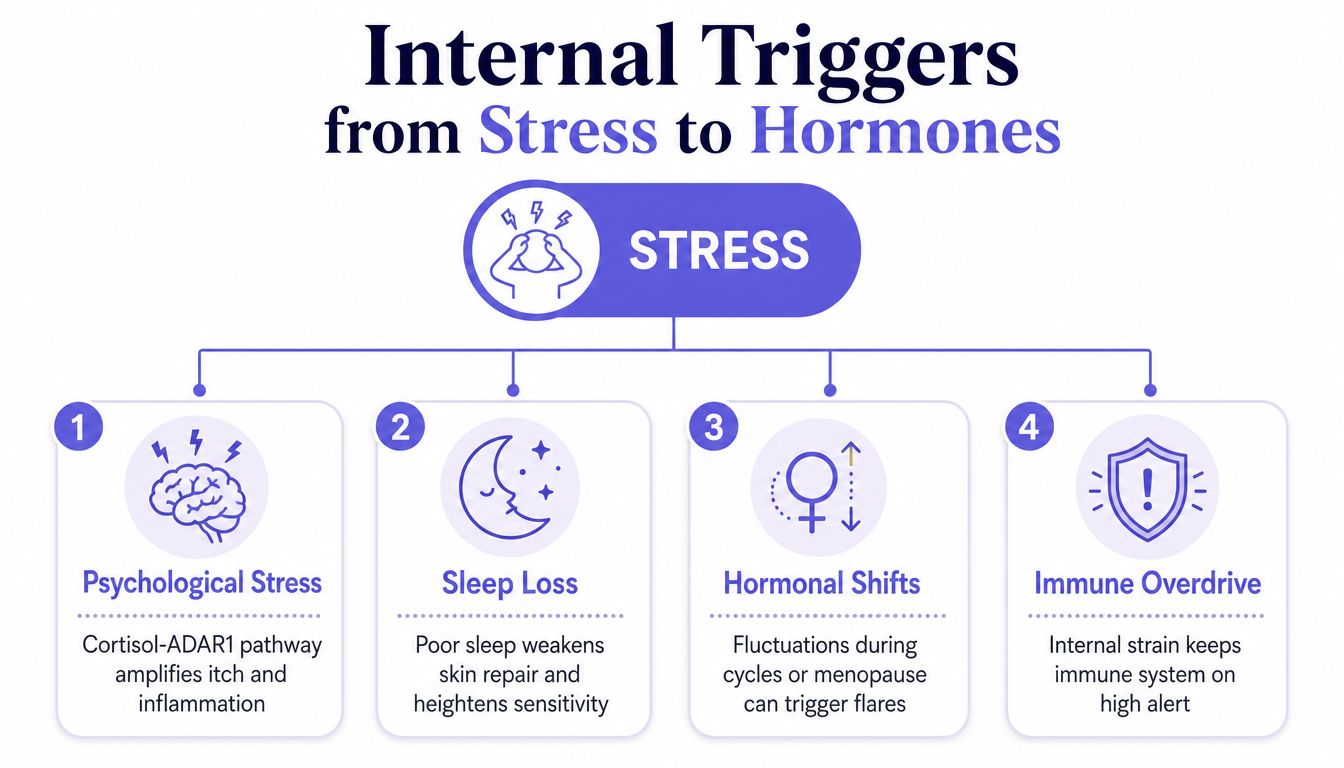
A demanding workweek, several nights of poor sleep, or ongoing caregiving can leave an adult with suddenly itchier, more inflamed skin. Stress is among the most consistently reported internal triggers. In a 2020 study of 588 adults, 35.4% reported stress as an itch trigger. Sweat was reported by 30.5%, weather change by 24.7%, dry air by 24.4%, and heat by 24.0%, according to this study summary on adult itch triggers.
The mechanism is not emotional. Sustained psychological strain can intensify itch signalling and interfere with barrier recovery. Research discussions of the cortisol-ADAR1 pathway describe a possible route from stress-related signalling to inflammatory activity. In practice, the nervous system and skin can reinforce each other: itching disrupts sleep, while poor sleep makes symptoms harder to settle. Stress is well supported as a potential aggravator, but it is rarely the only factor worth investigating.
Hormones and immune complications
Some adults notice flares around menstrual cycle changes, perimenopause, menopause, pregnancy, or a change in hormonal treatment. Record the timing before attributing the rash to hormones. Thyroid dysfunction can also affect dryness and sensitivity, so a new or unusual pattern may warrant medical review.
Infection requires a different response from routine bacterial colonisation. Eczema-prone skin may carry Staphylococcus aureus, while increasing redness, warmth, pain, weeping, yellow crusting, fever, or rapid spread can signal clinically significant infection. Herpes simplex may cause eczema herpeticum, and fungal overgrowth can resemble eczema. These possibilities need assessment rather than another moisturiser.
Food triggers also need proportion. Clinical guidance places greater emphasis on food triggers in children, while airborne triggers may matter more for sensitised adults. Evidence supports certain foods for some people, but broad elimination diets can create nutritional and emotional costs without proving that food drives an individual's flares. A symptom and exposure diary is more useful than removing multiple food groups at once.
A balanced eating pattern supports general wellbeing, but it should not create guilt or replace eczema treatment. Readers considering a diet for lower cortisol should treat dietary changes as supportive lifestyle measures. Likewise, information about probiotics for gut health does not establish that supplements will control an individual flare.
Proven Triggers versus Popular Myths
A 2006 systematic review in the British Journal of Dermatology found the strongest evidence for a limited set of worsening factors, including certain foods, house dust mite, stress, and seasonal factors. It also found no good evidence that detergents, textiles, or irritants caused worsening eczema in the way commonly assumed, which creates an important tension with everyday clinical advice.
That tension doesn't mean every person should ignore soap or clothing. It means we should separate population-level evidence from an individual contact pattern. A product can irritate one person's compromised hands even when the broader evidence doesn't prove that detergents worsen eczema in everyone.
Proven vs. Assumed Adult Eczema Triggers
| Trigger | Evidence Level | Likelihood in Adults |
|---|---|---|
| Stress | Stronger support in adult reporting and review evidence | Often relevant |
| Seasonal and weather factors | Supported, especially where timing is consistent | Commonly relevant |
| Certain foods | Supported for some people, not universal | Individual |
| House dust mite | Supported in selected settings | More likely when sensitised |
| Pet dander and pollen | Clinically relevant for sensitised patients | Variable |
| Harsh cleansing and repeated wet work | Clinically recognised, systematic evidence mixed | Relevant when the exposure pattern fits |
| Wool and rough fabrics | Common clinical concern, systematic evidence mixed | Personal response varies |
| Hard water | Commonly blamed, limited support as a universal cause | Uncertain |
| Mold | May matter through allergy or irritation, but not a universal explanation | Context-dependent |
| Generic detox claims | No established basis as a general eczema solution | Unsubstantiated |
Adults often overestimate pet dander and dust mites because these triggers are familiar from childhood allergy discussions. The Primary Care Dermatology Society notes that animal dander, house-dust mites, and aeroallergens tend to matter for sensitised patients, while adults more often encounter airborne triggers than food triggers. Its clinical guidance on atopic dermatitis also lists soap, detergents, overheating, rough clothing, stress, and infection as common flare factors.
Social media creates confirmation bias. Someone removes dairy and improves during the same period that stress falls and weather changes, then credits the food alone. A short symptom diary can be more useful than a sweeping restriction: record sleep, stress, sweating, weather, products, work exposures, and symptoms, then look for patterns that repeat.
Self-Care Strategies to Prevent Flare Ups
A workable routine should be simple enough for a busy weekday. Complexity creates more opportunities for fragrance exposure, over-cleansing, and product switching.
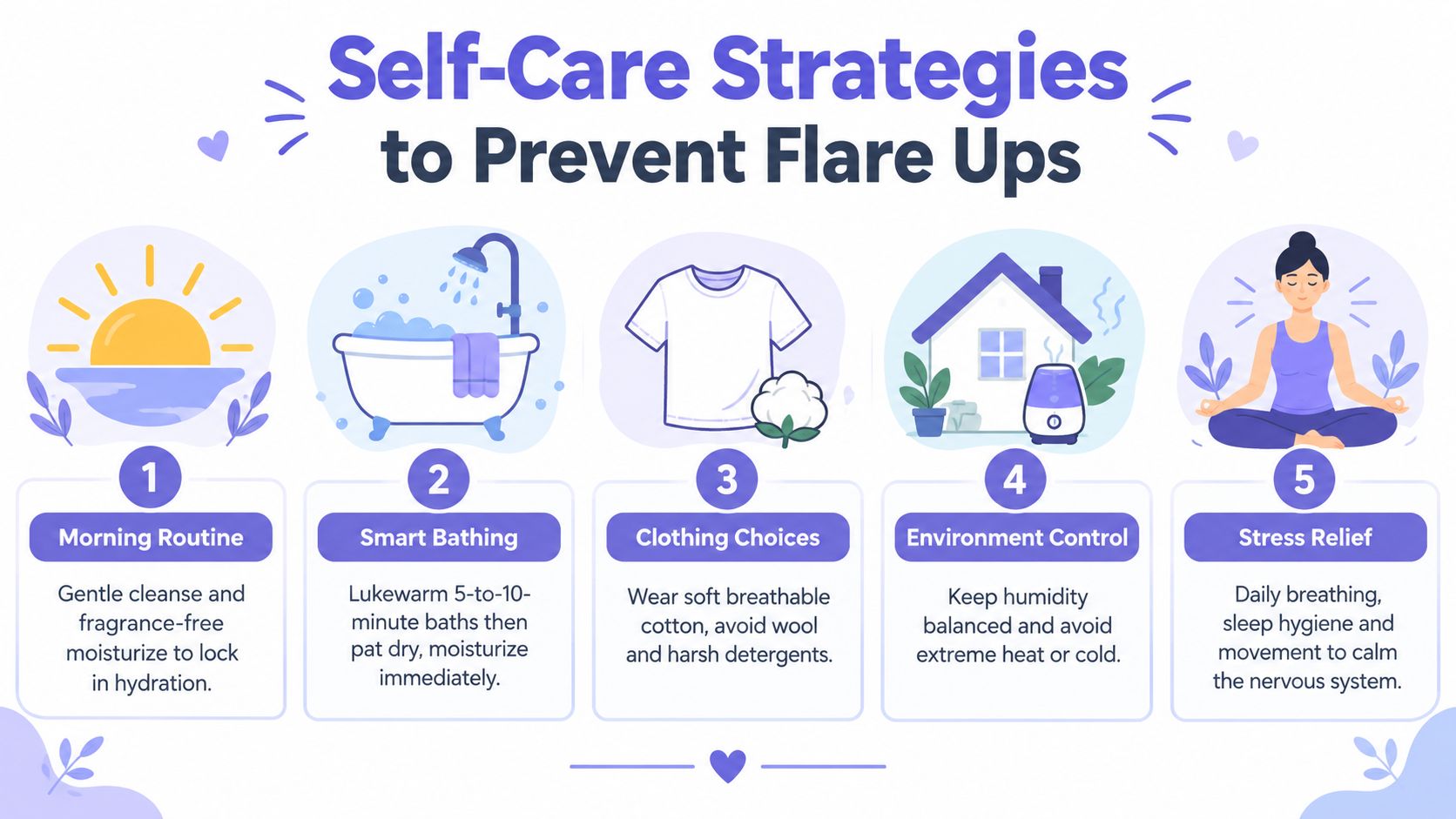
Build the routine around the barrier
- Morning care: Use lukewarm water, a fragrance-free cleanser where needed, and a generous moisturiser. Apply sunscreen after the moisturiser; mineral-based formulas may suit people who find some chemical filters irritating.
- Bathing: Keep baths or showers lukewarm and limited to 5 to 10 minutes. Pat rather than rub, then apply an emollient immediately while the skin still feels slightly damp.
- Moisturising: Reapply to dry areas during the day, especially after handwashing. A ceramide moisturiser for sensitive skin is one possible format, but petrolatum, glycerin, and other well-tolerated emollient bases may also be appropriate.
- Clothing: Choose soft cotton or bamboo layers when they feel comfortable. Avoid wool and rough synthetics if they reliably cause itching, and wash new clothes before wearing them.
- Laundry: Choose fragrance-free detergent, use a sensible amount, and skip fabric softener if it leaves residue or fragrance on the fabric. Remember that evidence for detergents and textiles as universal causes is mixed, so judge by your own pattern rather than fear.
- Environment: In dry months, a humidifier set between 40% and 60% humidity may make the room more comfortable. Clean the device properly, and keep the bedroom cooler if heat worsens nighttime itch.
Reduce the internal load
A consistent sleep window gives the nervous system a better chance to settle. Brief daily walks, even at an easy pace, can create a reliable break from work pressure. The 4-7-8 breathing pattern, inhaling for four counts, holding for seven, and exhaling for eight, may be a useful calming exercise if it feels comfortable.
Avoid antibacterial washes unless prescribed. They can add unnecessary irritation, particularly when a fragrance-free gentle cleanser is sufficient. Shop with restraint: prefer short ingredient lists, avoid added fragrance, introduce one new product at a time, and patch test on a small area before applying it widely.
A new moisturiser should earn its place through tolerability and consistency, not through an impressive ingredient list.
When to Seek Medical Advice
Self-care is reasonable for mild, familiar symptoms, but it shouldn't delay assessment when the pattern changes. From a pharmacist's perspective, I'd encourage medical advice for a rash that is widespread, rapidly worsening, unusually painful, or affecting the face, eyelids, or genitals.
Look for signs that may indicate infection or a different diagnosis:
- Possible infection: Yellow crusting, weeping, pus, fever, warmth, swelling, or rapid deterioration.
- Loss of daily function: Itching that repeatedly interrupts sleep, work, concentration, or ordinary activities.
- Failure of basic care: Persistent itching after diligent moisturising and trigger avoidance for about two weeks.
- A changed pattern: A sudden flare after years of stability, especially if it appears in unfamiliar locations or looks unlike previous eczema.
- Severe discomfort: Pain, bleeding, marked swelling, or skin that feels hot rather than itchy.
A dermatologist will usually begin with a focused history and skin examination. Depending on the pattern, they may consider patch testing, blood testing, or investigations for infection and other eczema look-alikes. Treatment can include prescription-strength topical anti-inflammatory medicines, non-steroid options, phototherapy, or newer systemic therapies for moderate-to-severe disease.
Seeking help isn't a failure of self-care. It's a rational escalation when inflammation controls your routine or creates a risk of secondary infection, persistent thickening, or scarring.
Your Take-Home Checklist for Calmer Skin
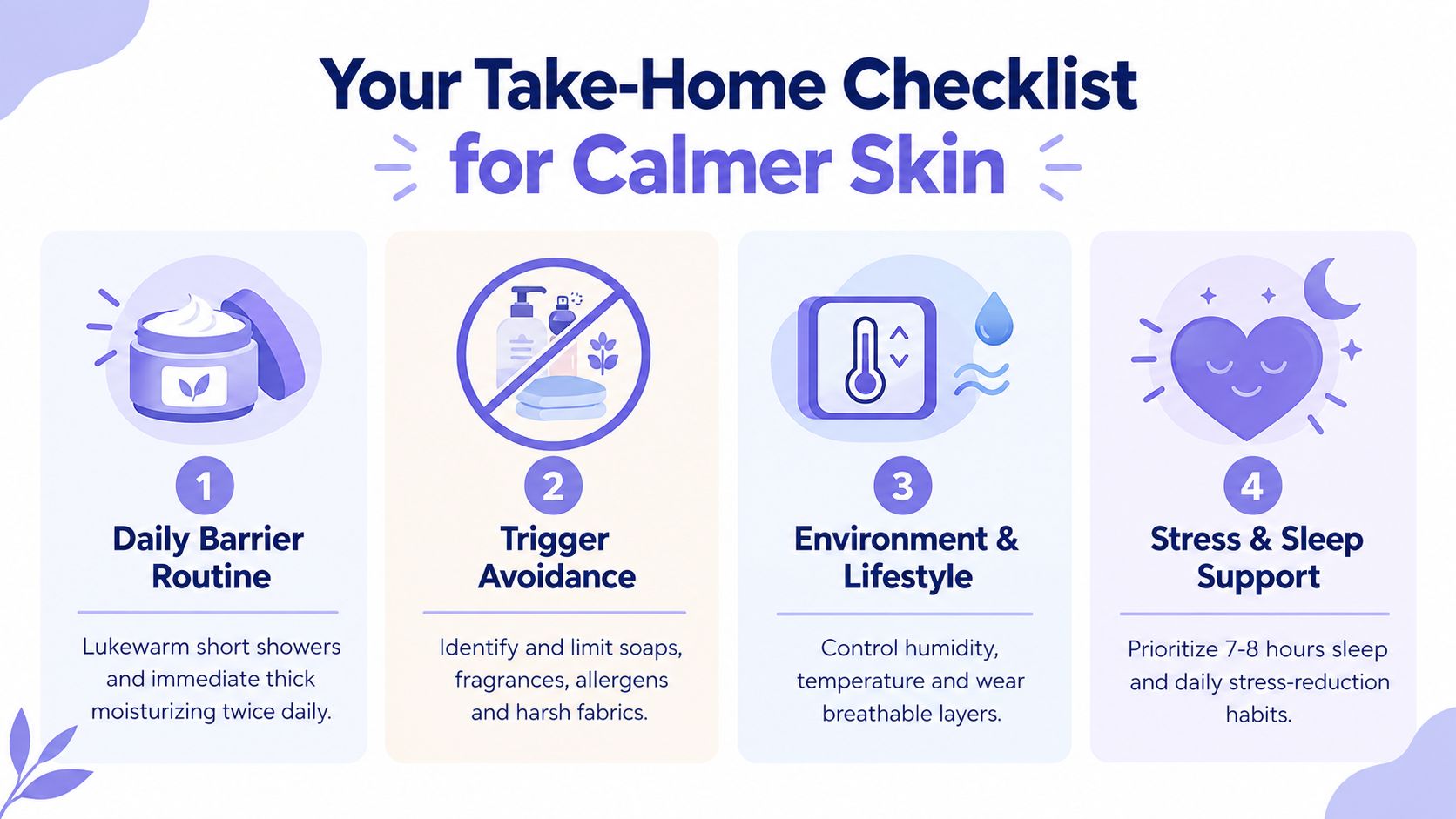
Start with four practical decisions, rather than changing your entire lifestyle.
- Protect the barrier. Keep showers short and lukewarm, moisturise immediately afterward, and use fragrance-free products consistently. A clear routine matters more than constantly testing new products. See this guide to best skincare for eczema for help choosing suitable options.
- Audit the environment. Review dry air, overheating, work exposures, laundry products, and fabrics. Choose breathable layers, then remove irritants that match your own flare pattern instead of blaming every possible trigger.
- Track internal signals. Record stress, sleep, sweating, hormonal timing, new products, and dietary patterns. Repeated timing is more useful than a single coincidence, so avoid major restrictions without a clear pattern.
- Escalate wisely. Seek medical advice for infection signs, rapid spread, severe pain, sensitive-area involvement, or symptoms that persist despite careful home care.
Adult eczema is easier to manage when you rank evidence-supported triggers above popular assumptions and keep care consistent. The most useful routine is one you can repeat before itching demands attention.
Calmer skin starts with a simple, consistent routine
For fragrance-conscious skincare and pharmacy products, visit Healtsy. Compare sensitive-skin collections and use the skincare quiz, introducing products gradually while involving your dermatologist or pharmacist if symptoms persist.
Visit Healtsy