


Pink Hair Toner Guide: How to Get Even Pastel Results
You bleached your hair, got it to a soft yellow, added something “pink,” and now the result is either prettier than expected or much stranger than expected. That’s the point where people start searching for pink hair toner, but they’re often looking for three very different outcomes. They want to enhance pink, mute pink, or remove pink.
I believe that’s where most online advice goes wrong. It treats pink hair toner like one category and one technique, when in practice your result depends on your starting base, porosity, and the kind of formula you’re using. After 16 years working across health and beauty, I believe the best help I can give is the practical kind: what this product does well, what it can’t do, and when toning is the wrong tool entirely.
Introduction to Pink Hair Toner and What It Really Does
A common real-life example is someone who lightened their hair at home, rinsed, dried it, saw a pale buttery blonde, and thought a pink toner would behave like a soft Instagram filter. Sometimes it does. Sometimes it turns peach, grabs unevenly at the ends, or disappears faster than expected after a few washes.
That happens because pink hair toner usually refines color rather than replacing your whole base. It’s typically a color-depositing product, not automatically the same thing as a permanent dye. Some pink toners do use oxidative chemistry and contain ingredients such as ammonia plus dye intermediates, as shown by a professional-style permanent cream toner example from Sally Beauty’s T50 Pink Blossom listing ingredient details for a pink permanent cream toner. That matters because “toner” on the box doesn’t always mean “very gentle rinse-off pink.”
What pink toner can do well
Pink toner works best when the hair is already pre-lightened and the underlying warmth is controlled. Technical color chemistry sources place many toning agents around pH 3 to 5, while healthy hair sits roughly around pH 4.5 to 5.5, which helps explain why toners are often designed to deposit shade in a gentler, more cuticle-friendly way rather than forcing strong lift technical pH and hair-science context for toning chemistry.
If your base is clean and pale, pink can read airy and pastel. If yellow is still present, pink often reads warmer, sometimes even peachy or muted.
Practical rule: Pink toner doesn’t cancel major warmth. It reveals whatever is underneath.
What it can’t do
It won’t reliably fix a muddy base, severe banding, or patchy bleach work. It also won’t behave the same way on low-porosity roots and porous ends. That’s why texture and strand behavior matter just as much as shade choice. If you want a stronger foundation before toning, this guide on mastering different hair textures is a useful companion.
Three reader jobs matter here:
Enhance pink
When you want a cleaner pastel, rose veil, or fresh deposit.
Mute pink
When the result is too bright, too rosy, or too obviously fashion-color.
Remove pink
When what you want is correction, not toning.
I’m certain this will solve a lot of confusion right away. If you know which of those three jobs you’re doing, the product choice becomes much safer.
How to Choose the Right Pink Shade and Formulation for Your Hair
A common salon scenario goes like this. Someone asks for soft pink, shows a pastel reference photo, and their hair still has warmth at the mids with porous ends from old lightening. The right choice is not just a prettier pink. The right choice is the formula and depth that fit the job you are trying to do.
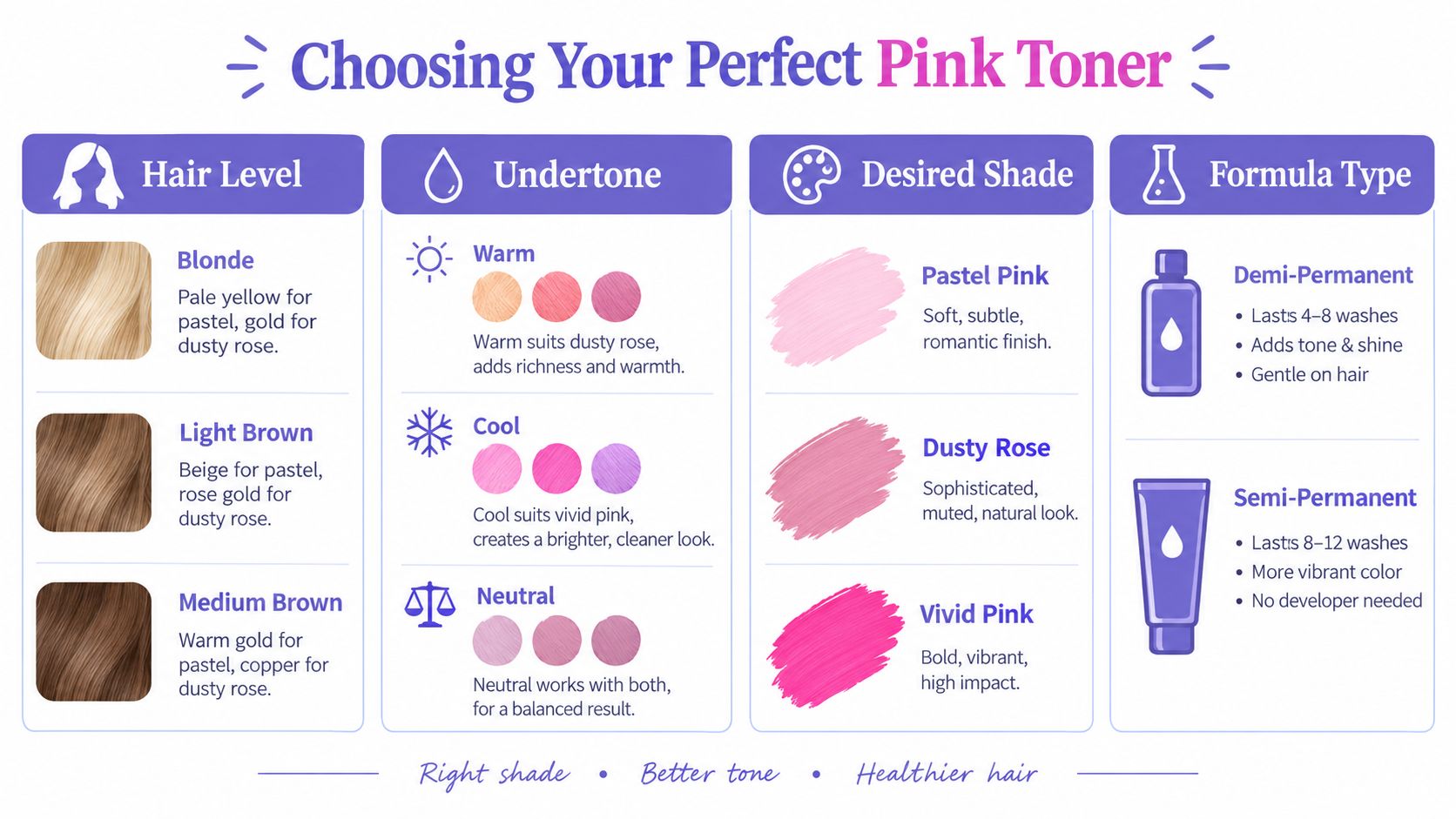
Three different jobs sit under the phrase pink toner, and they should not be handled the same way:
- Enhance pink if you want more visible pink, a cleaner pastel, or a refreshed rose finish
- Mute pink if the hair reads too bright, too candy-like, or too fashion-forward for what you wanted
- Remove pink if the pigment itself is now the problem and correction matters more than tone refinement
I believe this decision lens prevents a lot of unnecessary rework, especially at home.
Match the pink family to the base you actually have
A pastel pink suits a very clean, very light base. A dusty rose is more forgiving if a soft trace of warmth is still present. A stronger pink deposit can look intentional on a less pristine blonde, but the finish will read denser and less translucent.
Very pale hair also carries its own risk. A hair-color guidance example notes that level 10 blonde can hold onto violet or pink toning pigments more strongly because very little warmth remains to buffer the result, which is why pale blonde sometimes turns rosier than expected why very pale blonde can turn unexpectedly pink.
On extremely light hair, the usual problem is over-deposit, not lack of pigment.
Porosity changes the result as much as shade choice
Two heads with the same level of blonde can process pink very differently. Low-porosity hair may resist a soft conditioner-based pink and need more time or a slightly richer formula. High-porosity mids and ends often do the opposite. They can drink in pink quickly and leave you with darker ends, brighter patches, or a hollow-looking result once it fades.
That is why I separate color choice into three checks first: base level, porosity pattern, and goal. If one of those is off, the formula that looked right on paper can behave badly on the hair.
Formula type decides how much control you have
Different pink formats do different jobs well:
- Glosses and sheer deposit formulas suit enhancement on clean blondes when you want shine and a light veil of color
- Pink masks and pigmented conditioners work well for maintenance, soft refreshes, or first-time users who want less commitment
- Pink shampoos are useful for gentle upkeep, not major correction
- Cream toners and richer direct dyes give more deliberate deposit and more visible change, but they punish uneven porosity more quickly
For readers comparing product standards as well as shade families, this guide on organic hair dye choices gives a sensible framework for ingredient transparency and scalp comfort.
Within the Healtsy range, the practical selection rule is simple. Use a sheer or conditioning pink option for enhancing on pale, even hair. Use a softer neutralizing or dilution-based approach if the pink needs muting. Choose a corrective route, not another pink toner, if the job is removal.
Choosing Your Pink Toner by Base Level and Goal
| Starting Base and Goal | Best Formulation | Why It Works |
|---|---|---|
| Pale yellow blonde, want pastel pink | Diluted direct pink in conditioner or a soft pink mask | Sheer deposit helps limit over-grabbing |
| Clean light blonde, want dusty rose | Cream toner or richer pink gloss | Slightly denser pigment gives shape without turning neon |
| Warm blonde, want cleaner pink | First reduce visible yellow, then apply pink | Residual warmth can push the result peachy |
| Very porous ends, want even pink | Gentle deposit formula with lighter application on porous areas | Helps prevent dark or over-bright ends |
| Pink is too bright, want softer pink | Dilution, clear gloss, or a green-leaning muting correction when appropriate | Better than stacking more pink |
| Pink is unwanted, want it gone | Corrective removal approach | Removal is a separate service from pink toning |
Use the three-job framework before you buy
If the job is enhance, choose pink based on how clean and light the base is.
If the job is mute, reduce intensity before adding more color. A softer formula, dilution, or a balancing corrective step usually works better than another hit of straight pink.
If the job is remove, stop treating it like routine toning. In practice, people lose time and money. Reapplying pink over stained or uneven hair rarely fades more beautifully later. It usually makes the correction messier.
Preparing Your Hair and Deciding Between Salon and At-Home Application
Preparation decides more than brand choice. I’ve seen average formulas perform well on a clean base, and expensive formulas perform badly on hair that was too yellow, too fragile, or too unevenly bleached.
What to check before you tone
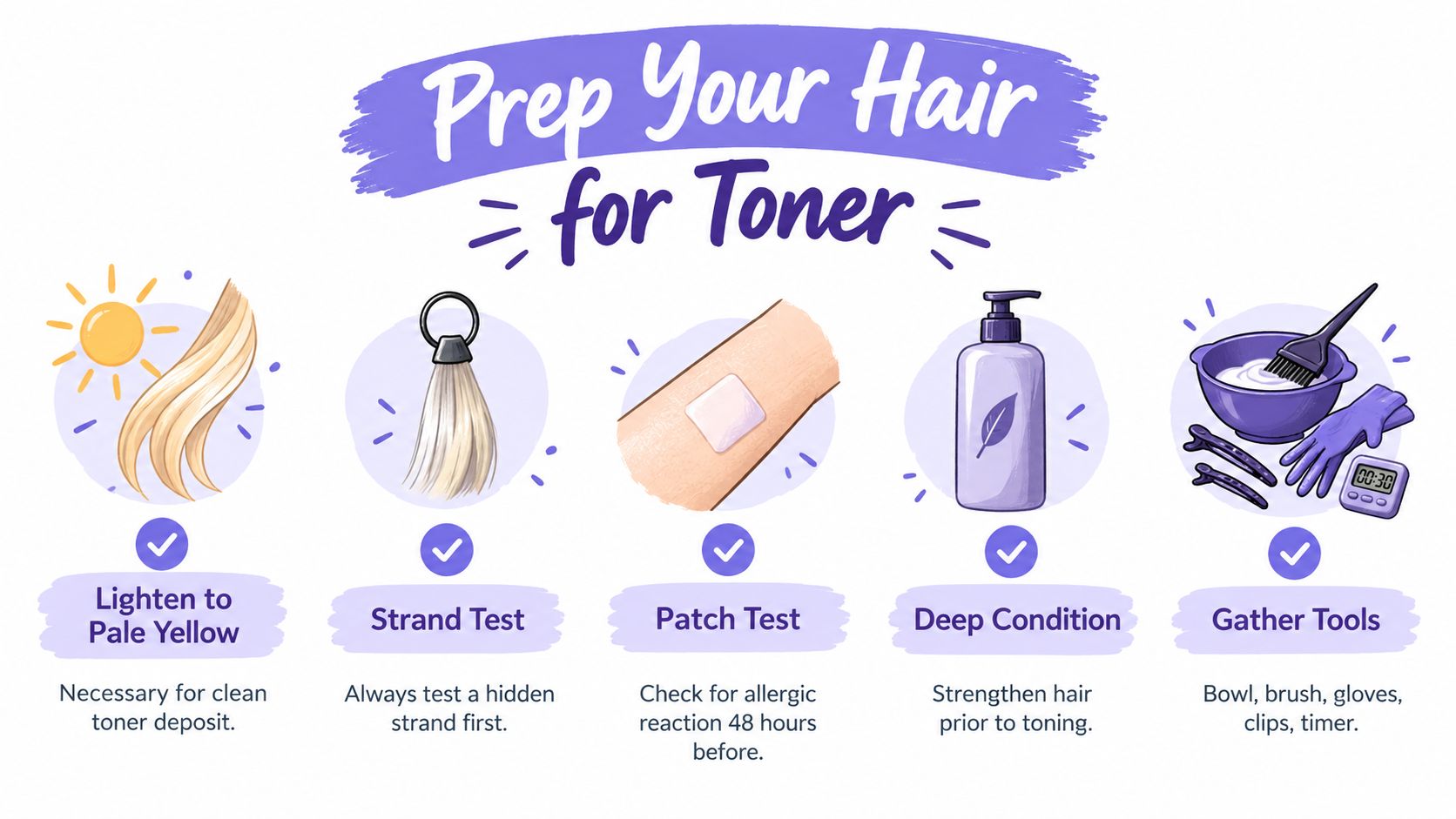
Pink toner behaves best on hair lightened to a clean pale yellow. If the base is darker, patchy, or strongly golden, the final pink won’t read the way you expect.
Use this quick pre-checklist:
- 1Do a strand test: Test on a hidden section first, especially if your ends are older than your roots.
- 2Do a patch test: If your formula contains oxidative color components, don’t skip skin safety.
- 3Assess elasticity and damage: Hair that feels gummy or snaps when wet needs recovery, not more chemistry.
- 4Check porosity pattern: Mid-lengths and ends often take pigment faster than roots.
- 5Lay out enough product: Thick or long hair often goes patchy because people run short halfway through.
For anyone who wants a deeper science read on growth and scalp context, functional hair follicles explained offers useful background. It isn’t a pink-toner tutorial, but it helps people understand why preserving fiber quality matters before chasing another color service.
Salon or home
At-home application can work well if your hair is short to medium length, your bleach base is even, and you’re comfortable sectioning with discipline.
A salon is the safer route when:
- Your hair has multiple histories: old bleach, box dye, highlights, or banding
- Your density is high: thick hair needs fast, complete saturation
- Your porosity is inconsistent: roots and ends may process very differently
- You’re trying to remove pink: correction is more technical than enhancement
If you can’t describe your current base clearly, you probably shouldn’t do corrective pink work at home.
Simple prep kit
You don’t need a huge setup. You do need the right one.
- Gloves, sectioning clips, tint bowl, brush, old towel
- Wide-tooth comb for controlled distribution, not rough dragging
- Timer and mirror access, especially for the nape and crown
If your hair tends to resist deposit because of low porosity, this guide on hair care for low porosity hair is worth reading before application day. I am certain this will solve a lot of the hesitation people feel when their hair “never takes color the same way as everyone else.”
Applying Pink Hair Toner for Even, Long-Lasting Color
Technique beats ambition here. Most uneven pink results come from base contamination, missed sections, or uneven saturation, not from the pink being “bad.”
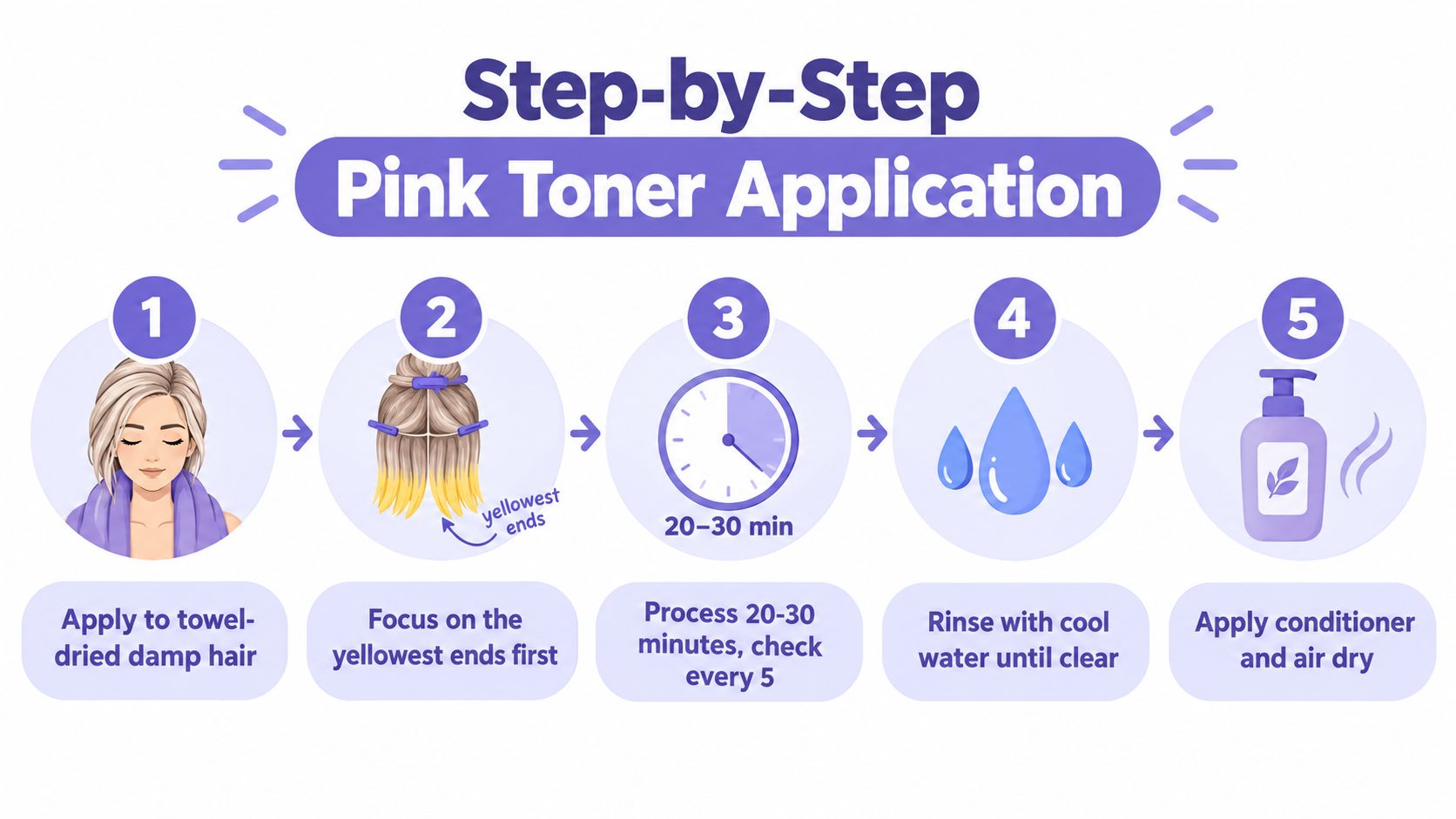
The workflow below follows practical salon-style guidance published by Bleach London, including the recommendation to neutralize remaining yellow first, apply to towel-dried hair, focus on the warmest zones first, allow 10 to 20 minutes for toner development, and leave a follow-on pink deposit for about 30 minutes when building a soft pink result step-by-step pink application guidance from Bleach London.
Step one, clean up the base first
If yellow is still visible, neutralize that first rather than hoping the pink will hide it. Pink over yellow often turns peachy. If that’s the look you want, fine. If you want airy pastel pink, it’s the wrong shortcut.
Towel-dry after cleansing or pre-toning. Hair should be damp, not dripping. Excess water dilutes the deposit and can make the result faint or inconsistent.
Step two, section with discipline
Divide hair into manageable sections. Four sections are the minimum for neat work on most heads, but denser hair usually needs more detailed subsectioning.
Start where the hair is warmest or yellowest. That’s commonly around the ends, the back, or older bleached sections.
Put product on the places most likely to stay peach first, not on the prettiest pale pieces around the face.
Step three, saturate fully
Many home applications fail. People smooth a little product on the surface, massage it quickly, and assume it will distribute itself. It won’t.
You want every subsection coated enough that you can see a clear, even layer of product. Pay special attention to:
- The nape: easy to miss, often warmer
- Porous ends: they can grab darker, so monitor them closely
- Behind the ears: common patch zone
- Crown regrowth area: often processes differently from older lengths
If you’re using direct pink dye for a pastel effect, dilute it with conditioner or a mask. That dilution step is specifically recommended in the same practical guidance above and is one of the easiest ways to create a softer result without overcommitting to pigment strength.
Step four, watch timing instead of guessing
Some workflows use a toner stage for 10 to 20 minutes, then a pink deposit stage for about 30 minutes. Don’t treat timing as universal. Porosity changes speed dramatically.
Check visually during development. If the front pieces are pale and your ends are very porous, the ends may finish before the rest of the head.
Here’s a useful demonstration if you like to see application movement and sectioning in action:
Step five, rinse carefully and stop at the right moment
Rinse with cool to lukewarm water until the runoff is mostly clear. Don’t scrub aggressively during the rinse. Rough handling at this point can encourage tangling in freshly processed hair.
Follow with a conditioner if your formula calls for it. Then let the color settle visually before deciding it’s “not enough.” Wet pink always reads different from dry pink.
What works and what does not
What works:
- Careful subsectioning
- Starting with the warmest areas
- Adequate product quantity
- Dilution for pastel goals
- Checking porous ends early
What doesn’t work:
- Applying on soaking-wet hair
- Smearing product on top layers only
- Guessing processing time without visual checks
- Trying to make pink fix strong yellowness
- Running out of product halfway through
I believe this is the part readers most need. Pink toner looks playful, but the method needs precision.
Aftercare and Maintenance to Keep Your Pink Toner Fresh
Pink-toned results are temporary, and that’s not a flaw. It’s the nature of the category. Independent hair-care guidance places toner fade at roughly 2 to 6 weeks, while some pink products advertise 4 to 6 weeks or 6 to 8 weeks, depending on formula type and wash frequency pink toner longevity ranges explained.
That means maintenance is less about “locking it forever” and more about slowing the fade while keeping the hair comfortable and glossy.
The habits that preserve pink better
Use a gentle, color-friendly cleanser. Wash less often if your scalp allows it. Cool water helps preserve tone better than frequent hot rinses.
Heat styling also matters. Repeated hot-tool use tends to make pastel tones look flatter and duller faster, especially on pre-lightened hair. Sun exposure can do the same, so if you spend a lot of time outdoors, adding dedicated UV care helps. This guide on the best sun protection for hair is practical if fading seems worse in sunny months.
The refresh logic
Don’t wait until the hair looks completely washed out before refreshing. Soft maintenance usually works better than extreme re-toning.
A sensible rhythm looks like this:
- Use a nourishing mask: especially if the lengths feel rough after lightening
- Refresh with a soft pink deposit product: when the color looks less lively, not when it is fully gone
- Pause if the ends feel overloaded: repeated deposit on porous hair can make the tips look darker than the mids
The fastest way to lose a pretty pastel is frequent hot washing. The second fastest is over-toning brittle ends.
Matching care products to the hair, not just the shade
Product selection becomes practical rather than fashionable. If your scalp is sensitive, choose gentle cleansers first. If the lengths are rough, masks matter more than another pigment product. If your concern is overall strand quality between color services, Healtsy stocks non-color tonics such as Nizoral Care Hair Tonic and Alpecin Caffeine Hair Tonic, which are haircare support products rather than pink toners.
That distinction matters. A hair tonic can support your routine, but it won’t replace a pink deposit formula.
Troubleshooting Common Pink Toner Problems and Smart Fixes
Most pink toner problems fall into one of five buckets. The fix depends on whether your real goal is still to keep, mute, or remove the pink.
When pink turns peachy
Cause: the base still had visible yellow.
Fix: don’t stack more pink immediately. If the warmth underneath is the issue, correction should focus on the base first. The broader search confusion around pink toning is real, and some guidance treats enhancement and removal like the same task, even though they are not why pink toner advice often confuses keep, mute, and remove goals.
When the result is patchy
Cause: uneven saturation, missed sections, or different porosity from roots to ends.
Fix: reapply only if the hair still feels sound. Work in smaller subsections and target the skipped zones instead of coating the whole head blindly.
When pale blonde goes too pink
Cause: very light hair had little residual warmth, so the pigment grabbed fast.
Fix: choose muting over intensifying. A softer neutralizing strategy or a few washes may be all you need. This happens often on level 10-style blonde, where “just a hint” can become obvious rosy deposit quickly.
Sometimes the smartest correction is to do less, not more.
When pink fades too fast
Cause: frequent washing, heavy heat styling, or a very sheer formula on resistant hair.
Fix: refresh with a softer maintenance product, reduce hot rinses, and decide whether you need a more substantial deposit format next time rather than a shampoo-level product.
When the hair feels too compromised
Cause: the issue is structural, not tonal.
Fix: stop coloring and shift to recovery. Toning damaged hair repeatedly rarely improves the appearance for long. If you’re curious how warmer tones interact with contrast placement and statement pieces, this article on copper hair with blonde money pieces is a useful reminder that placement and base choice matter as much as tone itself.
I believe the safest decision tree is simple. If you want to enhance, work with your current base. If you want to mute, reduce intensity or rebalance warmth. If you want to remove, don’t call it toning and hope for the best. Treat it as correction.
I’m certain this will solve much of the trial-and-error that makes pink feel harder than it is. Pink hair toner can look refined, soft, and expensive when the base is right and the method is patient.
Build a kinder routine around color-treated hair
Healtsy offers pharmacy-led hair and beauty care, including gentle maintenance products, scalp-support options, and everyday routine staples that fit around color-treated hair rather than complicating it. If you’re building a safer post-bleach or post-toning routine, compare practical haircare options with ingredient transparency and genuine stock.
Explore Healtsy