


Lip Sleeping Mask Guide for Overnight Lip Care
You finish the day with balm in your pocket, reapplying after coffee, lunch, and the walk home. Then morning arrives and your lips feel tight, lined, or flaky before breakfast. That pattern doesn't automatically mean you need a more powerful product. It may mean your daytime routine isn't leaving a protective film in place through the night.
I've worked in the pharmaceutical sector for 16 years, and I believe the most useful advice I can give is to separate temporary softness from actual skin repair. A lip sleeping mask is best understood as an overnight occlusion ritual, not a medicine or a cure. This is the complete guide to choosing one by its texture, label, and how your lips respond.
Why Overnight Lip Dryness Keeps Coming Back
You apply balm before bed, wake up with dry lips, and reach for the tube again. A day of wind, indoor heating, talking, eating, and licking can wear away a light film long before bedtime. If you sleep with your mouth open, breathing through your mouth may also contribute to dryness; SleepHabits advice for sleeping with your mouth open offers context on that habit.
Frequent daytime use is already common. Grand View Research reports that about 6 in 10 U.S. adults use lip-care products at least once a day, and that 62% of consumers who use lip care more than once daily use it multiple times per day. These figures describe U.S. consumers, not a global average, but they illustrate why the gap may be about timing rather than discovering lip care for the first time. (Grand View Research's U.S. lip-care insights)
A daytime balm has to fit around ordinary life. You talk, drink, eat, and sometimes wipe your mouth, so the layer may not last. A richer product applied at night has a different job: remain on the lips while you sleep, when you're not eating or speaking.
Keep using daytime balm when it suits you. A night mask adds a different wear occasion, and doesn't replace daytime lip care or lip products with sun protection.
For daytime exposure, choose a lip product with sun protection when appropriate. This guide to lip balm with sun protection can help you think about that part of the routine separately from overnight care.
Don't treat morning flaking as proof that a mask is missing from your routine. It may reflect a worn-off film, dry air, lip licking, or a product that doesn't suit you. I believe the rest of this complete guide will solve the confusion between softness, occlusion, and irritation.
What a Lip Sleeping Mask Does on the Lips
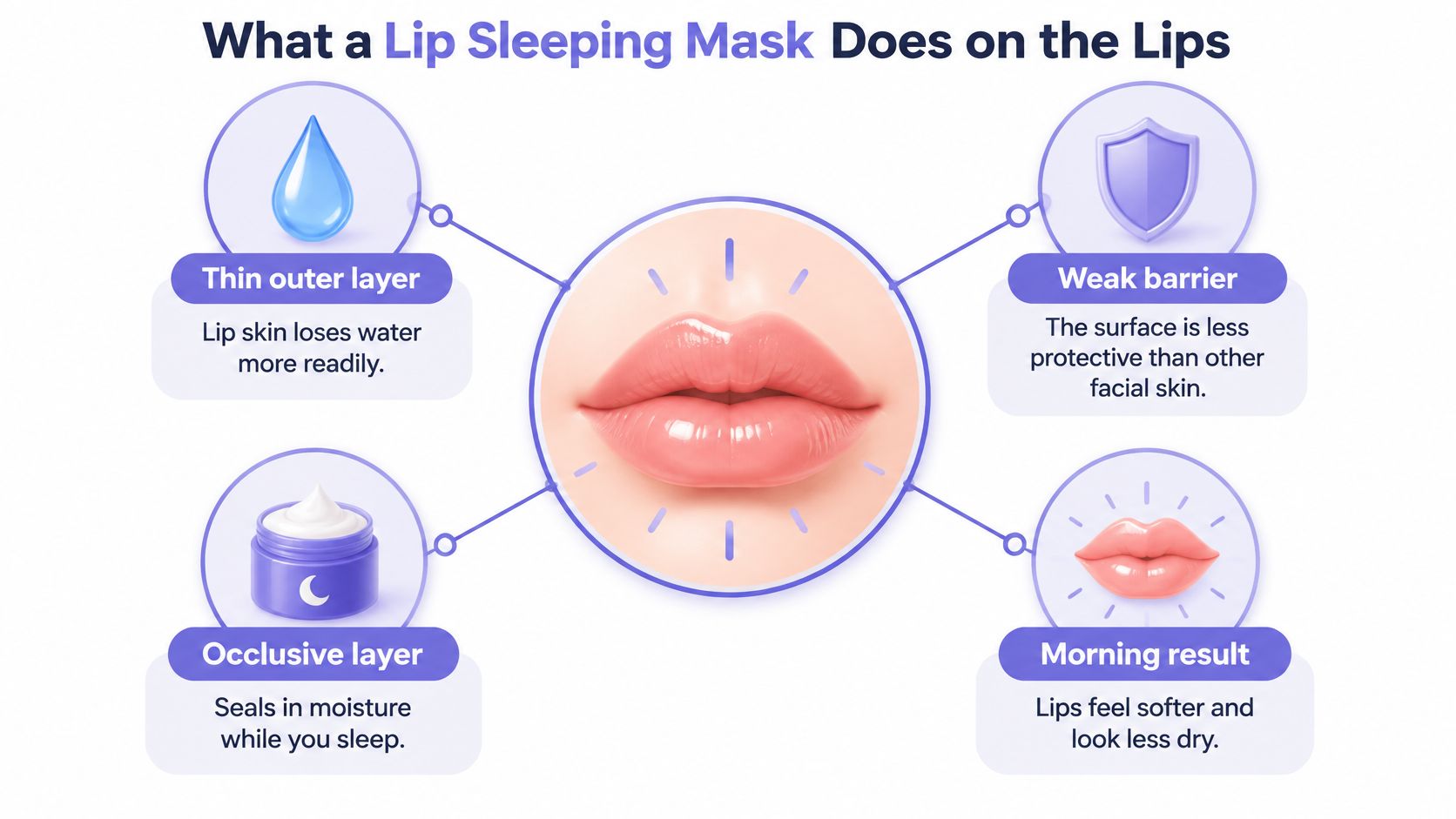
I would treat a lip sleeping mask as an overnight occlusion ritual: a flexible film applied at bedtime and judged by how it wears until morning. Lip skin loses water readily because its outer layer is thin and lacks the sebum-based protective film found on much facial skin. An occlusive layer gives the formula an uninterrupted period to remain in place.
In one clinical paper, lips affected by cheilitis had a mean transepidermal water loss (TEWL) of 66.8 g/m²·h and substantially lower capacitance than matched controls; in a separate in-vitro model reported there, 100% petrolatum reduced water-vapour transmission to 0.73 g/m²·h, while a tested lip cream produced moderate occlusion at 84.1 g/m²·h, according to a clinical review of lip barrier function and occlusion measurements.
Those figures describe tested materials under model conditions. They do not guarantee that every petrolatum product or lip cream will perform identically on your lips.
The practical effect is surface-level. Petrolatum, waxes, plant-derived lipids, and other film-formers can slow evaporation, while humectants such as glycerin or hyaluronic acid help bind water near the surface. The mask does not create a permanent moisture reserve, so check the film-forming ingredients before accepting stronger label claims.
Choose by texture and intended wear. I believe a petrolatum-rich formula is the sensible option when overnight dryness is marked or bedroom air is dry. An oil-and-wax mask may feel lighter and more comfortable, although it generally offers less resistance to water-vapour loss.
Apply a thin, even film to clean, dry lips. A thick smear can transfer to bedding before it forms a stable layer. Judge the morning result by comfort and softness, and treat stinging or worsening flakes as signs to reassess that formula.
The video below demonstrates how to approach an overnight lip-care routine.
How a Lip Sleeping Mask Differs from Balm
A lip sleeping mask and a daytime balm may share ingredient types, but they are designed around different routines. A mask is generally a richer leave-on layer applied before sleep and wiped away or washed off in the morning. A daytime balm is made for a pocket, quick application, and reapplication between talking, eating, and drinking.
The word "mask" on the label does not establish a performance standard. It does not automatically mean stronger, more reparative, or more hygienic. Compare the texture, intended wear time, fragrance and flavor, potential allergens, and packaging. A pot may suit a nightstand, but you will need to keep it clean; a tube or stick is more practical to carry.
Ingredient order makes the difference visible. A daytime balm may list petrolatum near the top because it is designed for frequent, portable use; a night mask may emphasize waxes or plant oils for a longer-lasting film. Compare the full lists rather than assuming the packaging determines performance. When you order a European pharmacy formula from abroad, the ingredient list is the most reliable part of what arrives, so read it before you commit.
| Question | Lip sleeping mask | Daytime lip balm |
|---|---|---|
| When is it used? | Usually before bed, as a leave-on layer. | During the day, with reapplication as needed. |
| What's the texture like? | Often richer and more noticeable on the lips. | Often lighter or more convenient for frequent use. |
| Can it be worn during the day? | Yes, if you're comfortable with the texture. | It's the usual choice for daytime wear. |
| Can it go over lipstick? | It may feel heavy or affect the lipstick finish. | A lighter balm may be easier to layer, depending on the product. |
| Is a mint tingle proof it works? | No. Sensation doesn't demonstrate performance. | No. Choose by formula and comfort, not a tingle. |
| Who should be cautious? | Anyone with cracked, sensitized, or reactive lips should check the formula carefully. | The same ingredient and reaction considerations apply. |
Lip serums, sleeping masks, and exfoliating scrubs have been identified as rising skincare product categories, a trend that makes label literacy increasingly useful. (DermNet's overview of contact reactions to lip products) I would apply the same reading to a familiar balm. NUXE Rêve de Miel Lip Balm 15g is a balm-format option; check where its occlusive and emollient ingredients sit in the list, note the suggested wear time, and compare that with a richer leave-on mask before you decide.
Shop at HealtsyNUXE Rêve de Miel Lip Balm 15g→Ingredients to Seek and Ingredients to Skip
Start with the full ingredient list, not the hero ingredient on the front of the jar. Under U.S. cosmetic-labeling rules, retail cosmetics list ingredients in descending order of predominance. Ingredients present at 1% or less may be listed in any order, and fragrance or flavor may appear under those general terms. (FDA summary of cosmetic labeling requirements)
That gives you a practical way to compare products. If shea butter appears near the beginning of one formula and near the end of another, the formulas are likely built differently. The list doesn't reveal exact percentages or guarantee that one product will perform better, but it's more informative than comparing front-label claims alone.
For dry or chapped lips, the American Academy of Dermatology lists ingredients including petrolatum, mineral oil, dimethicone, ceramides, castor seed oil, and shea butter as options to look for. They can help soften the surface and reduce moisture loss. (American Academy of Dermatology guidance for dry, chapped lips)
Ingredients to seek
- Petrolatum
- Mineral oil
- Dimethicone
- Ceramides
- Castor seed oil
- Shea butter
Possible irritants to watch
- Fragrance
- Flavor oils and mint
- Botanical extracts
- Beeswax or propolis
- Preservatives
- Antioxidant gallates
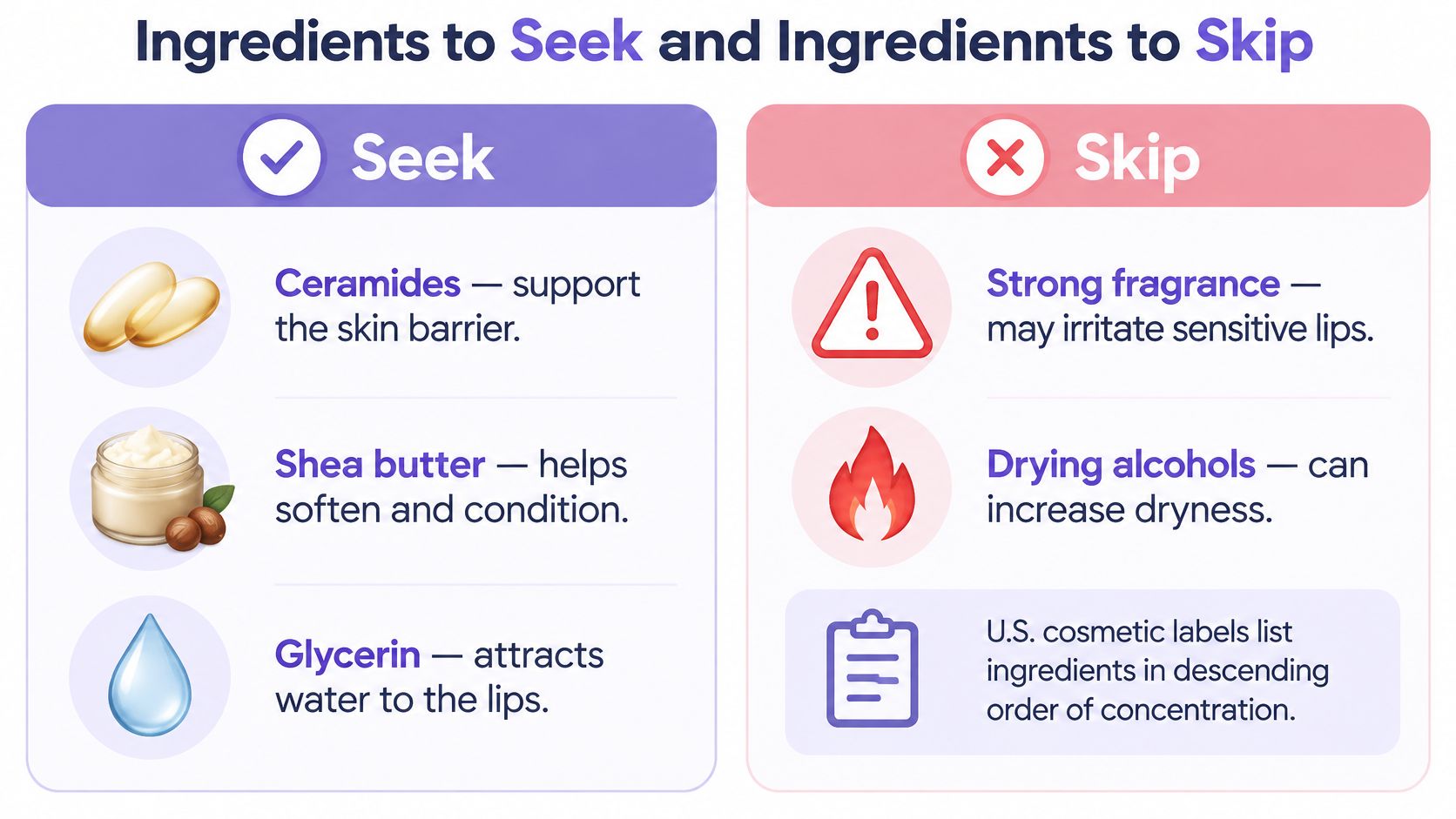
If a formula makes your lips sting or flare, take a closer look at potential irritants or allergens. Fragrance, flavor oils, mint, botanical extracts, beeswax or propolis, preservatives, and antioxidant gallates may be relevant for some sensitive users. "Natural," "clean," and pharmacy-style positioning doesn't mean allergy-free.
An ingredient's position helps you understand the formula, but your own reaction determines whether it's suitable for you.
A peeling product can be a separate step, not an automatic companion to an overnight mask. If you're considering one, read its directions and consider whether exfoliation is appropriate for your current lip condition; Dermacol Lip & Face Manga Peeling is an example of a product to assess on its own label.
Shop at HealtsyDermacol Lip & Face Manga Peeling→How to Fit a Lip Sleeping Mask into Night Care
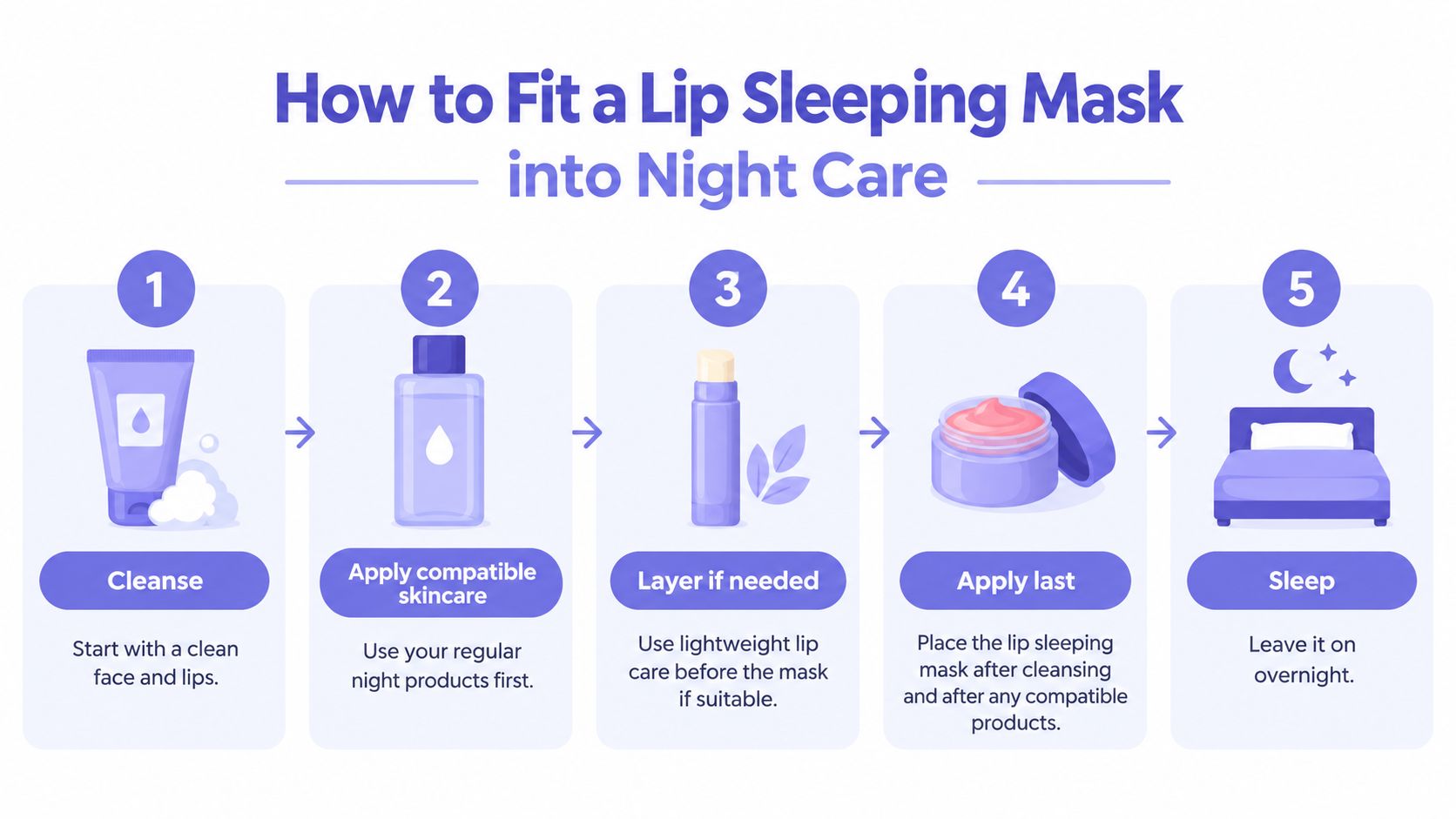
A cold evening outdoors can leave your lips tight by the time you finish washing your face, even if you used balm during the day. I advise adding the mask only after the rest of your routine, applying a thin, even layer as the final lip-care step before bed.
A controlled human study tested a lip-care formula containing fruit wax, coconut oil, and olive oil in 15 healthy female volunteers after a single application. Lipid deposition remained detectable in the stratum corneum for 2–6 hours, and the reported hydrating effect lasted approximately 6 hours. Those findings apply to that tested formula and study group. (Controlled study of a fruit-wax and oil lip formula)
Use this routine:
- Start clean. Wash your face and make sure your lips are free of food, makeup, and residue.
- Finish compatible skincare first. Keep facial products that irritate your lips from spreading onto them.
- Apply to slightly damp lips. A thin film is enough to cover the surface evenly, and working over light moisture supports the occlusion the mask provides.
- Keep the daytime products for daytime. Use a lip product with sun protection when you're exposed to the sun, rather than relying on an overnight mask.
- Leave the mask on overnight. If the film wears away, reapply as needed instead of beginning with a very thick coat.
Moisture in the outer skin layer matters too. When stratum-corneum water content stays low, the surface loses flexibility and becomes more prone to scaling and small fissures, which is part of why a consistent overnight occlusion ritual helps.
If you're ordering a European pharmacy formula from abroad, read the full ingredient list before the first use and watch how your lips respond over several evenings. Your own reaction is the deciding check.
Avoid stacking a fresh scrub, an acid, or a strongly flavored balm under the mask. Don't lick or pick at your lips, and keep the jar closed; use a clean fingertip or spatula, and don't share a pot.
A thin, even layer is usually enough for the job: it reduces product waste and makes it easier to notice whether the formula suits your lips.
When a Lip Sleeping Mask Makes Lips Worse
A mask shouldn't burn, swell, or leave your lips persistently red and scaly. If a reaction keeps returning after use, the issue may be irritant or allergic contact cheilitis rather than dryness that needs a thicker layer.
A review of published cases identified 58 people with allergic reactions to lip-care products; frequently implicated ingredients included castor oil, benzophenone-3, gallates, waxes, and colophony. Another clinical study found allergic contact cheilitis in 17% of people evaluated for cheilitis, with reactions commonly involving patients' own products, fragrance-related substances, balsam of Peru, benzophenone, and metals. These findings are reasons to take persistent reactions seriously, not a way to diagnose yourself. (Review of allergic reactions to lip-care products)
Pay attention to the pattern. A brief scent or mild sensation isn't the same as burning, swelling, scaling, or redness that recurs. Mint and flavor can create a noticeable feeling without showing that the formula is more effective.
A thicker layer increases contact with the formula. It doesn't make an irritating ingredient safer.
If you suspect a reaction, stop the new product and return to one bland, fragrance-free lip product. Don't add several new products at once, since that makes it harder to identify what's causing the problem. Seek professional assessment if symptoms persist or you notice swelling.
If your lips are already cracked or highly reactive, choose a simple fragrance-free film and skip flavor, scrubs, and DIY mixtures containing essential oils or food allergens. Caregivers should use the same cautious approach when choosing products for children. A separate product such as ISDIN Lip Repair Balm 10ml should also be judged by its ingredients and suitability, not assumed to be interchangeable with a sleeping mask.
Shop at HealtsyISDIN Lip Repair Balm 10ml→How to Choose a Lip Sleeping Mask Next
If you're comparing European pharmacy formulas from abroad, make the purchase decision by checking the actual product, not the country of origin or the word "pharmacy." A European formula still deserves the same scrutiny as any other lip product: read the ingredient list, think about your own sensitivities, and decide whether the texture is suitable for overnight wear.
Use four checks before choosing:
Check the base
Look for an occlusive or emollient ingredient near the start of the list if you want a richer overnight film.
Check the feel
Choose a texture you can comfortably leave on overnight. A scrub or strongly flavored tingle isn't a substitute for an occlusive layer.
Check the packaging
Pick a format you can keep clean and use hygienically.
Check your known triggers
Avoid ingredients that have bothered your lips before, including fragrance or particular allergens.
A simple petrolatum or shea-and-wax formula may be a more sensible place to start than a complicated DIY mixture with essential oils, citrus, or kitchen butters. More ingredients don't automatically make a product a better match.
Keep daytime protection separate from night care. For example, BABÉ Stick Lip SPF20 4g is a lip product with sun protection to assess for daytime use according to its label. It isn't a substitute for an overnight mask, and an overnight mask isn't a substitute for sun protection.
Shop at HealtsyBABÉ Stick Lip SPF20 4g→Healtsy is a Portugal-based shop for European pharmacy and parapharmacy products, shipped from Europe to customers worldwide. Its skincare range includes lip care alongside masks, moisturizers, cleansers, serums, and other skincare products, and a pharmacist reviews product information. I believe the best next step is to compare one fragrance-free overnight film against the checks above, rather than introducing several new lip products at once.
Choose your overnight lip product with confidence
Healtsy offers European pharmacy and parapharmacy skincare, including lip care, for shoppers looking for products from Europe. Compare options and choose an overnight lip product by its ingredients, texture, and fit with your routine.
Visit Healtsy