


Hair Care
Intense Repair Shampoo: A Pharmacist's Complete Guide
After a bleaching session, hair can feel less like silk and more like fine thread. It catches on the brush, snaps when you pull it into a ponytail, and the split ends seem to travel upward toward your face. At that point, the label intense repair shampoo sounds like exactly what you need. The practical question is whether the product can repair the fiber, or whether it mainly makes damaged hair feel smoother while you use it.
I've spent 16 years in pharmaceutical and personal-care ingredient science, translating formulas into advice people can use in the bathroom. I believe the most useful guidance is honest about both benefits and limits. This is the complete guide to intense repair shampoo, with a pharmacist's framework for matching cleansing chemistry, conditioning agents, and treatment frequency to the damage your hair has experienced.
What Brings You to an Intense Repair Shampoo
A client once described the moment after a lightening appointment when she first noticed the change. Her blonde hair looked beautiful in the mirror, but the lengths felt rough beneath her fingers. When she gently stretched a wet strand, it seemed fragile enough to break. Her question was simple: can a repair shampoo undo this?
The answer depends on what “repair” means. Beauty marketing often uses the word for several different outcomes, including smoother cuticles, less combing friction, better shine, reduced breakage, and improved manageability. Those outcomes matter, but they aren't identical to rebuilding a hair fiber that has lost internal structure.
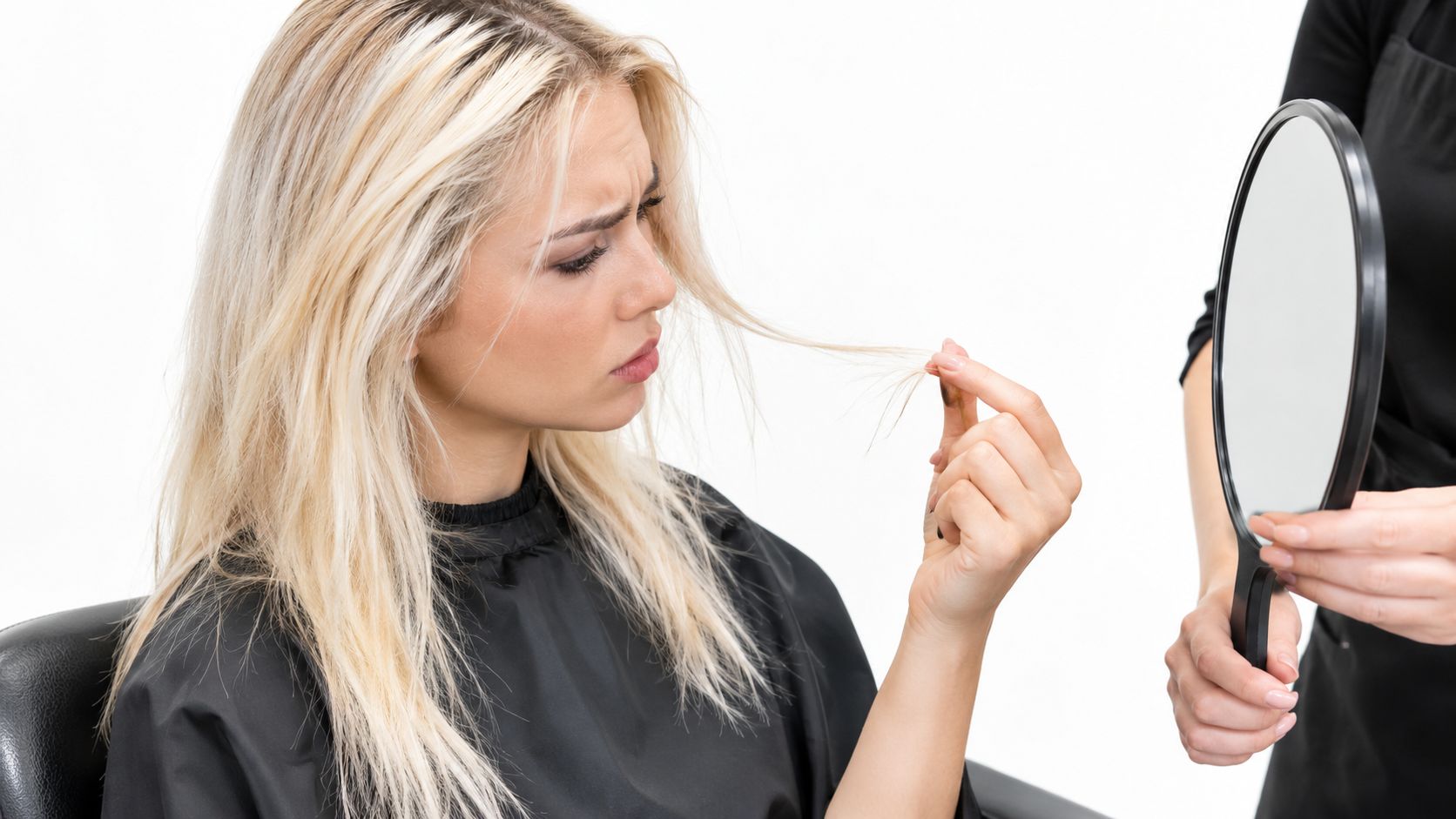
Bleaching and repeated coloring can leave hair porous and uneven. Heat styling can make the surface brittle, while brushing, towel friction, and tight hairstyles add mechanical stress.
A shampoo can't reattach a split end, but a well-formulated cleanser can reduce the roughness and friction that make already-compromised lengths harder to handle.
The question behind the label
The clearest clinical evidence in the supplied research concerns a 24-week shampoo-and-leave-on regimen for people with self-perceived thinning hair. The randomized, double-blind, placebo-controlled study enrolled 360 male and female patients aged 25 to 65. By week 24, the treated group showed an average increase of 5.68 hairs per square centimeter, while the placebo group showed no change. The study also reported lower shedding as early as weeks 6 and 8. Cleveland Clinic's report of the study makes clear that this evidence relates to a complete regimen and scalp-health context, not proof that every damaged hair shaft can be reconstructed by shampoo alone.
Treat “repair” as a performance claim until you know whether the formula has been tested for strength, breakage, smoothness, or another defined result.
My aim is to help you choose with confidence rather than disappointment. Once you separate cosmetic repair, meaning a smoother and more protected surface, from true fiber-level restoration, product labels become much easier to interpret.
What an Intense Repair Shampoo Actually Is
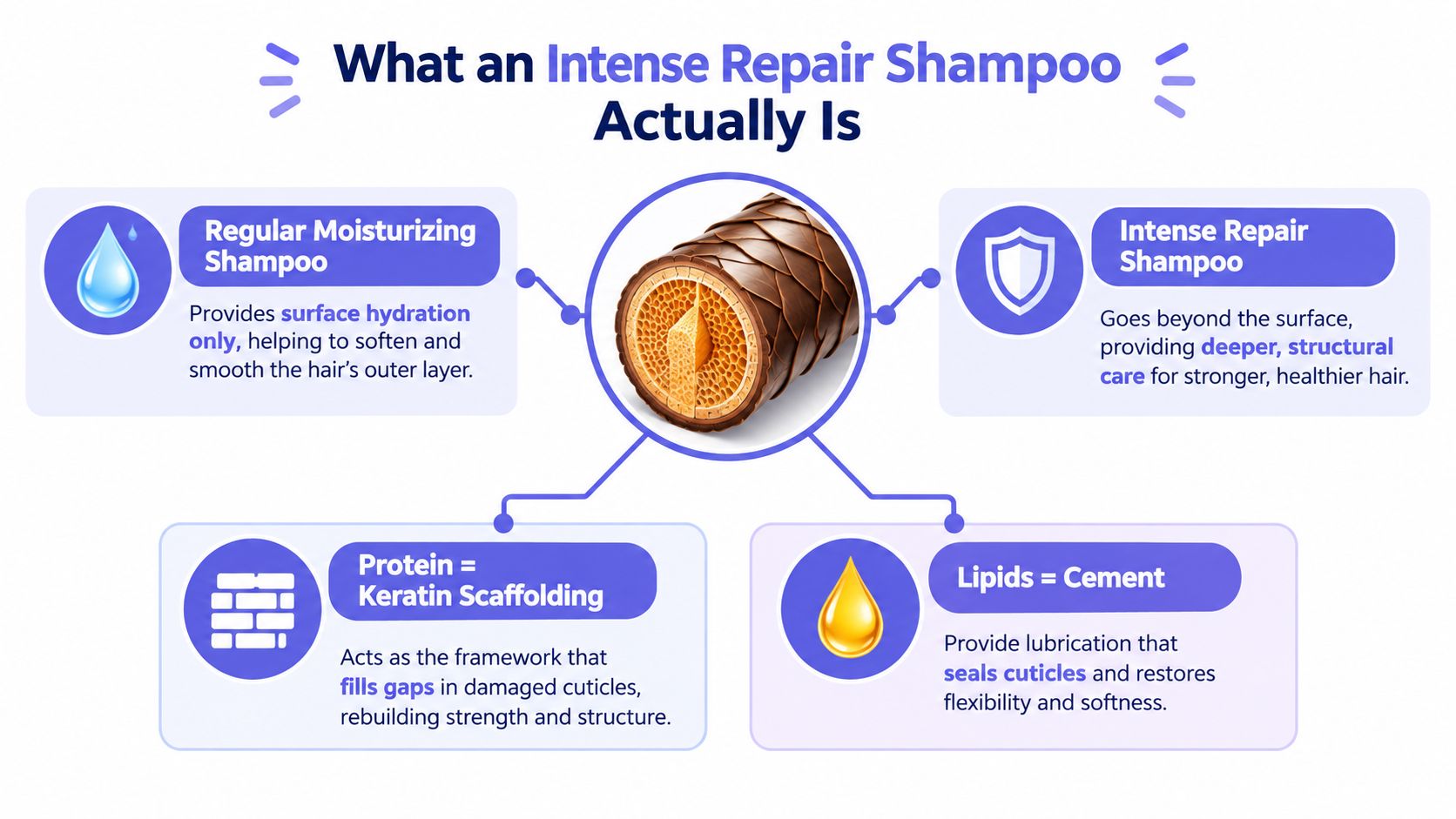
An intense repair shampoo is a cleansing formula designed to remove oil and residue while leaving behind conditioning materials that support the feel and resilience of damaged hair. It differs from a basic cleansing shampoo because it usually combines a surfactant system with ingredients intended to coat, lubricate, or temporarily reinforce rough areas of the fiber.
A useful analogy is a brick structure. Keratin forms much of the hair's protein framework, like scaffolding that gives the fiber its shape. Lipids and conditioning materials act more like mortar and protective coating, helping reduce the gaps and roughness that become noticeable after chemical processing, heat, or repeated friction.
That analogy has limits. Shampoo is rinsed away quickly, and its ingredients must work within a short contact time. It isn't the same as a mask left on the lengths, and it isn't a substitute for removing heavily split ends. The most realistic benefits are better slip, reduced roughness, improved shine, easier detangling, and lower vulnerability to everyday breakage.
Cosmetic repair versus structural restoration
Protein-based conditioning agents can deposit on damaged fibers and improve how hair behaves. A 2024 study of a transparent, silicone-free shampoo found that adding 2 wt% total protein from a cationic modified hydrolyzed protein and a low-molecular-weight hydrolyzed protein increased surface hydrophobicity and reduced friction compared with a protein-free commercial silicone-free shampoo. The formulation showed both surface adsorption and partial penetration, with the strongest conditioning effect coming from the combination of the two protein types at the right mass ratio. The International Journal of Cosmetic Science study supports a practical conclusion: a formula can make hair feel more conditioned without claiming to reverse every chemical change inside the fiber.
For readers exploring broader approaches to scalp and follicle concerns, these proven tips for hair follicle repair provide useful context. Follicle-focused care and shaft-focused repair are different conversations, and confusing them leads to unrealistic expectations.
The Key Ingredients That Do the Heavy Lifting
The ingredient list tells you more than the word “intense.” I look first for the relationship between conditioning polymers, proteins, lipids, oils, and the surfactants that carry them through the wash. The visible result depends on how these ingredients work together, not on whether one fashionable ingredient appears near the front of the label.
Four families to understand
Proteins such as hydrolyzed keratin, wheat, silk, and soy are used because smaller protein fragments can interact with damaged hair surfaces. They may temporarily fill irregular areas, improve feel, and support easier combing. This makes them especially relevant to hair that feels porous, weak, or rough after bleaching and chemical processing. Protein doesn't turn a broken strand back into an unbroken one.
Lipids and fatty conditioning materials help reduce the friction that makes hair feel coarse. Cetearyl alcohol is a fatty alcohol used in conditioning systems, while behentrimonium chloride is a cationic conditioning ingredient that can deposit on the fiber. These materials are useful when hair tangles, drags during brushing, or feels stripped after frequent washing.
Ceramide-style ingredients are used to support the lipid-rich regions between cuticle cells. On a label, you may encounter ceramide names or analogues rather than a simple promise to “restore the barrier.” They're most relevant to hair that feels dry, porous, and vulnerable to swelling and repeated handling.
Natural and silicone oils provide slip and a smoother optical finish. Argan oil, coconut oil, and dimethicone can help hair feel less rough and look shinier, although their weight and sensory profile differ. Fine hair may prefer a lighter system, while coarse or highly porous hair may tolerate a richer coating.
| Ingredient Family | Mechanism | Damage It Addresses | Example Ingredients |
|---|---|---|---|
| Proteins | Interact with damaged surfaces and may partially penetrate the fiber | Porosity, roughness, chemical-processing stress | Hydrolyzed keratin, wheat, silk, soy |
| Lipids and fatty conditioning materials | Lubricate and improve fiber flexibility and combing | Dryness, tangling, friction, brittle feel | Cetearyl alcohol, behentrimonium chloride |
| Ceramide-style ingredients | Support lipid-like regions around cuticle structures | Porosity, swelling, weakened surface feel | Ceramide analogues, lipid complexes |
| Oils and silicones | Coat the shaft, increase slip, and improve shine | Frizz, roughness, heat and mechanical stress | Argan oil, coconut oil, dimethicone |
Conditioning polymers are another major part of the story. Industry literature describes cationic polymers, including modified guar and cellulose materials, as ingredients that deposit on hair and improve its after-wash feel. This technical overview of shampoo ingredients is helpful when you want to understand why two shampoos with similar marketing language can perform differently.
Independent testing of shampoo polymers found that only PQ7 and Blend A among the tested synthetic polymers produced significant wet-combing reduction, and neither outperformed PQ10 or at least one cationic guar polymer. The lesson is straightforward: the conditioning polymer can matter as much as the protein or oil headline. The professional evaluation of shampoo polymers gives formulators and shoppers a reason to look beyond front-label claims.
Why the Surfactant System Matters as Much as the Actives
A repair shampoo can contain excellent conditioning ingredients and still leave hair feeling worse if the cleanser is too aggressive. Surfactants lift oil, dirt, and styling residue, but the wrong balance can also increase friction and remove protective materials from the fiber.
Sodium Lauryl Sulfate and Sodium Laureth Sulfate are familiar primary surfactants. They aren't automatically unsuitable for every person, but they can feel too stripping on porous, bleached, curly, or frequently washed hair. Milder systems may include Sodium Cocoyl Isethionate, Cocamidopropyl Betaine, or Decyl Glucoside, often blended to achieve cleansing without relying on one highly deterging material.
Read the first part of the label
Look near the beginning of the ingredient list. Cleansing agents generally appear in the higher-concentration portion, so the first surfactants give you an early indication of the formula's washing character. A product can say “intense,” “deep care,” or “repair” on the bottle while still using a cleanser that leaves fragile lengths squeaky and rough.
The physicochemistry of hair care explains why this matters. Cleansing can create deformation and abrasion as fibers bend and rub together, while strong anionic surfactants can remove structural lipids and proteins from the cuticle and cortex. Because hair has an epicuticular lipid layer, formulas work more sensibly when they combine milder cleansing with conditioning agents that coat or fill damaged areas. The peer-reviewed review of hair-care physicochemistry provides the underlying explanation.
“Sulfate-free” is useful information, but it isn't a complete quality assessment. A sulfate-free shampoo can still cleanse too strongly for your hair, while a formula containing a sulfate may suit someone with an oily scalp who uses a rich conditioner on the lengths.
Ask whether the cleansing system protects the damaged fiber while it removes residue. The word “repair” can't compensate for a formula that leaves you scrubbing and detangling harder.
For a plain-language look at alternatives such as glucoside-based cleansing agents, this gentle surfactant guide offers useful ingredient context. If dandruff or scalp scaling is part of the picture, don't select a repair product without considering the separate role of anti-dandruff ingredients. This guide to anti-dandruff shampoo ingredients helps distinguish scalp treatment from cosmetic conditioning.
Which Hair Types and Damage Patterns Benefit Most
The right intense repair shampoo depends less on a universal ranking and more on the pattern of damage in front of you. Hair that feels stiff after repeated protein treatments needs a different balance from hair that is soft, porous, and unable to hold moisture. Curly hair also has different handling needs from fine, untreated hair.
Match the formula to the dominant problem
Bleached or chemically processed hair often benefits from a formula that combines hydrolyzed proteins with lipid and ceramide-style conditioning. The objective is not to rebuild every altered bond. It is to make the surface more cohesive, reduce drag, and help the length tolerate routine washing and combing.
Curly, coily, and chronically dry hair often needs a moisture-led approach. Fatty alcohols, plant oils, and squalane can provide the lubrication that helps curls separate without excessive friction. A protein-rich formula may still be useful, but repeated use can be counterproductive if the hair already feels hard or straw-like.
Color-treated hair usually benefits from gentler cleansing and a strong conditioning finish. Antioxidant oils and UV-filter claims may be relevant, but the ingredient list and the way your color behaves after washing matter more than a bright package promise.
Fine hair requires restraint. Lighter protein hydrolysates and modest conditioning can support manageability without flattening the root area. Apply the cleanser to the scalp and let the rinse water carry the foam through the lengths instead of coating the roots with heavy leave-on materials.
| Hair Profile | Primary Damage | Best Active Focus | Protein-to-Lipid Ratio |
|---|---|---|---|
| Bleached or chemically processed | Porosity, roughness, snapping | Hydrolyzed protein, ceramide-style conditioners, lipids | Protein-led, balanced with lipids |
| Curly, coily, or very dry | Friction, dryness, tangling | Fatty alcohols, plant oils, squalane | Lipid-led with occasional protein |
| Color-treated | Fade concerns, dryness, surface roughness | Mild cleansing, conditioning, antioxidant oils | Balanced and gentle |
| Fine and limp | Breakage without tolerance for weight | Light protein hydrolysates, lightweight conditioners | Light protein, restrained lipids |
The same principle applies to low-porosity hair, where buildup and heaviness may become more noticeable than immediate dryness. This practical guide to hair care for low-porosity hair can help you assess whether your hair needs more deposition or just less product.
For shoppers comparing plant-oil-focused options, Vitamin Planet's hair-care selection offers an example of how a rescue-and-restore product may be positioned around nourishment. Read the complete formula and judge the result on your own lengths rather than assuming “natural” automatically means lighter or gentler.
How to Use an Intense Repair Shampoo in Your Routine
Application technique can decide whether a repair shampoo feels helpful or drying. Most damage sits on the mid-lengths and ends, while oil, sweat, and styling residue collect mainly near the scalp. Washing both areas with the same pressure is unnecessary.
A lower-friction wash
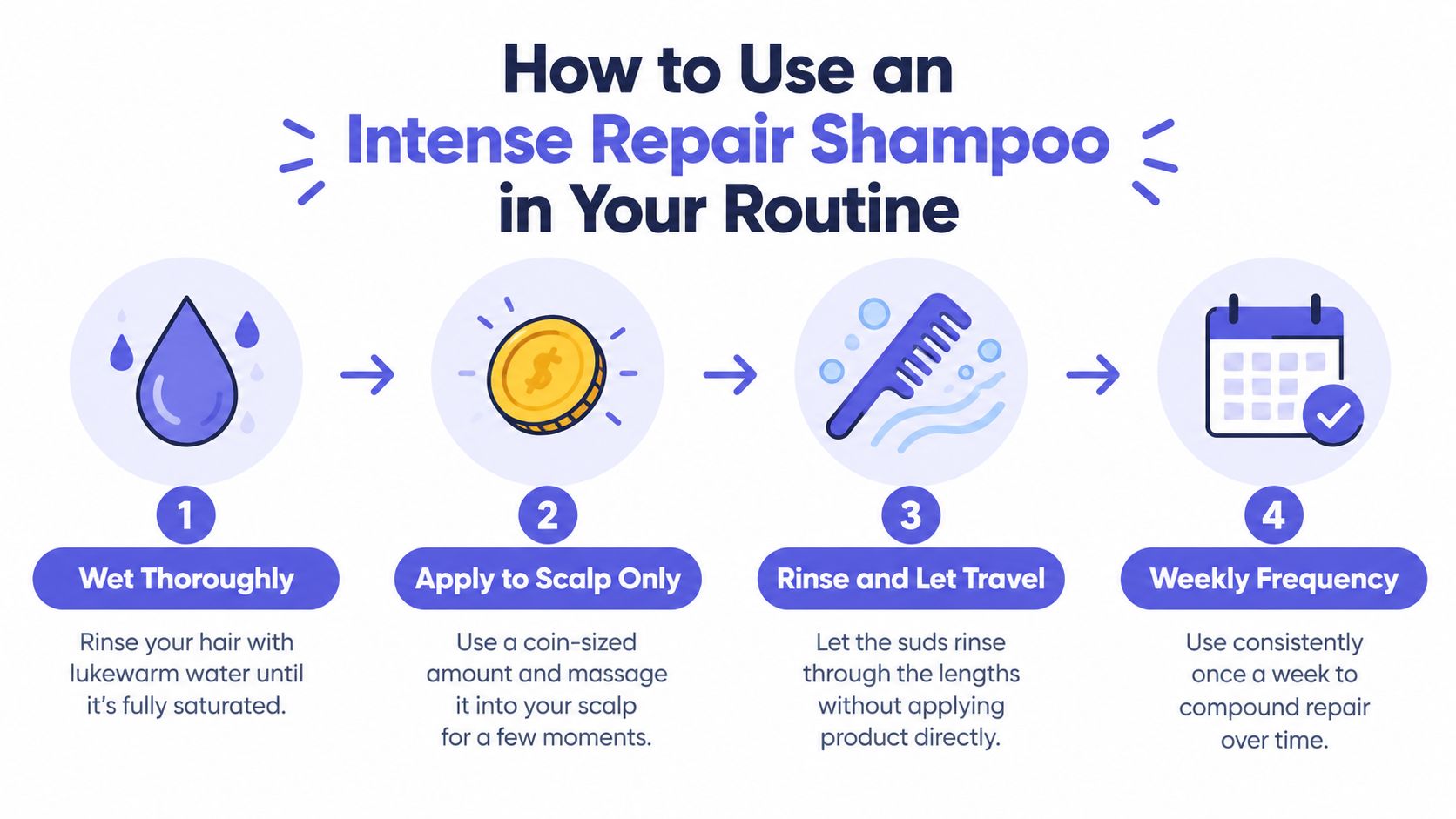
- Wet thoroughly. Use lukewarm water so the hair and scalp are fully saturated before the cleanser touches them. This helps the shampoo spread instead of forcing you to use excess product.
- Apply a small coin-sized amount to the scalp. Massage briefly with the pads of your fingers. Avoid scraping with fingernails and don't bunch the lengths into a knot on top of the head.
- Let the lather travel down. As you rinse, the diluted foam will pass over the lengths. This is usually enough for moderately soiled hair and avoids directly scrubbing fragile ends.
- Repeat only when needed. A second cleanse can make sense after heavy styling or on a very oily scalp. Otherwise, one thorough wash may provide enough cleansing with less repeated exposure.
Follow with a pH-balanced conditioner on the mid-lengths and ends. A weekly mask or a leave-in serum can add a separate conditioning layer, especially when the hair tangles easily. The shampoo supplies a short cleansing-and-deposition step, while the conditioner has more opportunity to improve slip during detangling.
A workable schedule
A normal scalp may tolerate the repair shampoo two to three times per week, adjusted for sweat, oil, styling, and personal washing habits. An oily scalp may need more frequent cleansing, but the solution isn't necessarily a harsher formula. A dry scalp or very porous hair may do better with less frequent repair-focused washing and a gentler, lipid-focused cleanser between uses.
Don't judge a regimen after one shower. Hair feel can change quickly because conditioning materials coat the surface, while reduced breakage depends on repeated low-friction handling and consistent protection. The evidence for a shampoo-and-leave-on regimen in scalp care was assessed over 24 weeks, not after an overnight transformation. The clinical report is a useful reminder to separate immediate cosmetic feel from outcomes that require sustained use.
Watch the routine demonstration below, then adapt the pressure, amount, and frequency to your scalp rather than copying a fixed schedule.
Safety, Sensitivities, and the Protein Overload Trap
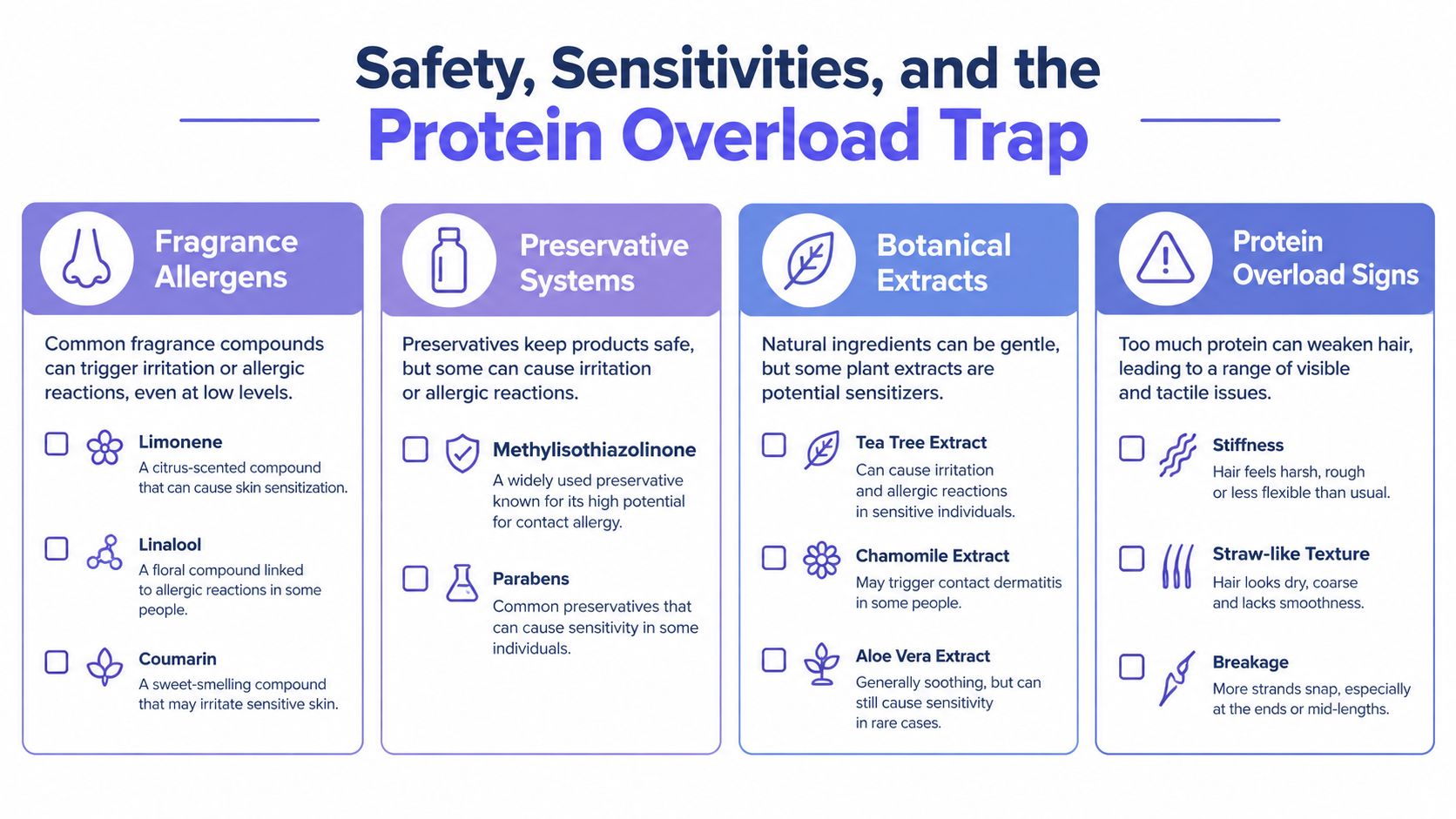
“Repair” doesn't mean “suitable for every scalp.” Fragrance compounds, preservative systems, and botanical extracts can cause problems for people who are already reactive. Methylisothiazolinone and parabens are examples shoppers may wish to identify when reviewing a formula, although the presence of an ingredient on a label doesn't predict an individual reaction by itself.
Stop and reassess if a new shampoo brings itching, redness, persistent flaking, burning, or a rash. A cautious patch test can be sensible for a new formula, especially if you've previously reacted to fragranced or botanical products. For recurring symptoms, seek advice from a qualified healthcare professional rather than repeatedly changing products without identifying the cause.
More protein isn't automatically better
Hydrolyzed proteins are dose-dependent conditioning tools, not a permanent strengthening guarantee. If you use several protein-heavy products together, hair may begin to feel stiff, coarse, or brittle. Fine strands can show this effect sooner because a small amount of residue changes their movement and texture.
A simple observation can guide your next step. If wet hair feels unusually straw-like, resists bending, or feels gummy when stretched, pause the protein-rich products and use a moisture-focused conditioner or shampoo instead. That doesn't prove protein overload, but it is a useful reason to simplify the routine and observe the response.
Damaged hair may need both reinforcement and flexibility. Cycling a protein-focused wash with a gentler, lipid-focused option can be more comfortable than using the strongest repair formula at every wash.
Hair and scalp concerns can overlap with broader barrier issues. This resource on repairing a damaged skin barrier explains why irritation management begins with reducing triggers and supporting the barrier, rather than adding more active ingredients.
Buying Tips and Your Most Common Questions Answered
Start with the ingredient list, not the prestige of the bottle. Look for a cleanser that suits your scalp, conditioning agents that suit your lengths, and a formula whose texture doesn't force you to compensate with aggressive brushing afterward. A mid-priced product can be perfectly practical if its surfactant and conditioning system matches your needs, while an expensive product can disappoint if it leaves your hair stripped or overloaded.
What to check before buying
- Read the cleansing base. Look for a blend that cleans your scalp without leaving the lengths squeaky, rigid, or difficult to detangle.
- Find the conditioning system. Cationic polymers, fatty alcohols, oils, and protein ingredients can all contribute, but their combination matters more than one hero ingredient.
- Consider your scalp separately. A dry or sensitive scalp may need a gentler cleanser, while an oily scalp may need stronger cleansing balanced with careful conditioning on the lengths.
- Treat “sulfate-free” as one clue. It doesn't automatically establish that a formula is mild, nourishing, or appropriate for color-treated hair.
- Buy for the routine, not the promise. If the product page bundles shampoo, conditioner, and leave-in outcomes, remember that you may not be able to assign every result to the shampoo alone.
For a comparison point, this information about Vichy Dercos shampoo shows why shoppers should distinguish scalp-directed formulas from products designed mainly for damaged lengths.
Common questions
How often should I use an intense repair shampoo?Start with your normal washing pattern and adjust by scalp oiliness, styling residue, and the condition of your lengths. Two or three weekly uses may suit some normal scalps, while dry hair may need less frequent repair-focused cleansing and more emphasis on conditioner.
Can it replace regular shampoo?It can serve as your main shampoo if the cleanser suits your scalp and your hair remains flexible, clean, and manageable. If the lengths become stiff or coated, alternate with a simpler moisturizing or lipid-focused formula.
Is it suitable for color-treated or keratin-treated hair?It may be, but check the complete formula and follow the treatment provider's advice. Color-treated hair often benefits from gentler cleansing, while treated hair can react poorly to unnecessary friction or overly frequent washing.
When should I expect visible improvement?A smoother feel and easier detangling may appear quickly because conditioning agents work at the surface. Stronger conclusions require consistent use and a defined outcome, such as less breakage or better combing. The premium repair system described in the supplied evidence reported 99% restoration of original strength, 73% more shine versus unwashed hair, hair that was 2 times smoother, and 93% stronger hair versus a non-conditioning shampoo, but those results belong to the tested full regimen and its stated comparison, not to every shampoo sold under an intense repair label. The product evidence and claim context should be read with that distinction in mind.
Can I combine it with scalp treatments?Often, yes, but separate the purpose of each product. A scalp treatment addresses the skin or follicle environment, while an intense repair shampoo mainly affects cleansing and the hair shaft. Follow the treatment directions and reduce use if irritation appears.
A shampoo won't reconnect a cut end or erase every internal change caused by bleaching. I'm certain a careful match between cleanser, conditioning chemistry, and frequency will solve much of the confusion around damaged hair, because it replaces dramatic promises with a routine you can evaluate fairly.
Build your intense repair routine
Healtsy offers pharmacy and beauty products across haircare, skincare, body care, and wellness, including shampoos formulated for damaged or fragile hair. Visit Healtsy to compare formulas by concern, check verified customer reviews, and build an intense repair routine around your scalp and hair profile.
Shop Healtsy