


Glycolipid Cream Cleanser Guide: What It Is and How to Use
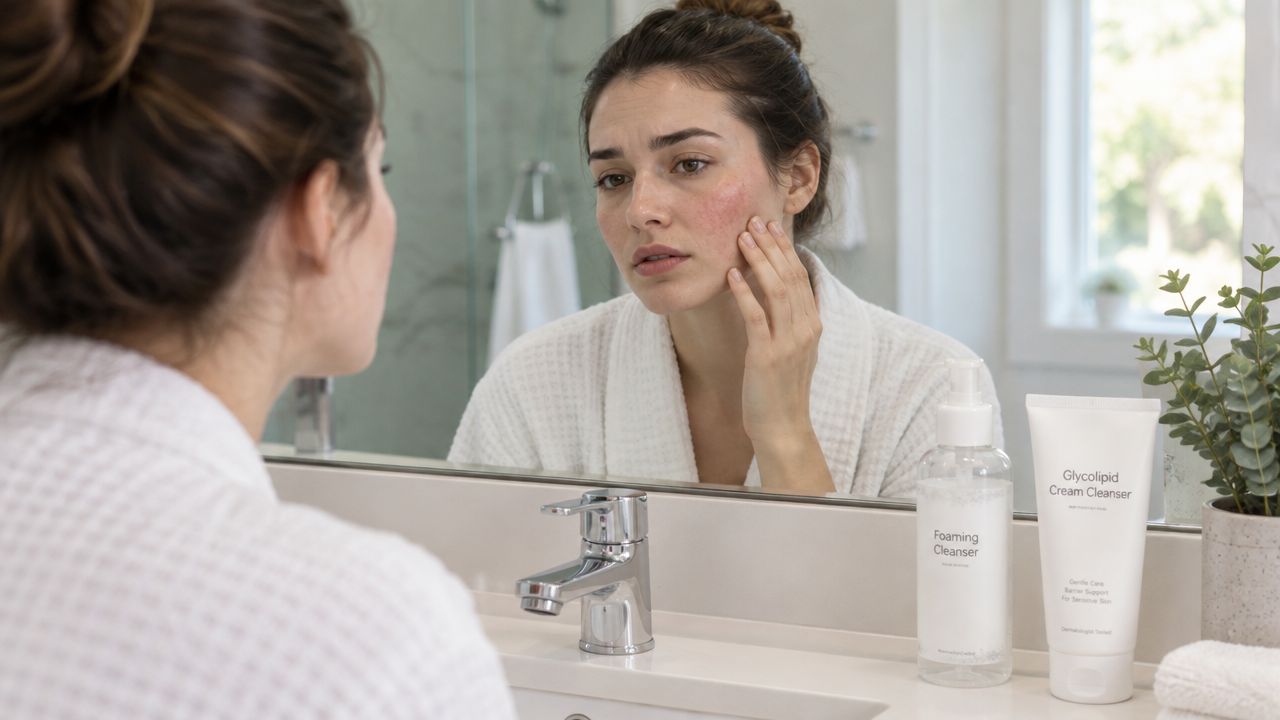
You've probably noticed the pattern: your face feels tight immediately after washing, then looks shiny or uncomfortable later in the day. Perhaps sunscreen and makeup still need removing, but stronger foaming cleansers leave your skin red, dry, or reactive. A glycolipid cream cleanser can be a sensible answer, provided you use it for its intended function rather than what marketing promises.
I've worked in the skincare and pharmaceutical sector for 16 years, and I believe the best advice is usually the least dramatic. This complete guide to glycolipid cream cleanser formulas explains where they fit, what the evidence supports, what they can't replace, and how to introduce one without upsetting a sensitive routine.
Why Glycolipid Cream Cleansers Are Trending Now
A client once described her evening routine as “cleaning until my skin squeaked.” She used a foaming wash after sunscreen, followed with a toner because her face still felt congested, and then applied a rich moisturiser to correct the tightness. The products weren't necessarily poor. The problem was that the cleanser was asking too much of her skin.
Cream cleansers became more appealing as people moved away from that stripped feeling. Glycolipids are biosurfactants, meaning they're bio-derived cleansing molecules with a place in modern personal care rather than a vague “natural” label. A peer-reviewed review in Molecules, available through the NIH's discussion of glycolipid biosurfactants, describes glycolipids as surfactants and emollients used in cleansing and hydrating cosmetics.
Why the ingredient class matters
Surfactants help water interact with oil, dirt, sunscreen residue, and makeup so those materials can be lifted and rinsed away. The review highlights short-chain sophorolipids with 12 to 16 carbon fatty-acid tails as desirable for cleansing because their balanced water-loving and oil-loving structure supports solubility and surface-tension reduction. That gives formulators a practical route to mild cleansing without relying solely on high-foam detergency.
The timing also makes sense. People are wearing long-lasting sunscreen and makeup, yet many are trying to simplify routines and avoid unnecessary irritation. The same literature places glycolipids within a wider move toward more sustainable surfactants for personal care, which helps explain why the ingredient keeps appearing in newer formulas.
I don't treat every biosurfactant claim as proof of superior skincare. I do see value in a cleanser designed around low foam, emollient comfort, and effective surface cleansing. For readers who want more background on choosing a wash, this practical guide to why cleansing matters and how to pick a suitable cleanser is a useful companion.
What a Glycolipid Cream Cleanser Actually Does
A glycolipid cream cleanser works like a tiny ferry. One side of the cleansing molecule is comfortable around water, while the other interacts with oily residue. During massage, it helps gather surface oil, daily grime, sunscreen, and lighter makeup. Rinsing then carries that mixture away.
That doesn't mean the cleanser “pulls toxins” from skin or cleans deep inside pores. It works mainly at the surface, where a well-formulated cleanser should work. The aim is to remove unwanted material while leaving the skin feeling comfortable rather than over-processed.
How the cream base changes the experience
Commercial formulas show how glycolipids are used in practice. One published ingredient list includes water, behenyl alcohol, polyglyceryl-2 stearate, pentylene glycol, polyglyceryl-6 dicaprate, glyceryl stearate, and stearyl alcohol, alongside glycolipids and other ingredients. The full deck contains 14 named ingredients before preservatives, illustrating a cream cleanser built as an emollient-rich, low-foam system rather than a high-detergency wash. You can review the published formula through the glycolipid cream cleanser ingredient listing.
Glycolipids sit alongside mild emulsifiers and nonionic cleansing agents. Fatty alcohols and emollient components help create slip, so your fingers can move across the face without the dragging sensation that encourages excessive rubbing. The result isn't necessarily a dramatic lather. That's intentional.
A comfortable, low-foam cleanse is often more useful than a stronger wash if your skin already feels tight after cleansing.
Use the same reasoning when comparing textures. Someone with oily skin may prefer a lighter gel, while someone with dryness may find a cream format easier to tolerate. Skin health advice from Longevity Medical Institute can provide broader context when cleansing decisions sit alongside ongoing skin concerns. For a different perspective on cleanser textures and oily-skin routines, see this guide to Korean cleansers for oily skin.
Benefits, Limits, and the Evidence You Can Trust
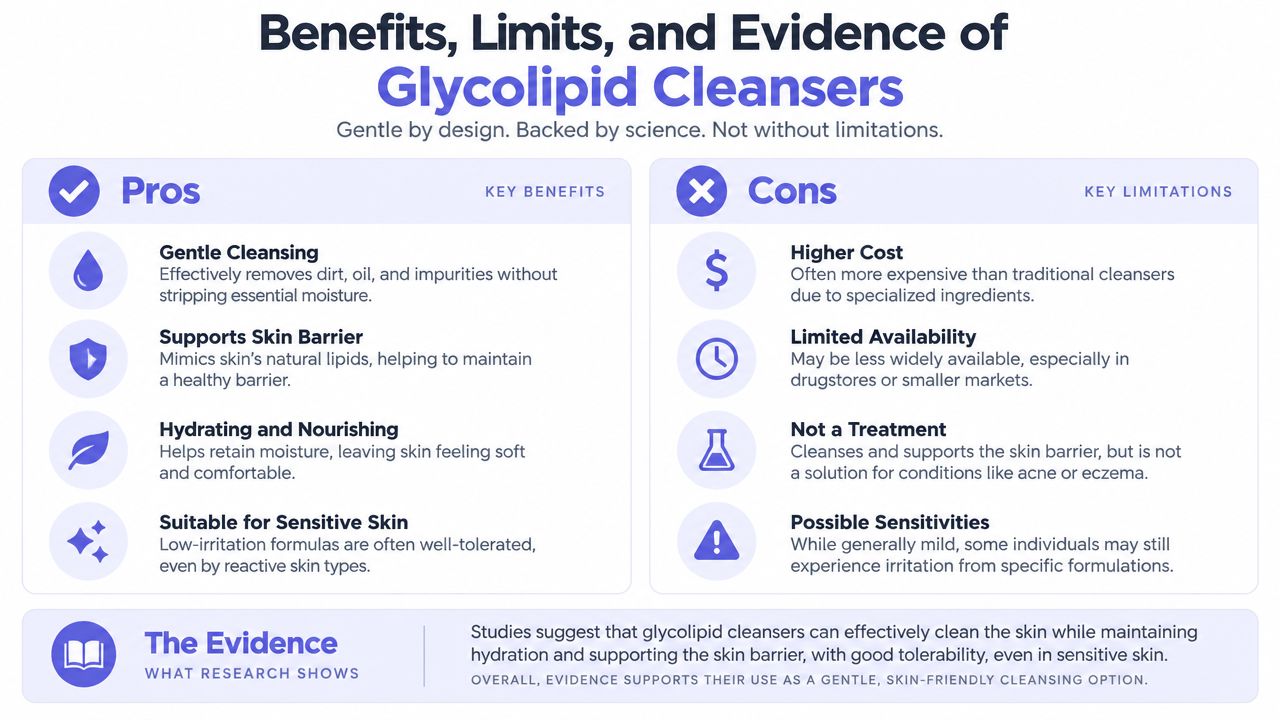
The strongest case for a glycolipid cream cleanser is practical, not miraculous. It can remove everyday surface residue, light makeup, and sunscreen while offering a softer after-feel than some aggressive foaming washes. That makes it appealing for dry, sensitive, or easily irritated skin, especially when the rest of the routine already contains active ingredients.
A published product study provides useful, though limited, context. In a 2-week study involving 32 subjects using the cleanser twice daily, the product was reported as non-drying and non-stripping. 88% of users were satisfied with cleansing performance, and 94% said their skin felt smooth and clean, as reported in the published clinical summary.
What those results do and don't prove
The figures describe user experience over a short period. They don't establish that glycolipids repair a damaged barrier, change the microbiome, or outperform every other gentle cleanser. Satisfaction and smoothness matter because cleanser comfort determines whether someone can maintain a routine, but they're not the same as objective barrier measurements.
There's a significant evidence gap. A recent review discussion notes that no study had tested purified glycolipid congeners on 3D human skin models, leaving claims about barrier support and microbiome effects weakly substantiated. That's important because “barrier-friendly” has become common marketing language, while comparative evidence against classic non-foaming cream cleansers remains limited.
A glycolipid formula may also disappoint if you expect it to remove everything in one pass. Consumer reviews commonly distinguish between comfortable makeup removal and solving blackheads or congestion. A cleanser can lift surface residue, but it isn't an exfoliant and shouldn't be expected to replace a treatment for comedones.
A video can help visualise the broader cleansing concept, but it shouldn't be mistaken for independent clinical proof.
My view after years of reviewing these claims is straightforward. The product's comfort profile is credible enough to consider, while its larger barrier and microbiome promises deserve caution. For readers working on recovery after over-cleansing, this guide to repairing a damaged skin barrier may be more useful than adding another cleanser immediately.
When to Choose a Glycolipid Cream Cleanser Over Other Types
The right cleanser depends on what is sitting on your face and how your skin reacts afterward. A person wearing a light moisturiser and sunscreen has different needs from someone wearing waterproof eye makeup, long-wear foundation, and water-resistant sunscreen.
| Cleanser Type | Best Skin Goal | Makeup/Sunscreen Removal | Routine Placement |
|---|---|---|---|
| Glycolipid cream cleanser | Gentle cleansing with a comfortable after-feel | Suitable for light makeup and everyday sunscreen, but heavy or waterproof layers may need help | Standalone gentle wash or second cleanse |
| Micellar water | Quick removal with minimal water | Useful for light makeup and surface residue, though some users prefer rinsing afterward | First step or convenient morning cleanse |
| Oil cleanser | Dissolving oil-heavy, long-wear products | Usually the more practical option for heavy makeup and persistent sunscreen films | First cleanse |
| Gel wash | Fresh cleansing and removal of sweat or excess surface oil | Can work well for daily residue, depending on the formula | Standalone wash or second cleanse |
A simple decision test
Choose the glycolipid cream format when your main complaint is tightness, stinging, or an over-cleansed feeling, and your makeup load is modest. It can also suit people who want a second step after an oil cleanser, because the cream texture removes remaining residue without turning the evening routine into repeated scrubbing.
An oil cleanser still has a clear role. If mascara, foundation, or sunscreen remains visibly attached after the cream wash, the answer isn't to massage harder. Start with an oil-based product, emulsify it as directed, rinse, and then use the glycolipid cleanser as the gentler follow-up.
Micellar water is convenient for travel or a quick first pass, but it isn't automatically gentler for everyone. Leaving cleansing agents on reactive skin can be uncomfortable, so rinsing may still be sensible. Gel washes can be helpful for oilier skin, yet the formula matters more than the word “gel” on the label.
People with eczema-prone skin should keep the routine especially uncomplicated. This guide to a gentle cleanser for eczema-prone skin offers useful context. My practical recommendation is to match the cleanser to the residue you need to remove, then choose the mildest format that leaves your skin calm.
How to Use a Glycolipid Cream Cleanser Safely
A new cleanser doesn't need a dramatic introduction. The safest approach is gradual, particularly if your skin reacts to unfamiliar formulas or you're already using exfoliating acids, retinoids, or prescription treatments.
Start with a patch test
Apply a small amount to a clean area on the upper forearm. Keep the area dry and leave the product on for 24 hours, following the brand's stated instructions where they differ. Stop use if you notice redness, burning, itching, blistering, or irritation, as specified in the brand's patch-testing guidance.
If the patch test is comfortable, use the cleanser on a small part of the face before making it your full routine. This doesn't guarantee that irritation can't occur, but it gives a cautious user a sensible screening step.
Keep the application gentle
Use enough product to create slip across the face, rather than using a minimal amount that makes you press and drag. Massage with clean fingertips for a short, comfortable period, paying attention to the hairline, sides of the nose, and jaw where sunscreen can collect.
Rinse with lukewarm water and remove the cleanser without a rough cloth or repeated rubbing. Pat the skin dry, then apply a simple moisturiser if your face feels comfortable but needs support.
For frequency, begin with the evening cleanse. If your skin remains settled, you can consider using it in the morning as well. Twice-daily use appeared in the short product study, but individual tolerance should guide your routine rather than a target that you feel obliged to meet.
A calm routine beats a perfect routine. If your skin feels increasingly tight after adding the cleanser, reduce use and reassess the whole routine instead of adding more moisturiser to cover the discomfort.
Ingredients, Routine Fit, and What to Look For When Buying
A glycolipid cream cleanser should earn its place by making the rest of your routine easier. It generally pairs comfortably with leave-on hydrators such as hyaluronic acid and with familiar supportive ingredients such as niacinamide because the cleanser is rinsed away. The bigger caution applies to tolerance. If your skin is already irritated by retinoids or exfoliating acids, even a mild cleanser may sting temporarily.
Don't buy it expecting exfoliation. Glycolipids can help remove surface residue, but they won't replace a product specifically formulated to loosen persistent dead-skin buildup or treat blackheads. If congestion is your main concern, keep cleansing gentle and address that issue separately rather than scrubbing harder.
Assess the formula, not just the front label
Independent ingredient analysis gives some useful reassurance. Skincarisma reports 16 ingredients, with 14 rated low risk, and gives the formula an Excellent 97/100 score in its ingredient analysis of the cleanser. EWG's ingredient entry notes that glycolipids aren't on its Restricted or Unacceptable Lists. These assessments don't prove that every person will tolerate the product, but they support the view that glycolipid formulas fit the wider interest in skin-compatible, bio-derived surfactants.
When comparing options, check whether the product has non-comedogenic and ophthalmic testing if those claims matter to you. Fragrance-free formulas may be preferable for reactive skin, though “fragrance-free” alone doesn't guarantee perfect tolerance. Look for a cream texture that rinses cleanly, doesn't require vigorous rubbing, and leaves no uncomfortable film.
A simple routine might be cleanser, a hydrating serum, moisturiser, and sunscreen in the morning. In the evening, heavy makeup or sunscreen may call for an oil first cleanse, followed by the glycolipid cream cleanser. For broader ingredient planning, this overview of skincare ingredients for radiant skin can help you avoid adding several overlapping products at once.
For moisturising context beyond cleansing, you can also read about the updated Zo Hydrating Creme benefits from Dr. Connie Hiers. The principle is the same: judge the product by how it fits your skin's needs, not by how impressive the ingredient story sounds.
The best buying checklist is modest:
- 1Choose the right job: Pick a glycolipid cream cleanser for comfortable daily cleansing, not as a replacement for exfoliation.
- 2Match removal demands: Add an oil cleanser first when waterproof makeup or persistent sunscreen needs dissolving.
- 3Protect tolerance: Patch test and favour a simple, fragrance-conscious formula if your skin is reactive.
- 4Watch the after-feel: Tightness, burning, or ongoing redness means the routine needs reassessment.
Build a simpler routine around your skin
Healtsy offers facial cleansers and related skincare options, including pharmacy-focused formulas for different skin concerns, so you can compare a glycolipid cream cleanser with alternatives such as hydrating or gentle cleansing formats.
Explore Cleansers