


French Pharmacy Moisturizer: Best Picks for 2026
You're standing in a pharmacy aisle with a dry, uncomfortable face, a half-used luxury cream at home, and three products claiming to be gentle. One tube promises barrier repair, another highlights thermal water, and a third has a beautiful scent that leaves your skin stinging. Choosing a French pharmacy moisturizer shouldn't require a chemistry degree or a loyalty to the most famous blue-and-white packaging.
After 16 years in the pharmaceutical sector, I believe the most useful approach is to start with the skin barrier, then consider texture, climate, trigger tolerance, and the ingredients that support your actual concern. The French pharmacy tradition includes excellent practical formulas, but not every product is fragrance-free, minimalist, or appropriate for reactive skin. This is the complete guide to selecting a French pharmacy moisturizer that earns its place in your routine.
Why a French Pharmacy Moisturizer Deserves a Spot on Your Shelf
At a Paris pharmacy counter, a parent may arrive with a baby's visibly dry, irritated skin and a simple question: “What can I use without making this worse?” The pharmacist doesn't begin with packaging or a celebrity endorsement. They ask where the irritation appears, whether the skin is broken, what has already been applied, and whether a doctor has diagnosed eczema or another condition.
That setting explains the category better than the word “French” ever could. A French pharmacy moisturizer belongs to a dermocosmetic channel, where skincare is commonly positioned alongside dermatological care and pharmacist guidance. In France, pharmacies account for about 50% of skincare-category cosmetics sales, representing approximately €2.1 billion in 2023, according to French pharmacy market context. The broader hygiene-and-beauty segment sold through pharmacies reached €2.52 billion in 2024, with value growth of 9% and volume growth of 4.9% in the same source.
What separates the category from luxury skincare
The strongest pharmacy formulas usually make their case through ingredient selection, tolerance, and function. A cream may focus on glycerin, ceramides, niacinamide, dimethicone, or emollient lipids rather than relying primarily on fragrance and a decorative jar. That doesn't mean every pharmacy product is automatically superior, and it doesn't mean luxury skincare never works. It means the buying question changes from “Does this feel prestigious?” to “Does this formula meet my barrier needs?”
A well-designed moisturizer can also offer more relevant hydration per application than a designer cream whose main appeal is scent, finish, or presentation. I'm certain that comparing the ingredient list and the texture is more reliable than comparing the story on the front of the package. Readers interested in a familiar brand family can also review these trusted Vichy French pharmacy products, but the same barrier-first standards should apply to every brand.
A pharmacy location is a useful quality signal, not a guarantee that every product suits sensitive or fragrance-reactive skin.
The practical framework is straightforward. Sensitive users need trigger control, oily users need a light vehicle that still reduces water loss, dry users need lipids and occlusion, and mature users often need hydration plus targeted actives. Climate matters just as much, because a lotion that feels comfortable in humid weather may fail in a dry winter office.
From Apothecary Jars to Modern Dermocosmetics
The word “pharmacy” carries historical weight because pharmacists were once directly involved in preparing skin treatments. In nineteenth-century French apothecaries, patients relied on trained professionals to compound preparations, select ingredients, and explain how to use them. That relationship helped establish a culture in which the pharmacist acted as a practical filter between a manufacturer's formula and the person applying it at home.
The modern category developed from that foundation rather than appearing as a purely cosmetic trend. Crème Simon, founded in 1860 by pharmacist Joseph Simon, is described as an early milestone and the first cream to contain glycerine, a moisturizing agent. It was sold through pharmacies and perfumeries around the world during the early twentieth century, as described in this history of French pharmacy skincare.
Three steps shaped the modern model
Formulas increasingly addressed dryness, irritation, photoprotection, and visible skin aging rather than offering only a pleasant texture.
The development of modern dermocosmetics accelerated in the 1970s, when Pierre Fabre combined cosmetics and dermatology, particularly in photoprotection and skin aging, according to the same historical source.
A moisturizer was not placed in a general beauty aisle. It could be recommended alongside a prescribed treatment, a cleanser for compromised skin, or sun protection. That context encouraged brands to communicate through tolerability, testing, and specific skin concerns.
Thermal spring water stations, dermatology partnerships, and hospital-oriented testing also helped shape the identity of brands such as Avène, La Roche-Posay, Vichy, Bioderma, and SVR. Those names are now widely recognized, but the underlying model remains more important than brand recognition. A useful companion read is this overview of Bioderma and sensitive-skin care.
What “pharmacy” does and doesn't promise
Pharmacy distribution suggests that the product was developed and positioned within a more clinical skincare culture. It doesn't prove that the moisturizer is fragrance-free, that it will suit acne-prone skin, or that it can treat a diagnosed condition by itself.
I believe “pharmacy” is best understood as shorthand for a development and counseling model, not as a magic ingredient. The label earns trust when the formula, instructions, and intended use support that trust.
How a French Pharmacy Moisturizer Actually Hydrates the Skin
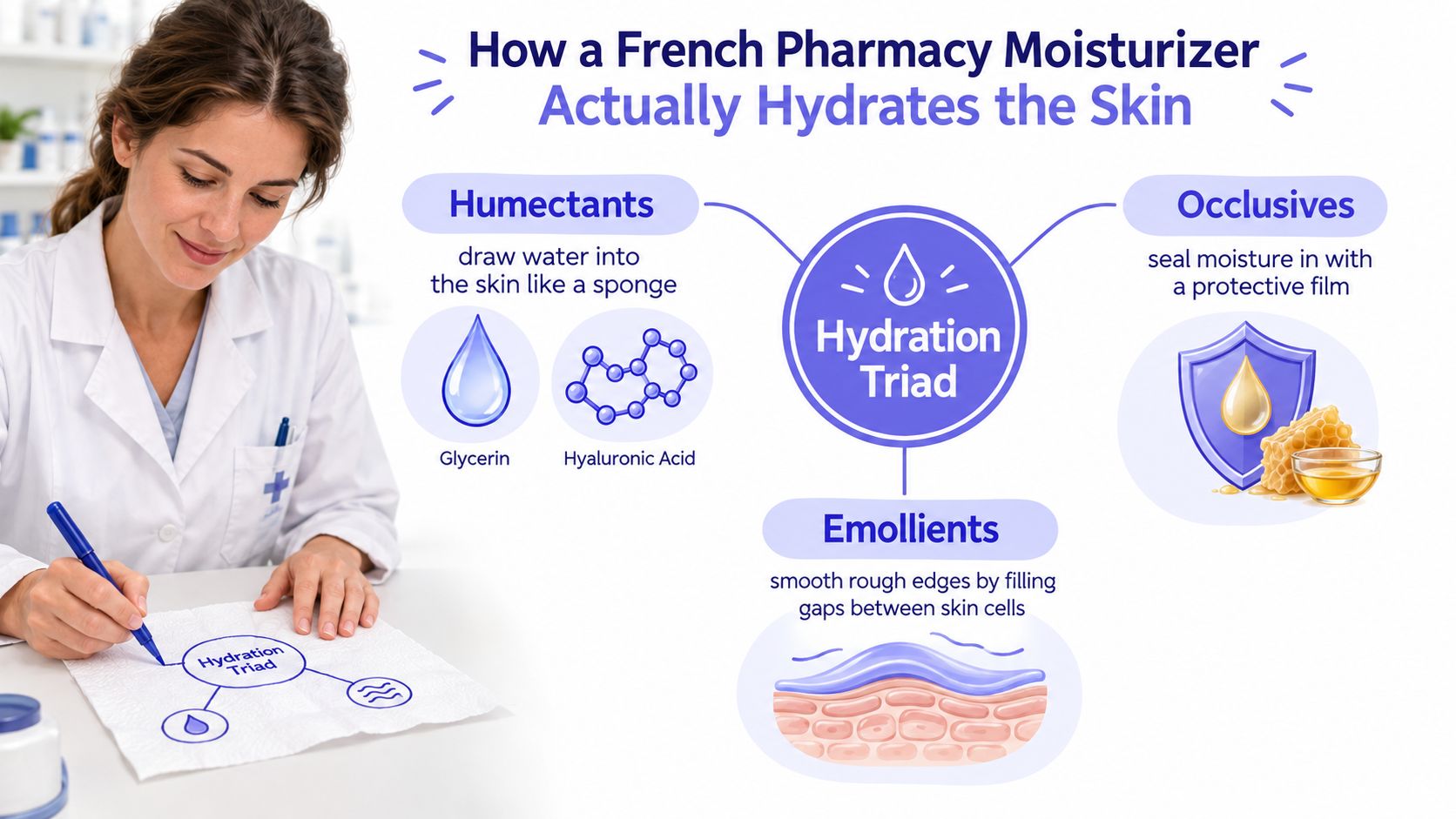
At the counter, a customer may describe tightness after cleansing, rough patches by evening, or a cream that feels rich but does little. Those symptoms point to a hydration problem with more than one cause. Effective formulas usually combine humectants, emollients, and occlusives, each addressing a different part of the barrier.
Humectants such as glycerin attract and bind water in the stratum corneum, the outermost layer of skin. Hyaluronic acid, niacinamide, and sodium PCA can also support water management, although their roles and performance differ by formula. Humectants draw water toward the surface, but they do not by themselves prevent ongoing evaporation.
Emollients smooth the uneven spaces between surface cells. Squalane, shea butter, plant oils, and barrier lipids soften rough areas and improve the way skin feels. Ceramides have a more specific role because they help replenish intercellular lipids involved in barrier organization.
Occlusives create a protective surface film. Dimethicone, petrolatum, and beeswax can reduce transepidermal water loss, or TEWL, by slowing evaporation. A useful occlusive system does not need to feel greasy. Lightweight products can still perform well when they pair a humectant with suitable emollient and barrier support.
Why the balance matters
A clinical formulation review describes the practical value of combining water-binding ingredients with occlusive and ceramide-based support. A humectant used alone may leave skin feeling temporarily hydrated while evaporation continues from the surface.
The more useful benchmark is a coordinated system. Glycerin or hyaluronic acid can attract water, while ceramides, free fatty acids, cholesterol, or another appropriate emollient and occlusive combination helps keep that water in the stratum corneum. The right balance also depends on climate, cleansing, and how much sensory weight the user will tolerate consistently.
A pharmacy-style ingredient deck can show this architecture in practice, with water, glycerin, squalane, dimethicone, niacinamide, and ceramide NP appearing in one barrier-supporting moisturizer, as shown in this ingredient listing for a barrier-supporting moisturizer. Its finish may feel light, while its ingredients still support both surface comfort and barrier function.
For targeted hydration alongside a moisturizer, this overview of La Roche-Posay serum development provides useful routine context. I'm certain the practical question is not whether a cream feels rich. It is whether the formula supports both water influx and water retention without creating a trigger burden the user will abandon.
Matching the Right Formula to Your Skin Type
A moisturizer should match the skin's behavior, not just its label. “Sensitive,” “dry,” and “oily” describe different needs, and one face can move between them with weather, medication, cleansing habits, or active treatments.
Reactive skin generally benefits from a short ingredient list and a low-sensory formula. Glycerin, niacinamide, and allantoin can support hydration and comfort, but even a familiar ingredient may irritate an individual user. For acne-prone skin, I usually favor a lightweight fluid or gel-cream over a dense balm, especially when the person already uses a leave-on treatment.
Dry skin needs more than water-binding ingredients. Look for a cream that combines humectants with ceramides, shea butter, colloidal oatmeal, squalane, or a suitable occlusive. Mature skin may also benefit from peptides, antioxidants, and hyaluronic acid, but these additions should sit on a credible barrier base rather than replace it.
A practical comparison
| Skin Type | Barrier Priority | Texture to Choose | Hero Ingredients | Example Archetype |
|---|---|---|---|---|
| Reactive or sensitive | Reduce trigger exposure and support comfort | Minimal lotion or gel-cream | Glycerin, niacinamide, allantoin | Fragrance-free barrier lotion |
| Oily or acne-prone | Hydrate without a heavy surface film | Light fluid or non-greasy gel-cream | Glycerin, niacinamide, squalane, caprylic triglyceride | Lightweight daily moisturizer |
| Dry or dehydrated | Replenish lipids and limit water loss | Cream or barrier balm | Ceramides, shea butter, colloidal oatmeal | Rich recovery cream |
| Mature | Maintain barrier function while adding targeted care | Cream with a comfortable finish | Ceramides, peptides, antioxidants, hyaluronic acid | Ceramide-led anti-aging moisturizer |
Squalane and caprylic triglyceride can suit breakout-prone users who dislike heavier oils, but “non-comedogenic” is never a personal guarantee. Patch testing remains more useful than a marketing promise. For a more detailed approach to reactive complexions, consult this guide to building a sensitive-skin routine.
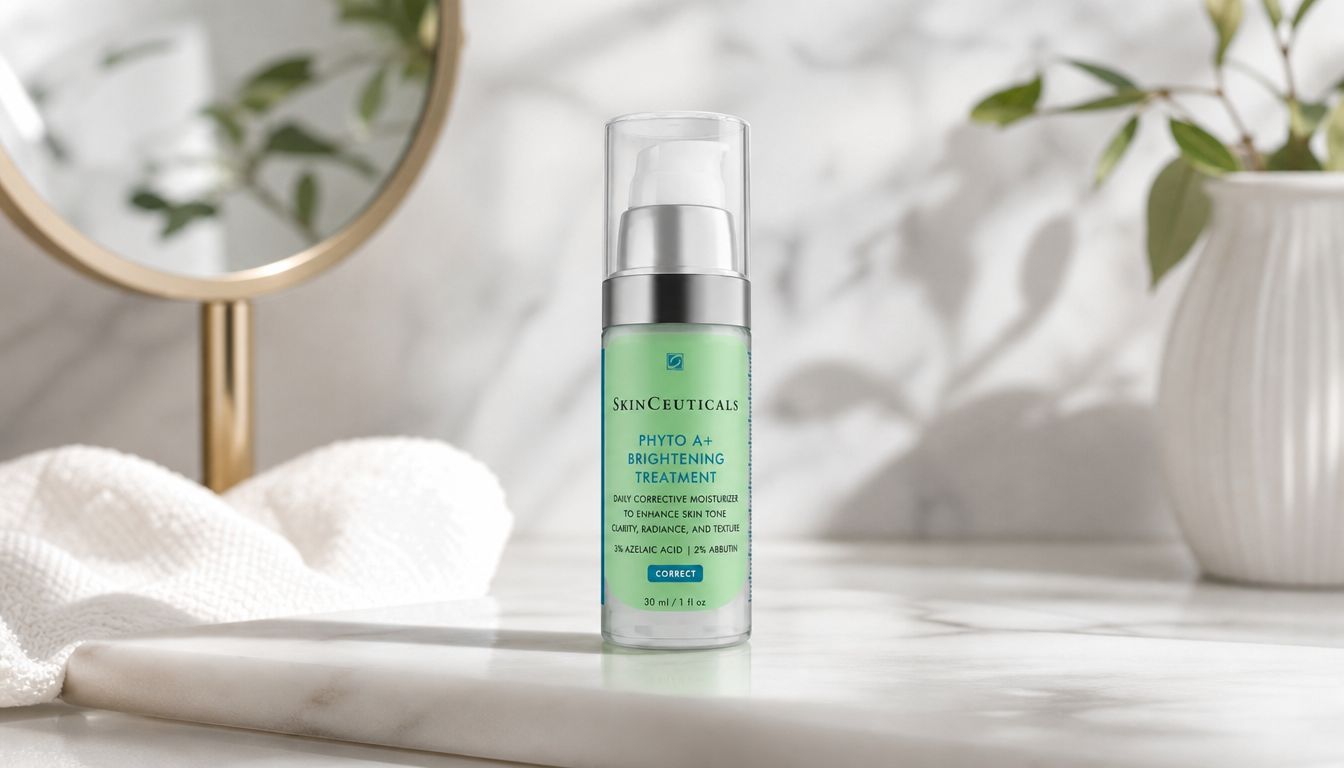
One example outside the classic barrier cream category is Skinceuticals Correct Phyto A+ Brightening Treatment - 30ml. Its light gel-cream formula contains 3% azelaic acid, 2% arbutin, and 5.75% botanical extracts, so I'd treat it as a brightening and texture-focused moisturizer archetype rather than a substitute for a bland recovery balm.
If your skin burns easily, choose the least complicated formula that solves the immediate problem. Add brightening or anti-aging actives only after comfort is stable.
Climate changes the answer. Humid weather often favors fluid textures, while winter air, heating, and low-humidity offices can make a cream or balm more useful. The right product is the one that leaves skin comfortable without provoking congestion or stinging.
Fragrance-Free and Truly Gentle or Just Good Marketing
French pharmacy skincare has a deserved reputation for practical, sensitive-skin formulas, but gentle is not universal. Popular products may contain fragrance, fruit extracts, essential oils, or complex botanical blends. A product can feel elegant and soothing to one person while irritating another.
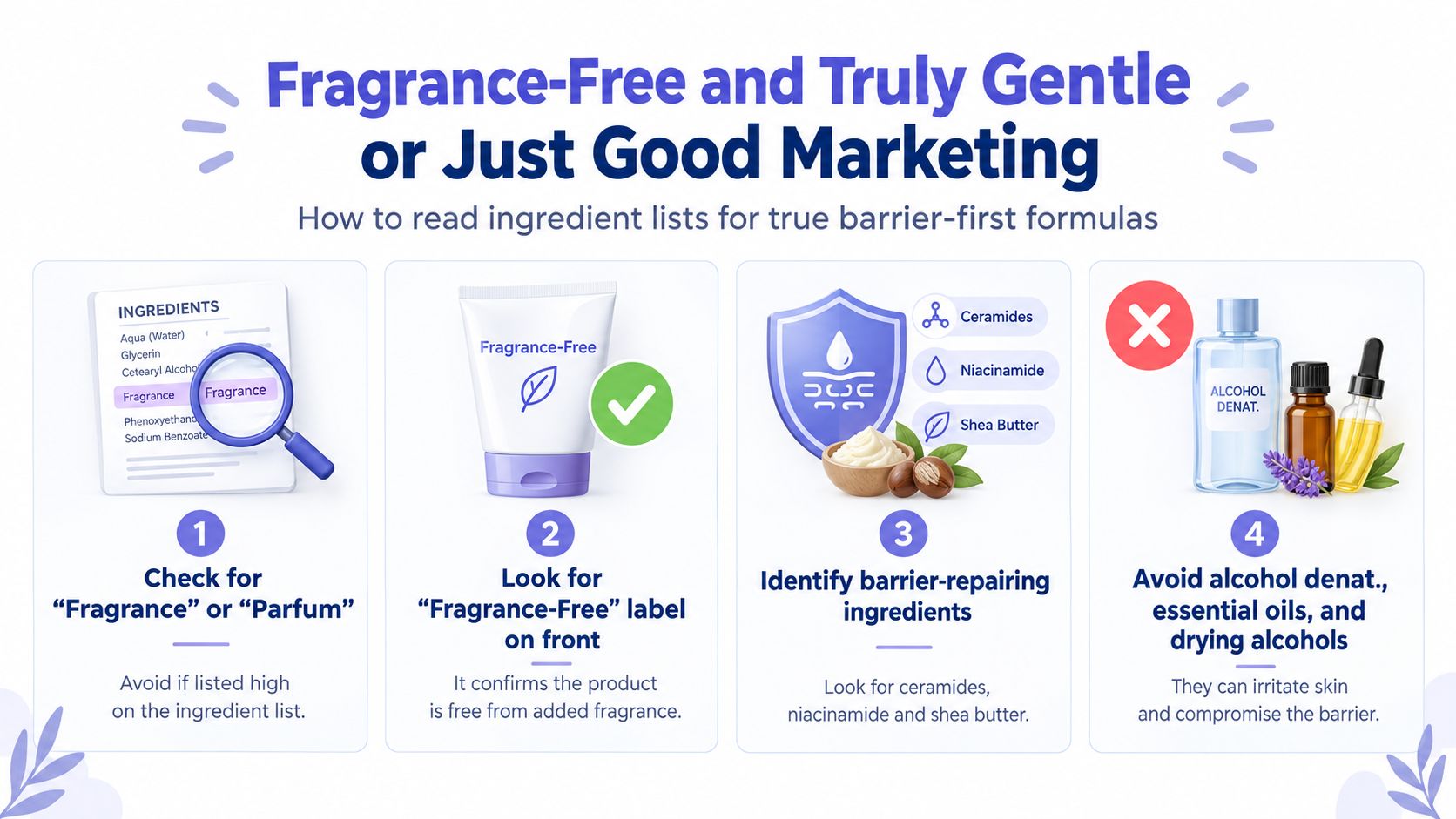
On a European ingredient list, fragrance may appear as “Parfum” or “Fragrance.” Fragrance allergens such as limonene and linalool may also be listed separately, and essential oils can introduce additional aromatic components. A masking fragrance may be used to cover the smell of raw ingredients, but sensitive skin can still react to the fragrance system.
A quick INCI audit
- Check the opening ingredients. Look for water-binding agents such as glycerin and barrier-supporting materials. Ingredient order doesn't tell you everything about performance, but it helps identify whether the formula has a credible moisturizing base.
- Scan the final third. Search for Parfum, Fragrance, limonene, linalool, and essential oils. Their presence doesn't mean every user will react, but it matters if your skin is already inflamed or fragrance-sensitive.
- Separate “gentle” from “fragrance-free.” A front-label claim isn't the same as reading the complete current ingredient list. Packaging can vary by market, so check the version you're buying.
- Match the formula to the claim. A product marketed for barrier repair should contain more than a pleasant emollient feel. Ceramides, niacinamide, glycerin, shea butter, or other appropriate support can make the claim more coherent.
What I recommend for compromised barriers
Start with a minimalist, fragrance-free moisturizer built around glycerin, ceramides, niacinamide, dimethicone, petrolatum, or colloidal oatmeal, depending on the texture your skin tolerates. Avoid introducing several new products at once, because you won't know which ingredient caused a flare.
The same audit applies to cult favorites. A famous product may be excellent for makeup preparation or sensory comfort, yet unsuitable for someone specifically seeking fragrance-free care. I believe trigger tolerance deserves equal billing with brand heritage.
If your skin has persistent redness, oozing, cracking, swelling, or significant itch, a moisturizer is supportive care, not a diagnosis. Seek professional assessment rather than repeatedly changing creams.
How to Apply a French Pharmacy Moisturizer the Right Way
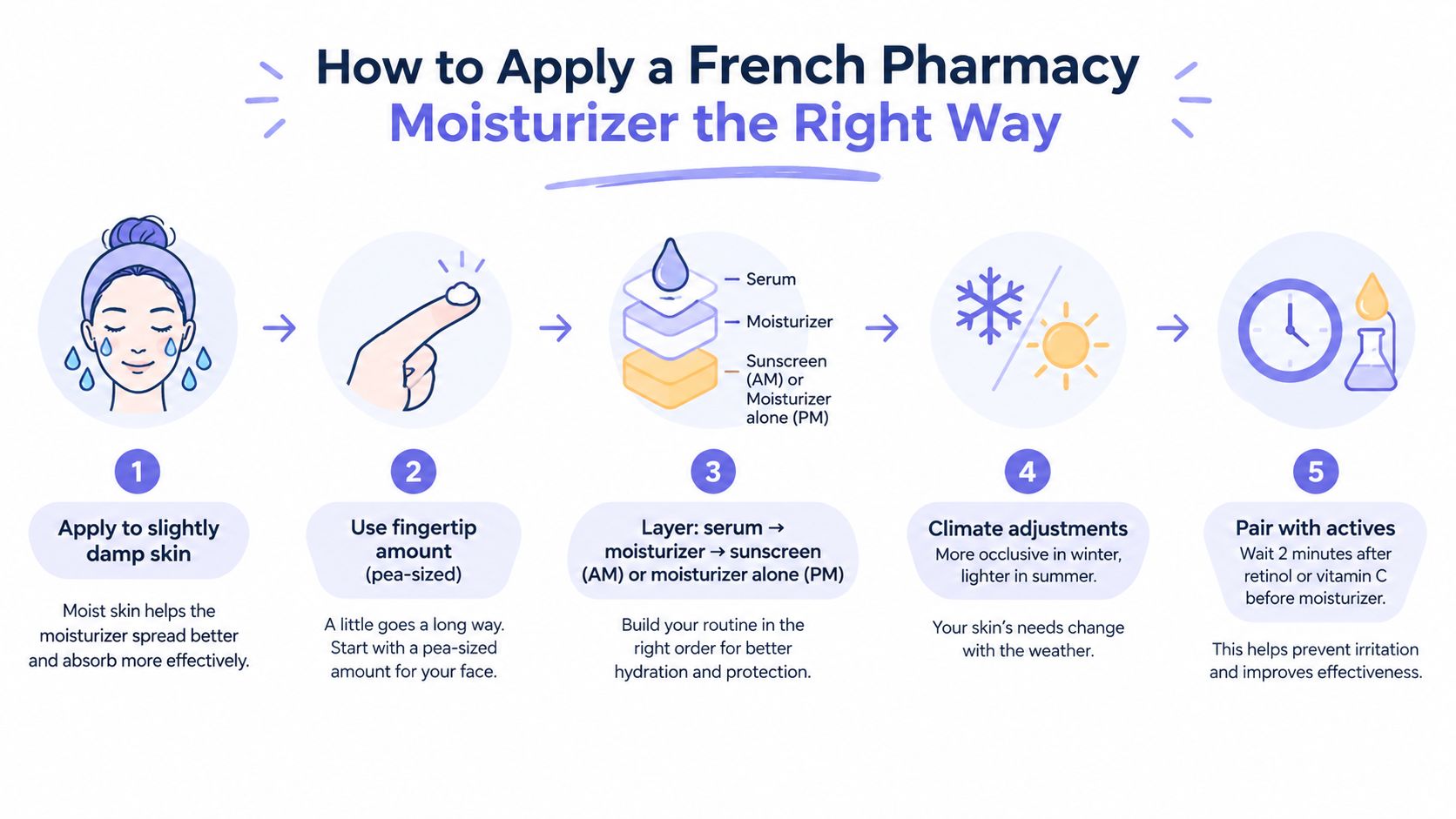
Application changes how a moisturizer performs. Cleanse without leaving the skin tight, then apply the moisturizer while the face is slightly damp. This gives humectants access to surface water, while the cream helps reduce subsequent evaporation.
Use a modest fingertip amount for the face and neck, adding more only where the skin feels dry. Warm the product between your fingers, press it across the cheeks and forehead, then smooth gently instead of rubbing aggressively over irritated areas.
Layering with treatments
In the morning, use the sequence serum, moisturizer, sunscreen when all three are needed. In the evening, cleanser followed by moisturizer may be enough. If you use retinoids or exfoliating acids, apply the active according to its instructions and use a ceramide-rich moisturizer to support comfort. A short buffer between layers can help reduce pilling and sensory irritation.
Retinoid nights don't need a crowded routine. If your skin reacts, moisturizer can be applied before or after the retinoid depending on the product instructions and your tolerance. Don't assume stronger stinging means stronger results.
Watch the weather as closely as your skin. Choose a lighter fluid during humid summer conditions and a more occlusive cream in winter or in a dry office. Morning moisturizer should sit comfortably beneath sunscreen, while an evening balm can be reserved for areas that crack or feel tight.
For broader lifestyle factors that support nighttime routines, this resource on beauty sleep and clearer skin offers useful context beyond product selection.
What the Clinical Evidence Tells Us About Barrier Repair
A barrier-first moisturizer should do more than leave skin feeling soft. The outer barrier regulates water movement, and transepidermal water loss, or TEWL, indicates how quickly water escapes through the skin. When hydration improves and TEWL falls, people may experience less tightness, roughness, and reactivity.
The evidence favors balanced ingredient systems over single-ingredient formulas. Humectants draw and hold water in the skin, while occlusives reduce evaporation. Ceramide-containing formulas can support this process, with published assessments reporting improvements in hydration and TEWL over 2 weeks. The specific result still depends on the complete formula and regular use.
Ceramides are especially relevant for dry, sensitive, and eczema-prone skin. A clinical moisturizer containing ceramides, cholesterol, phytosphingosine, glycerin, sodium PCA, and sodium hyaluronate was reported to reduce signs and symptoms of mild-to-moderate eczema in a study indexed by PubMed.
Evidence snapshot
| Product | Key Active | Study Type | Measured Outcome |
|---|---|---|---|
| Ceramide-containing moisturizer | Ceramides, cholesterol, phytosphingosine, glycerin, sodium PCA, sodium hyaluronate | Clinical eczema study | Reduced signs and symptoms of mild-to-moderate eczema |
| Humectant-containing moisturizer | Water-binding ingredients | Clinical and mechanistic assessment | Improved moisture content |
| Occlusive moisturizer | Occlusive film-formers | Clinical and mechanistic assessment | Improved TEWL |
| Ceramide-led moisturizer | Ceramides with barrier lipids | Clinical and mechanistic assessment | Improved TEWL and barrier support |
These findings do not show that moisturizer cures acne or replaces prescription anti-inflammatory treatment. They also do not establish that a more expensive cream has stronger evidence. Ceramides alone do not guarantee the same result across products. Lipid balance, ingredient concentration, tolerability, and consistent application all affect performance.
For ingredient comparisons, this guide to ceramide moisturizer use for sensitive skin offers practical context. At the counter, I look for a simple response after consistent use: skin feels less tight after cleansing and reacts less often to ordinary products or weather changes. If that improvement does not appear, reassess the formula rather than relying on its price, heritage, or pharmacy image.
Buying Safely and Caring for Your Routine Over Time
A good formula can fail before it reaches your bathroom if the supply chain is unreliable. Buy from a verifiable pharmacy, the manufacturer, or an established retailer that clearly explains its stock and return process. Parallel imports aren't automatically counterfeit, but packaging, language, sunscreen filters, and expiry information can differ by market.
Inspect the packaging before opening it. A missing batch number, mismatched expiry formatting, damaged tamper seal, or unusually deep discount should make you pause. Contact the manufacturer if the batch code cannot be verified or if the product's color, texture, or scent differs noticeably from a familiar purchase.
Practical ownership checks
- Record the opening date. Follow the product's period-after-opening symbol and replace opened jars according to the manufacturer's guidance. A general replacement window of 6 to 12 months is often used for opened jars, but the package instructions take priority.
- Control storage. Keep moisturizer below 25°C when the label permits, away from direct heat and humidity. A damp bathroom can be less suitable than a cool bedroom drawer.
- Watch for change. Color drift, separation, an unusual smell, or a changed texture can signal that the product should no longer be used.
- Consider shipping conditions. Thermal spring water sprays and other temperature-sensitive products should be shipped and stored according to the manufacturer's instructions. Outside the European Union, customs duties and local import rules may affect delivery.
- Keep purchase records. Receipts help with returns, authenticity questions, and any manufacturer guarantee or registration process.
Three common questions
Can I identify every counterfeit from packaging alone? No. Packaging clues help, but manufacturer verification and a trustworthy retailer provide stronger reassurance.
Are French pharmacy moisturizers prescription-only? Most moisturizers are cosmetic products, but some brands also sell separate treatment products that may be regulated differently. Ask a pharmacist or doctor when the product is intended to manage a diagnosed condition.
Are they safe during pregnancy? A basic moisturizer is generally approached differently from a treatment containing medicinal or active ingredients. Check the complete ingredient list with your doctor or pharmacist, especially if the product targets acne, pigmentation, or inflammation.
Seasonal switching is sensible. Use a lotion or fluid when your skin is comfortable, move toward a cream or balm during cold, dry periods, and place a humectant serum underneath only when the moisturizer alone doesn't maintain comfort. Healtsy provides French pharmacy skincare, sunscreen, and other health and beauty products with product information and routine-focused browsing tools, which can help you compare formulas before purchase.
Find a moisturizer that fits your skin and your routine
Healtsy offers a broad selection of French pharmacy moisturizers and barrier-focused skincare for sensitive, dry, acne-prone, and mature skin. Compare suitable formulas, check ingredient details, and choose with confidence.
Visit Healtsy