


After Sun Lotion Best Picks for Soothing Recovery
You get home after a long afternoon outside, and your skin tells the story before you even look in the mirror. It feels warm, tight, and slightly stingy. In that moment, you want one simple answer: what's the after sun lotion best choice for fast relief that won't make things worse?
I believe that's the right question, but I also believe people are pushed toward the wrong answer. They're told to chase cooling gels, tropical scents, or whatever product is labeled “after sun,” when the issue is usually barrier repair, hydration balance, and irritant avoidance. In my 16 years in the skincare sector, I've seen the same pattern again and again. The products that feel dramatic in the first minute aren't always the ones that help skin recover well by the next morning.
This is the complete guide to choosing an after-sun product with more confidence. I'm certain this will solve a lot of the guesswork people face at the pharmacy shelf or while shopping online, because the decision becomes much easier when you focus on timing, texture, ingredients, and skin sensitivity instead of marketing language.
Lotion is still the format most shoppers gravitate toward, and that makes sense. The global after-sun care products market was estimated at USD 2,349.2 million in 2024 and is projected to reach USD 3,006.5 million by 2030, with creams, lotions, and body butter accounting for more than 49% of sales in 2024 according to Grand View Research's after-sun care market analysis. Traditional lotion textures remain the category standard because they're practical, familiar, and usually better at combining comfort with lasting moisture.
Introduction to Finding Your Best After Sun Lotion
A lot of readers land here in the same situation. They've had a beach day, a hike, a pool afternoon with children, or more sun exposure than planned. They're not looking for a luxury ritual. They want relief that feels safe, sensible, and worth buying.
I believe the best after-sun choice starts with one honest question: is your skin mainly hot and reactive right now, or is it dry and depleted a few hours later? Those are related problems, but they don't always need the same texture. A cooling gel may feel good first. A richer lotion may do more overnight. A fragrance-free basic moisturizer may sometimes outperform a trendy “after sun” product if the formula is kinder to stressed skin.
A quick way to think about the choice
| What you're feeling | What matters most | Usually the better fit |
|---|---|---|
| Hot, prickly, freshly exposed skin | Comfort and low irritation | Light, soothing, fragrance-free gel or lotion |
| Tightness a few hours later | Hydration plus barrier support | Lotion with humectants and emollients |
| Dry peeling patches the next day | Lasting moisture | Richer lotion or cream layered carefully |
| Sensitive or easily reactive skin | Simplicity and irritant avoidance | Fragrance-free, alcohol-free formula |
One practical point matters here. If you're planning sun-heavy routines around seasonal beauty treatments, it's also worth understanding what's realistic for safe laser hair removal in summer, because skin that's already heat-stressed needs gentler timing and aftercare.
For prevention, I always encourage people to pair recovery thinking with solid UV habits. A straightforward refresher on sun protection basics and daily SPF use helps prevent the kind of post-sun discomfort that sends people searching in a rush later.
Healtsy GuideSun protection basics and daily SPF use →The best after-sun product isn't the one with the loudest cooling claim. It's the one your skin can tolerate while it rebuilds comfort.
What After Sun Lotion Actually Does for Your Skin
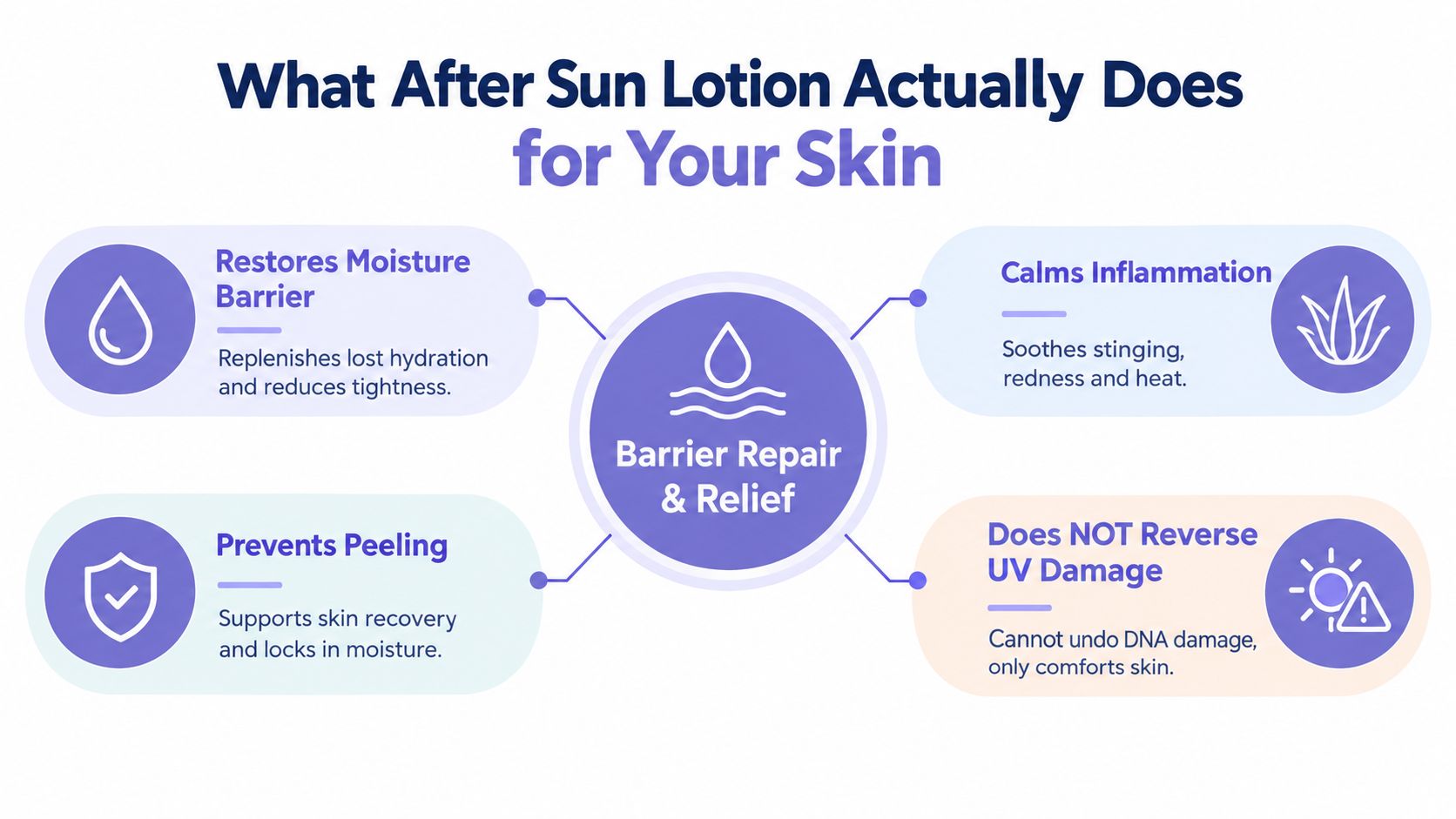
People often expect after-sun products to “undo” sun exposure. They don't. The most useful way to think about them is simpler and more realistic. They help reduce tightness, stinging, and dryness while supporting the skin barrier after UV stress.
Dermatology-focused guidance consistently frames the best after-sun lotions this way. Ingredients such as aloe vera, glycerin, hyaluronic acid, ceramides, and panthenol are used because they soothe inflammation, increase water content in the outer skin layer, and improve recovery from post-UV dehydration, as outlined in CNN Underscored's review of after-sun lotion ingredients.
Think of sun-stressed skin like a dried sponge
A dried sponge doesn't become soft again because you wave cold air over it. It changes when you add water and help it hold that water. Skin behaves in a similar way after sun exposure.
Humectants such as glycerin and hyaluronic acid draw water into the upper layers. Emollients soften the rough feel. Barrier-supportive ingredients help reduce that uncomfortable “pulled tight” sensation that shows up after showering or before bed.
What it helps with, and what it can't do
An after-sun lotion can help with comfort. It can help skin stay more hydrated. It can support a better-feeling surface while the irritation settles.
It can't reverse UV damage.
That distinction matters because it changes how you shop. If you want longer-term recovery thinking, it's useful to read about antioxidants for sun-damaged skin, which approaches the issue from the repair-support side rather than the immediate soothing side.
Cooling sensation is not the same as meaningful recovery. Relief in the first five minutes is nice, but hydration plus barrier support is what usually matters by morning.
Published hydration testing also supports this practical difference. Corneometer-based skincare data show that well-formulated post-sun regimens can produce hydration gains in the 6% to 48% range, with stronger results typically coming from formulas that combine humectants with emollients or occlusives rather than relying on aloe alone, according to the hydration testing discussion in SCIRP.
If your face is the area that reacts first, I'd also look at a more targeted guide to after-sun care for facial skin, because the face often needs lighter textures and fewer irritants than the body.
Healtsy GuideAfter-sun care for facial skin →Gels, Lotions and Sprays Compared for Real Life Use
No single format wins for everybody. The after sun lotion best option depends on where the product is going, how hot your skin feels, how dry it gets later, and whether you'll reapply it.
A parent after a family beach day often wants speed and easy spreading. Someone back from a hike may care more about shoulders, chest, and neck comfort before bed. Someone with hairy legs or a hard-to-reach back may prioritize convenience first.
After Sun Format Comparison by Situation
| Format | Feel and Finish | Hydration Depth | Best For |
|---|---|---|---|
| Gel | Lightweight, quick-cooling, usually less greasy | Lighter unless paired with richer support | Freshly warm, uncomfortable skin and oily skin types |
| Lotion | Balanced slip, more cushion, comfortable overnight | Better for sustained hydration | Most people, most body areas, overnight recovery |
| Spray | Fast, convenient, lighter application | Usually depends on follow-up layering | Back, shoulders, quick top-ups, travel use |
Where each format works best
Gels are often the first reach when skin feels hot. They spread fast and can feel instantly calming, especially if stored somewhere cool. The trade-off is that many gels don't give enough lingering moisture on their own, so people love them at 7 p.m. and feel dry again by 10 p.m.
Lotions are usually the strongest all-rounders. They're easier to make well because they can carry both water-binding ingredients and softening lipids in one step. That's one reason lotion-style formats remain dominant in the category, not just in sales but in real everyday use.
Sprays are practical, not magical. I recommend them most for hard-to-reach zones, for partners helping each other apply product on the back, or for people who hate rubbing a lot of product through body hair. The compromise is that sprays can go on too lightly unless you're deliberate.
If your skin feels hot first and dry later, use a light gel for immediate comfort and a lotion later in the evening. You don't have to force one product to do every job.
Real-life fit matters more than theory
At home, a lotion is often the safest default. On holiday, a spray may win because people use it. After a shower on a hot evening, a gel-lotion texture often feels easiest.
If you want a product example category to compare against, a dedicated Nuxe after-sun overview can help you see how brands position these textures differently, but the useful question remains the same: does the format match how your skin behaves after sun?
Healtsy GuideNuxe after-sun overview →Here's the simple rule I use in practice:
- Choose gel if your main complaint is heat and you dislike residue.
- Choose lotion if your main complaint is tightness, dryness, or overnight discomfort.
- Choose spray if convenience is the reason you'll use it consistently.
Ingredients That Soothe and Ingredients to Avoid
People make the best choices or the worst mistakes. Packaging can be persuasive, but skin doesn't care about tropical branding. It responds to formulation.
I believe ingredient grouping makes label reading much easier. Instead of memorizing dozens of names, judge them by job.
What to look for first
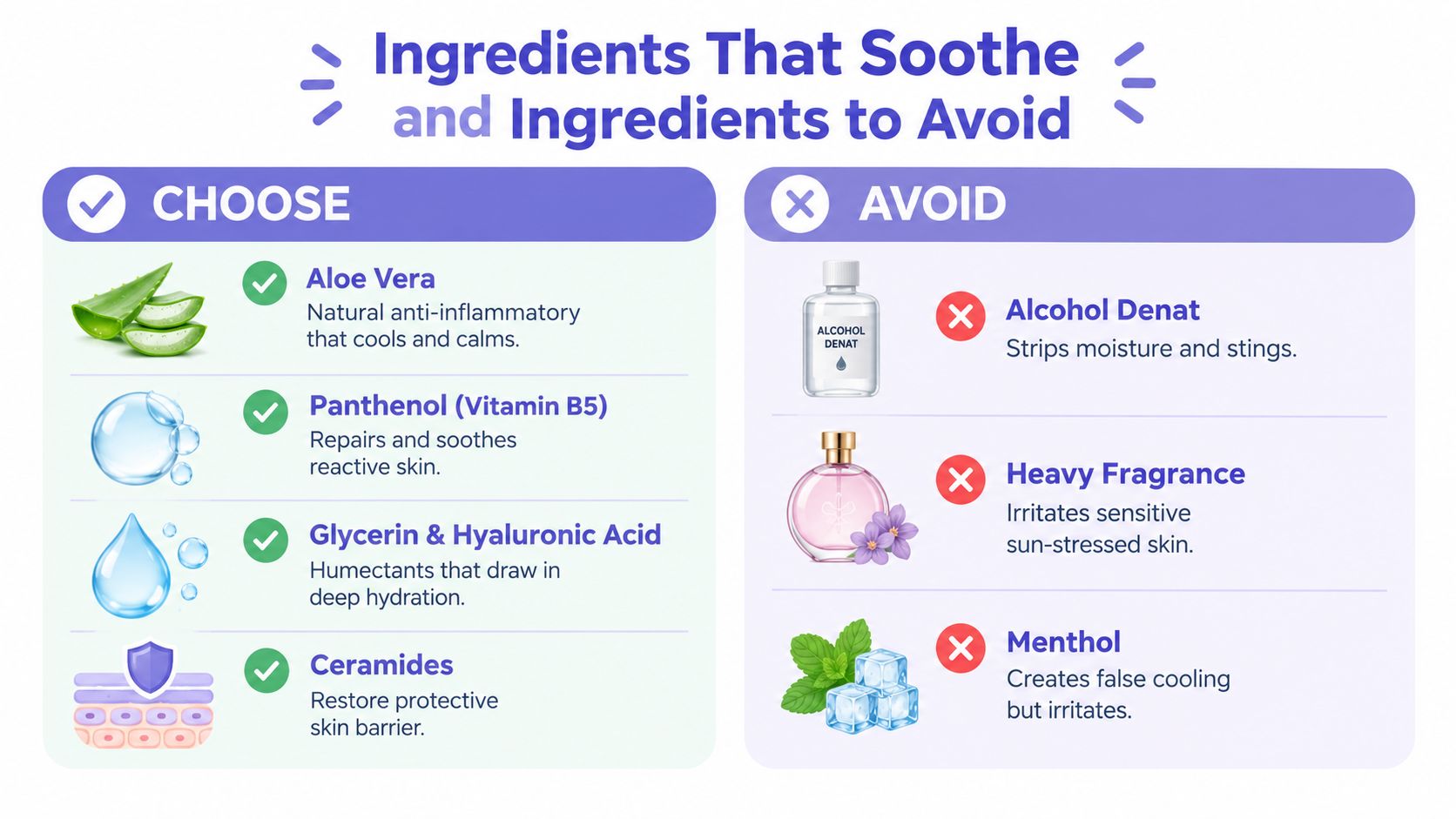
Aloe vera and panthenol are the classic soothing pair. Aloe is repeatedly highlighted for anti-inflammatory calming, and panthenol is well known for helping reactive skin feel less irritated.
Glycerin and hyaluronic acid are your water magnets. They help increase water content in the outer layer of the skin, which matters when skin feels papery or tight after sun exposure.
Ceramides support barrier repair. They're especially helpful for skin that doesn't just feel hot, but also feels fragile, rough, or easily provoked by friction from clothing or bedding.
Why combinations usually beat aloe alone
Aloe-only formulas can feel lovely at first, especially on very warm skin. But in practice, many people need more than a calming splash. They need water-binding ingredients plus something that reduces moisture loss afterward.
That's why a balanced formula often performs better than a “hero aloe” product. A lotion with aloe, panthenol, glycerin, and supportive lipids usually has a better chance of helping skin feel improved the next day.
For readers comparing ingredient-heavy pharmacy options, this closer look at Hyalu B5 serum-style hydration support is useful because it shows how humectants and barrier support can work together rather than relying on one soothing ingredient alone.
Healtsy GuideHyalu B5 serum-style hydration support →What to avoid on very inflamed skin
This part is often skipped, and it shouldn't be.
Neutral medical guidance says to avoid alcohol and “-caine” products such as benzocaine because they can sting, irritate, or trigger allergic reactions, according to the Mayo Clinic's sunburn first-aid guidance. Health Canada also advises against benzocaine or lidocaine and warns against creams or lotions that may trap heat in the skin, as noted in its sunburn first aid advice.
That means these deserve extra caution:
- Alcohol-heavy formulas can sting and worsen dryness.
- Strong fragrance can turn a mildly irritated shoulder into an itchy one.
- Numbing agents may sound helpful but aren't ideal for irritated, sunburned skin.
- Very heavy early occlusives can feel smothering when skin is still actively hot.
Freshly sunburned skin usually wants calm, water-based comfort first. Richer sealing layers make more sense later, once the heat has settled.
The contrarian but practical truth
A labeled after-sun product isn't always better than a bland moisturizer. A 2024 review found the strongest clinical evidence for acute sun-damage care came from amino acids, peptides, and Aloe barbadensis, while practical guidance also supports a fragrance-free emollient and warns against fragranced or alcohol-based after-sun products, according to the 2024 review in Dermatology and Therapy.
I've seen this in real life many times. A simple fragrance-free pharmacy moisturizer often beats a glamorous after-sun product that smells amazing but stings on contact.
How to Apply After Sun Lotion for Maximum Relief
Technique matters more than many think. A good product can disappoint if it's applied too late, put onto sweaty skin, or layered too heavily while the skin still feels hot.
I believe the best routine is calm and simple. After a long day outdoors, you don't need a ten-step recovery plan. You need gentle cooling, smart timing, and enough product to cover the skin comfortably.
The order that usually works best
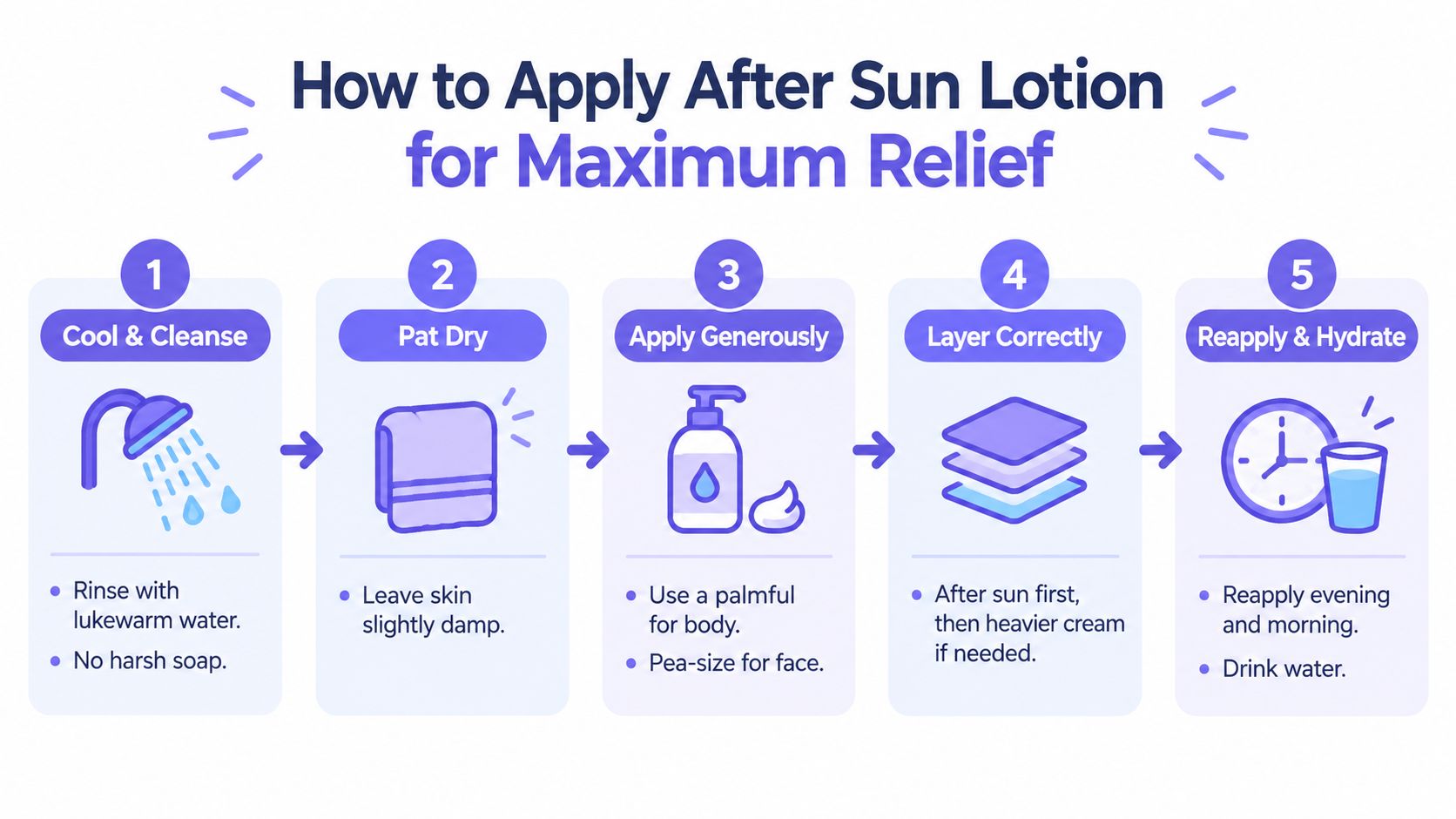
- Cool the skin gentlyTake a lukewarm or cool shower, not a hot one. Hot water adds to the flushed feeling and can leave skin even tighter afterward.
- Pat, don't rubLeave the skin slightly damp. That small amount of surface moisture can help a lotion spread more evenly.
- Apply enough productUnder-applying is a common mistake. The body needs a generous layer over exposed areas. The face needs less, but it still needs complete coverage.
- Layer only if neededIf your skin is still very warm, start with the lightest soothing layer. If it feels dry later, add a richer fragrance-free cream.
- Reapply when skin asks for itIf the skin feels tight again before bed or the next morning, apply another layer. Sun-stressed skin often needs repeated comfort, not one dramatic application.
Face and body need slightly different handling
For the face, choose a lighter formula and avoid heavily fragranced textures. Facial skin often reacts faster and clogs faster.
For the body, especially shoulders, chest, and shins, use enough product to reduce drag during application. If it feels like you're fighting to spread it, you probably need more.
Common mistakes I see often
- Applying on unwashed skin leaves sweat, salt, sunscreen residue, and friction behind.
- Using harsh cleansers first can make stinging worse.
- Over-applying a thick balm too early can feel uncomfortable when skin is still hot.
- Skipping morning reapplication leaves already dry skin struggling through the next day.
A cooled product can feel more comfortable, but comfort isn't permission to overdo heavy layers on skin that still radiates heat.
My usual evening example is simple. Cool shower. Pat dry. Light first layer over hot areas. Then, later in the evening, a richer fragrance-free layer if the skin starts feeling taut again. That rhythm works well because it respects both stages of post-sun skin.
Choosing the Best After Sun Lotion for Your Skin Type
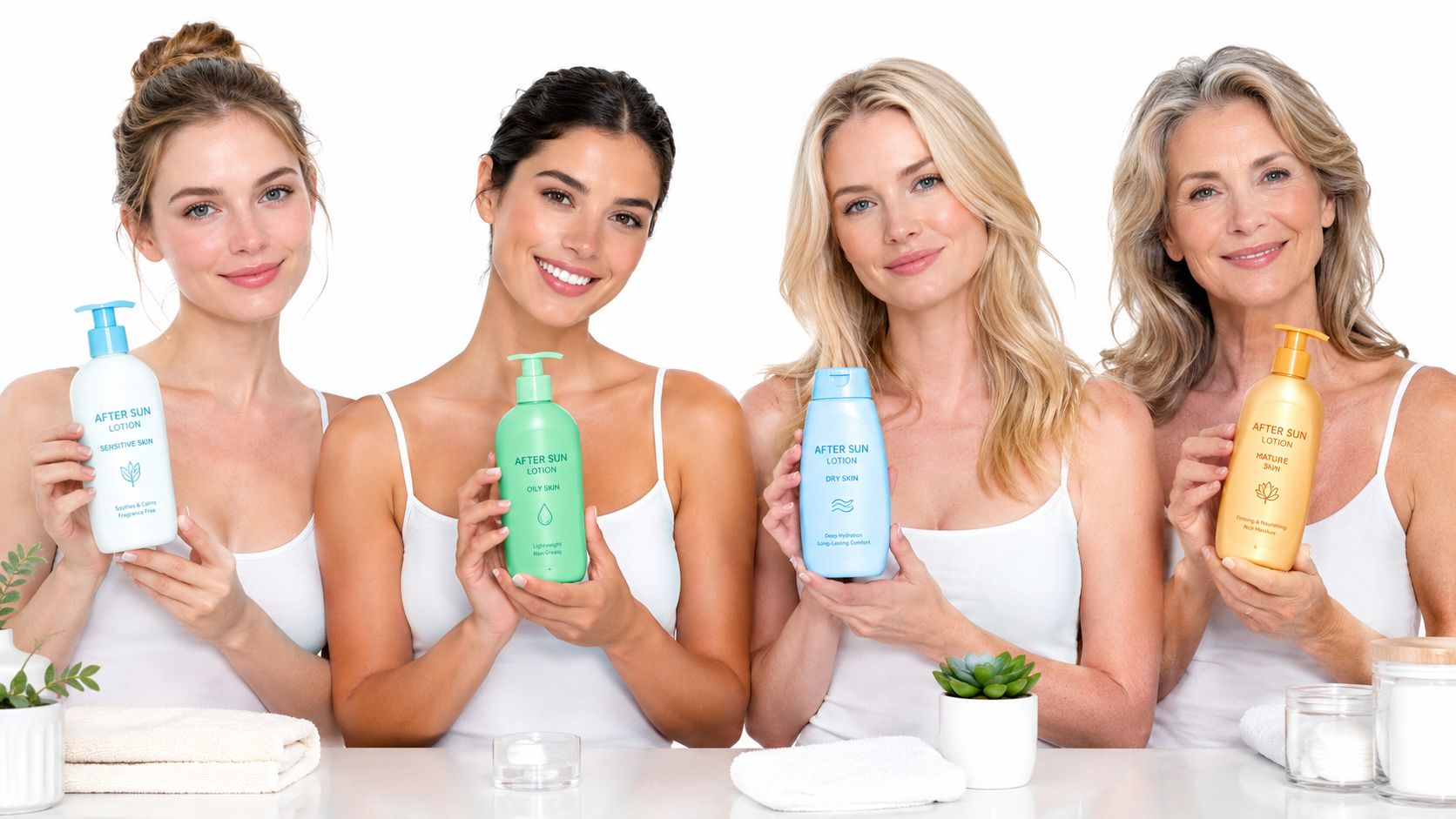
The after sun lotion best choice for one person can be wrong for another. The label matters less than the skin in front of you.
Sensitive and reactive skin
Keep it plain. Fragrance-free, alcohol-free, and minimal are the safest words to look for. If a product gives a dramatic cooling sensation, I'd be cautious unless you already know your skin tolerates it well.
Patch testing helps here. Even a good formula can feel wrong on freshly stressed skin if you're already reactive.
Oily and acne-prone skin
Choose lighter textures, especially for the face, upper chest, and back. Gel-creams or lighter lotions usually work better than rich body butters.
The goal is comfort without residue. Skin that feels hot and congested won't thank you for a thick scented layer.
Dry and mature skin
This group often needs more than cooling. It usually benefits from formulas that combine soothing ingredients with stronger moisture support. A light first layer can still make sense if the skin is very warm, followed later by a richer cream or lotion.
If the skin isn't inflamed and mainly feels dehydrated, a bland fragrance-free moisturizer may be just as sensible as an after-sun labeled product.
Children and baby skin
Children's skin needs simplicity and caution. I'd stay with gentle, fragrance-free products and avoid numbing ingredients and strongly scented formulas. If the area is clearly sunburned, keeping the skin covered from further exposure is an important safety step, not an optional extra.
A simple household guide
One practical retail option is the Healtsy sunscreen and after-sun shopping environment, where readers can compare pharmacy-style skin needs more systematically, but the useful filter is still the same: low irritation, suitable texture, and enough support for your skin type.
Healtsy ShopFind the best sunscreen for your body: top brands compared →Your Final Decision Framework and Smart Shopping Tips
When you're standing in a store or scrolling online, reduce the decision to five checks. That's the easiest way to choose without getting distracted by branding.
The shelf-side checklist
- Check the soothing base — Aloe and panthenol are useful, but they're stronger in context when paired with humectants or barrier-supportive ingredients.
- Check for hydration support — Glycerin, hyaluronic acid, and supportive lipids usually tell you the formula is built for more than a quick cooling effect.
- Check what's missing — Freshly irritated skin does better when alcohol-heavy formulas, strong fragrance, and numbing ingredients aren't part of the story.
- Check the format fit — A good lotion you'll use beats a perfect gel you'll forget. Match the texture to your real habits.
- Check the skin-type match — Oily skin often wants lighter textures. Dry or mature skin often wants more cushion and a better overnight finish.
This is the complete guide to thinking clearly about after-sun care. Formulation quality beats brand hype, and irritant avoidance often matters more than exotic claims.
I believe this framework is the most useful advice I can give from 16 years in the sector. I'm certain it will solve the biggest mistake people make, which is buying for marketing language instead of buying for the actual state of their skin. Once you understand that, the after sun lotion best choice becomes much easier.
Build a calmer post-sun routine with Healtsy
Healtsy offers a practical way to shop this category alongside sunscreen, sensitive-skin care, pharmacy staples, and family products in one place. Compare after-sun options by texture, skin concern, and overall routine fit.
Shop Healtsy